
The automotive world often views rebadged vehicles with a certain level of skepticism. It is easy to see why. When two cars…
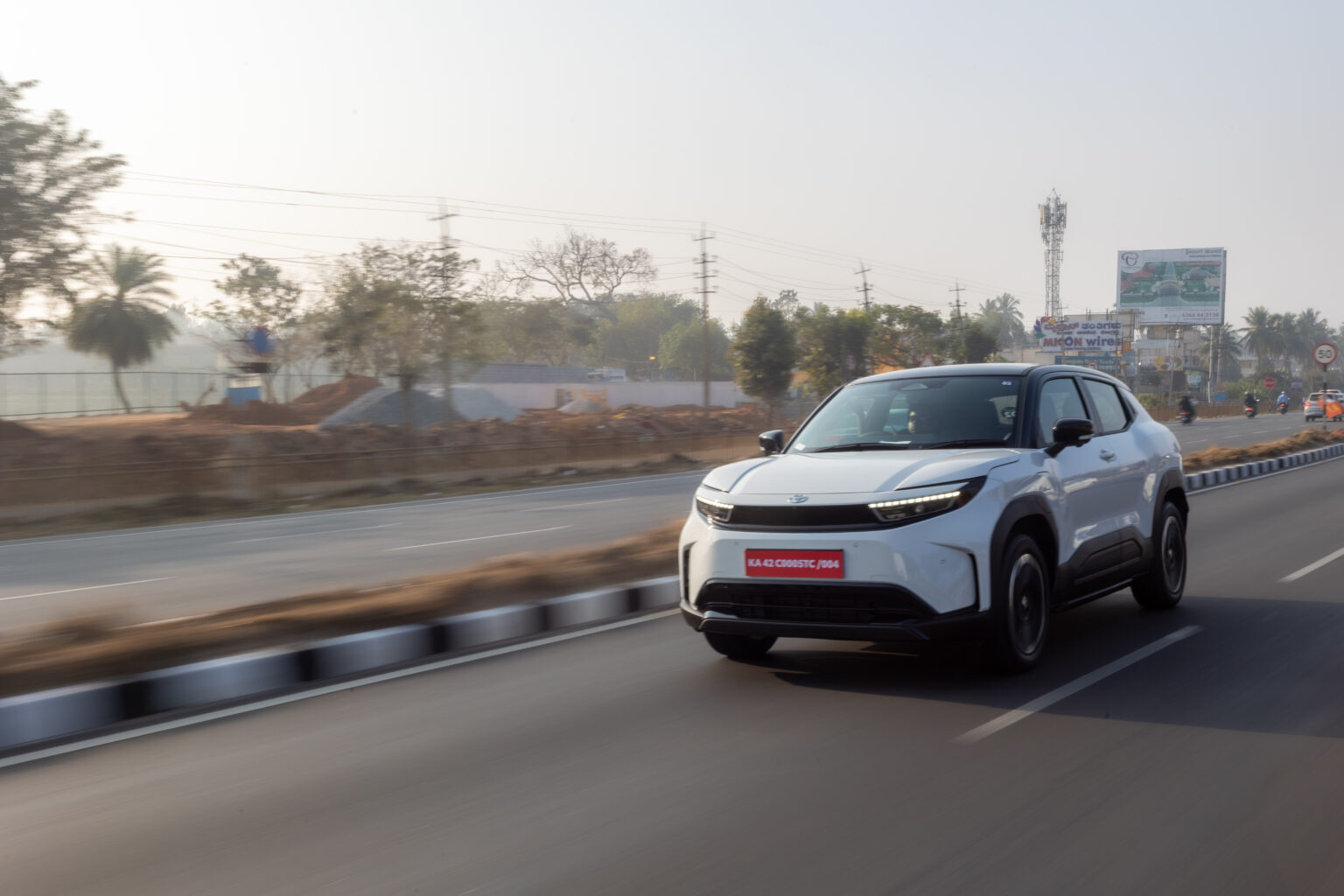
The automotive world often views rebadged vehicles with a certain level of skepticism. It is easy to see why. When two cars share a chassis, a motor, and a majority of their body panels, the distinct personality of the secondary brand can sometimes feel like an afterthought. The Toyota Urban Cruiser Ebella seeks to challenge that perception, albeit only with some changes to the exterior design. Built on the foundation of the Maruti Suzuki e Vitara, the Ebella represents Toyota’s strategic move into the mid-size electric SUV space.
EXTERIOR DESIGN
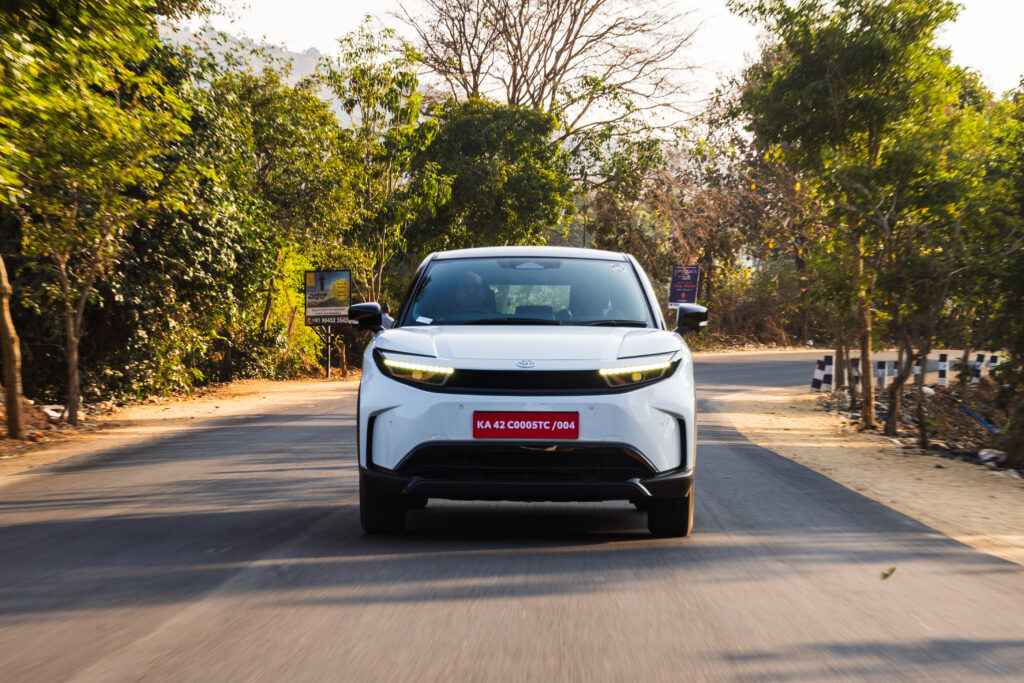
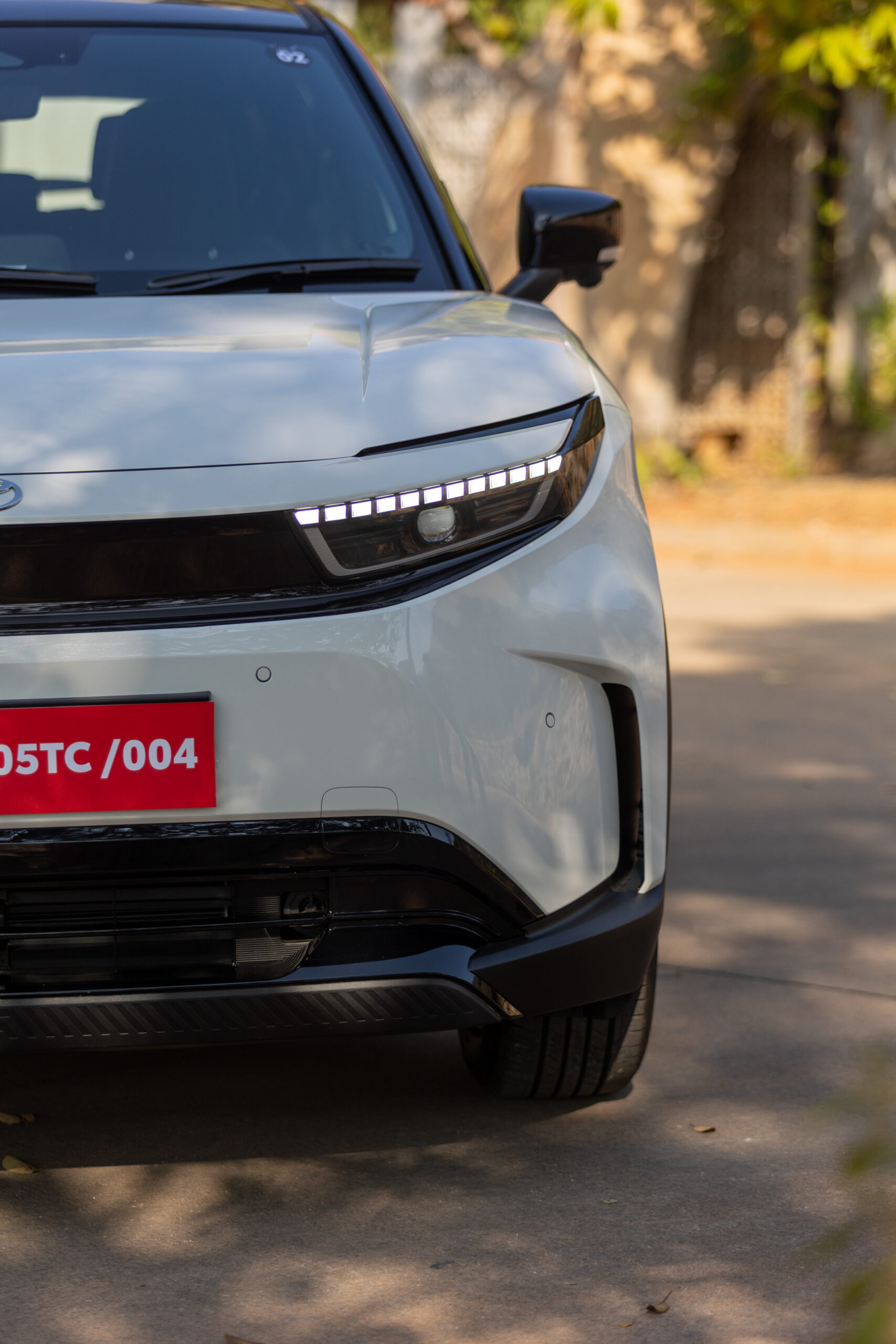
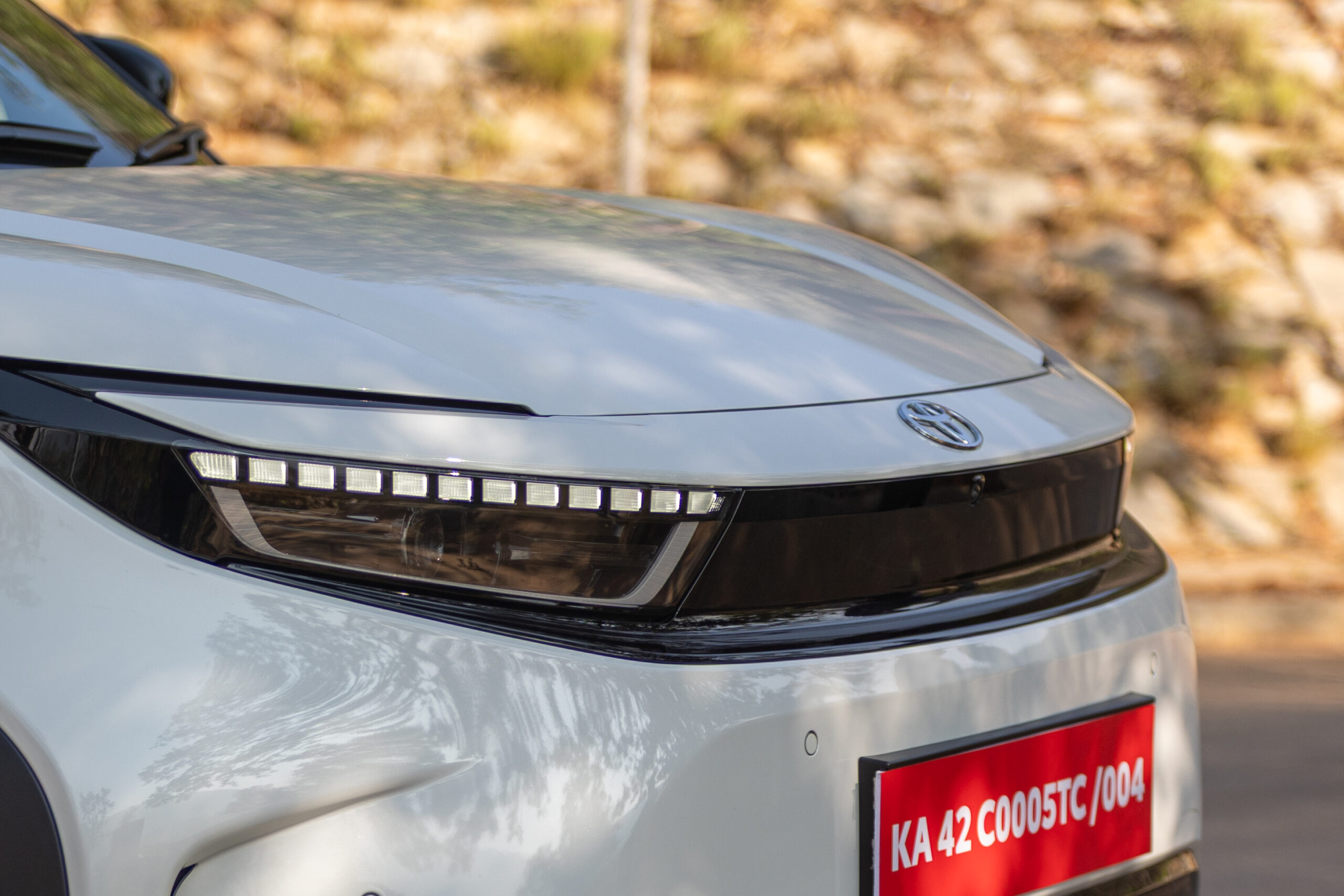
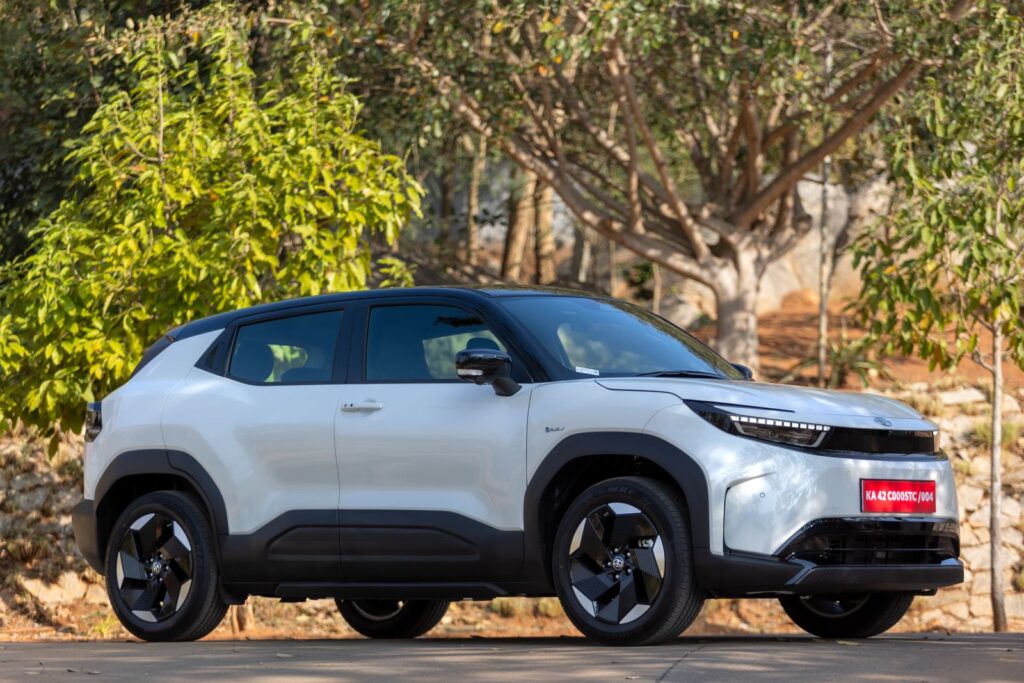
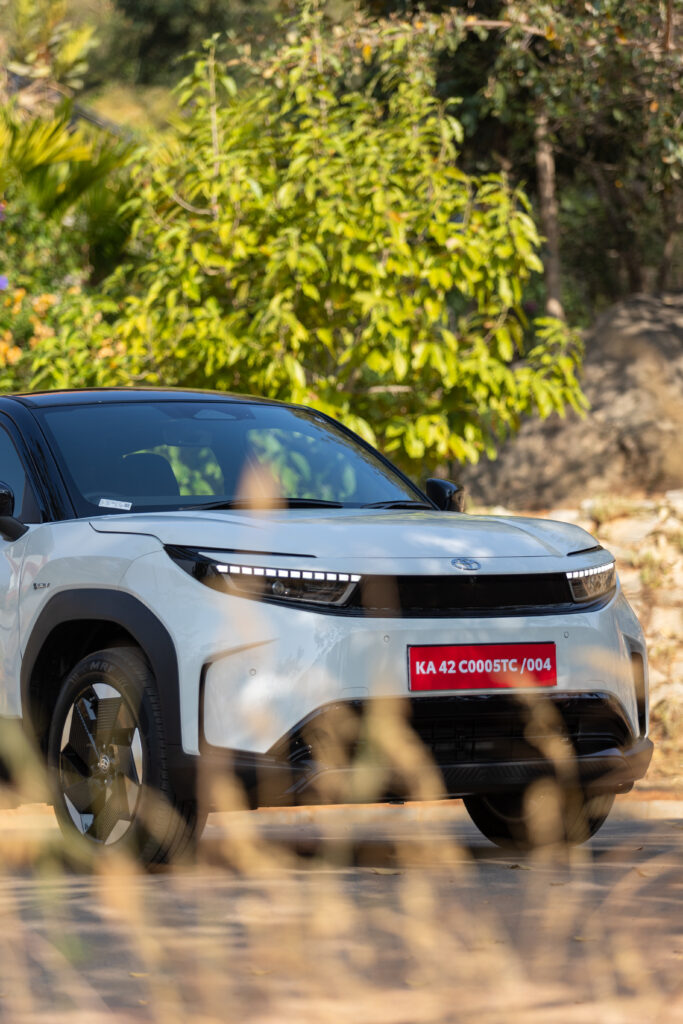
The most significant departure from its Maruti sibling is the visual identity. Toyota has completely reworked the front fascia, moving away from the rounded, bulbous headlight units of the e Vitara. In their place is a much sharper, ‘hammerhead’ design. The slim headlight units are paired with segmented LED DRLs that resemble eyebrows, giving the car a more aggressive and modern gaze. The bonnet and bumper have also been cleaned up, resulting in a face that feels more premium and cohesive.
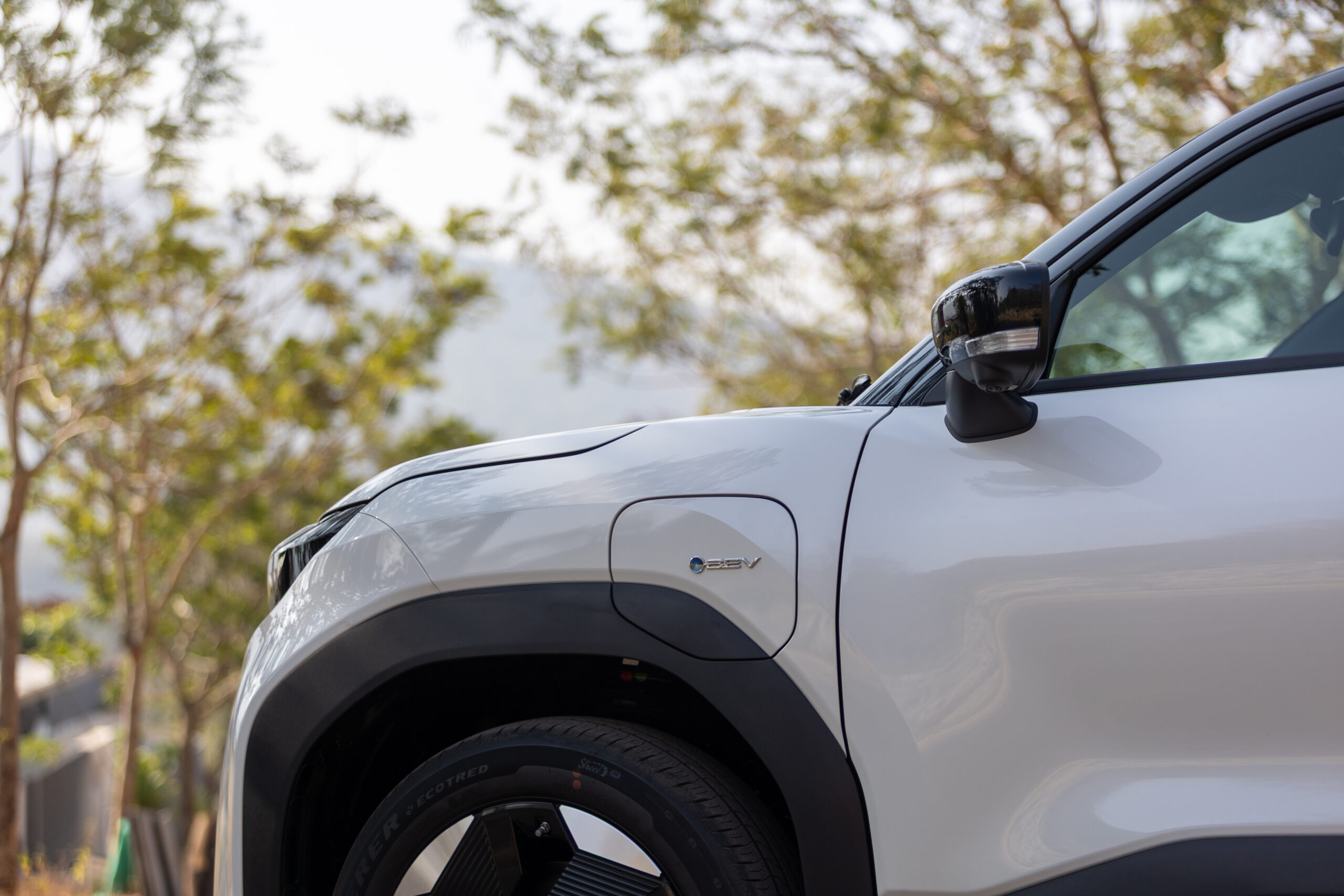
The updates continue to the rear, where the lighting signature has been refreshed to align with Toyota’s global electric aesthetic. However, the side profile remains identical to the e Vitara, and this is where one of the Ebella’s and e Vitara’s most frustrating design choices persists. The rear door handles are integrated into the C-pillar. While designers often claim this adds a coupe-like look, in practice, they are an ergonomic nightmare. They are awkward to reach (especially for children), unintuitive for new passengers, and, frankly, do nothing to improve the overall silhouette of the car.
PERFORMANCE
The Ebella is offered in three primary variants: the E1, E2, and the range-topping E3. During our time with the E3 variant, which produces 172 hp and 193 Nm of torque, the performance felt surprisingly adequate for a vehicle of this size.
On the road, the acceleration is brisk. While it does not offer the neck-snapping torque that some high-performance EVs are famous for, it delivers its power with a linear confidence that makes daily driving effortless. Overtaking fast-moving traffic on the highway is a simple affair; the motor responds quickly to inputs. There are three drive modes – Eco, Normal and Sport with sufficient differentiation in terms of power delivery. While a scientific range test was not possible during this drive, the efficiency observed suggests that achieving 400 km on a single charge is a very realistic expectation for most drivers.
RIDE AND HANDLING
If you were expecting a cloud-like ride from a Toyota-badged SUV, the Ebella might come as a bit of a surprise. The suspension setup is firm, echoing the characteristics of the e Vitara. At low speeds, the car is quite communicative. You will feel most road imperfections, even though the suspension does a decent job of ensuring it doesn’t crash or bottom out over large bumps.
The real issues emerge as you pick up the pace. On uneven highways, the firm setup results in a bouncy ride that becomes magnified at higher speeds. This creates an unsettled feeling that can be unnerving for the driver and uncomfortable for passengers. Those in the rear seat bear the brunt of this bounciness, which, combined with the upright seating position, makes long-distance travel less than ideal.
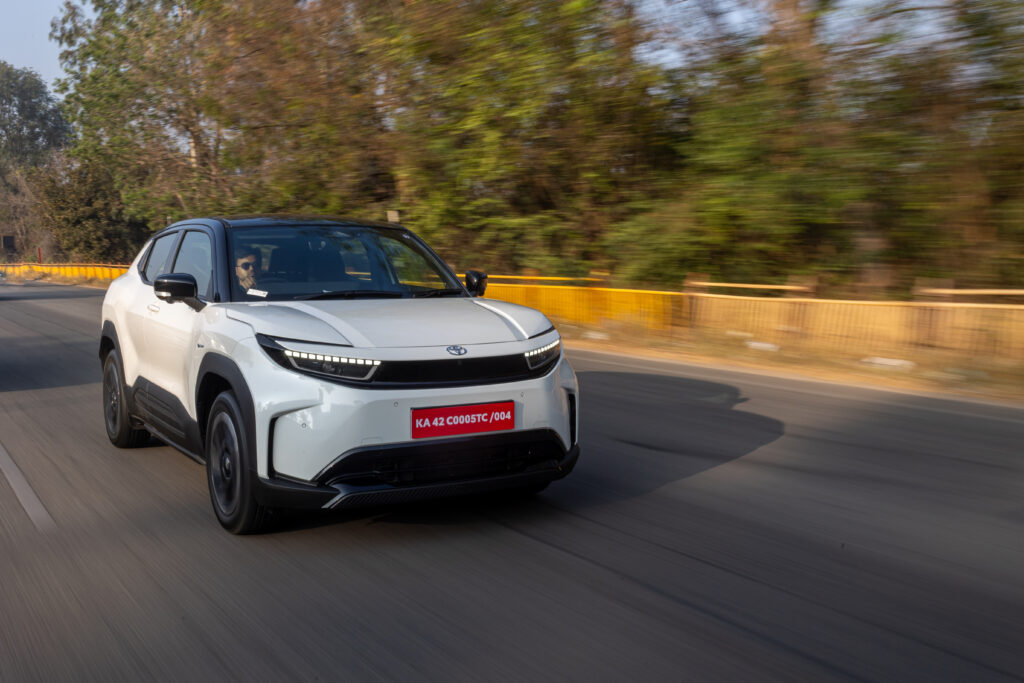
In terms of handling, the Ebella is safe and predictable, but it is certainly not fun in the traditional sense. There is a noticeable amount of body roll when diving into corners, reminding you of the car’s height and weight. On a positive note, the steering has a decent weight to it. It does not feel overly light or artificial, providing enough feedback to keep the driver engaged.
INTERIOR QUALITY AND ERGONOMICS
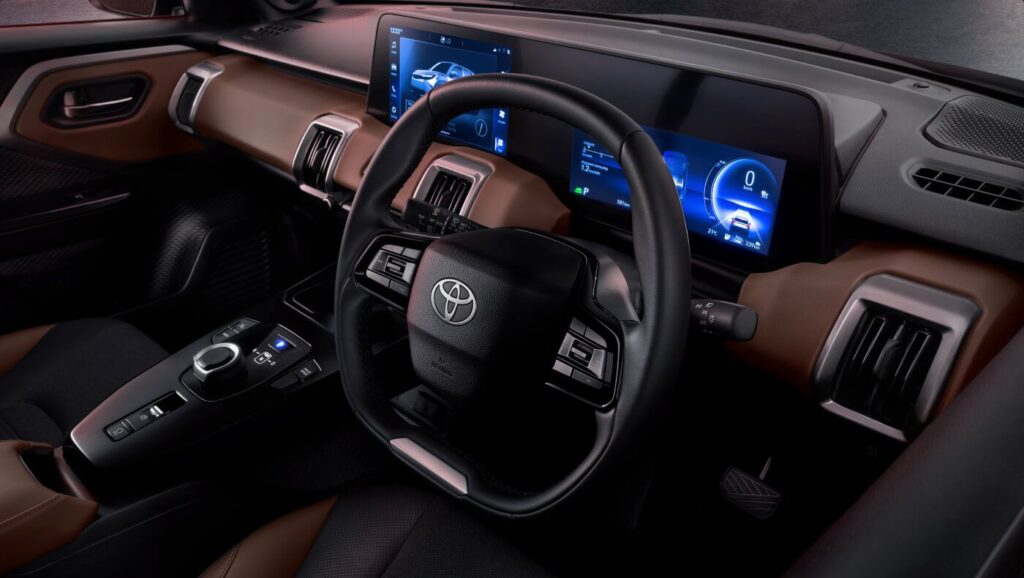
The cabin of the Ebella is solidly built. The materials used and the general construction feel high-quality and built to last. You get the sense that this interior will look just as good five years from now as it does today. From a driver’s perspective, the ergonomics are generally excellent. The seating position provides a commanding view of the surroundings, and most primary controls fall easily to hand.
However, there are a few notable quirks that detract from the experience:
The NVH Levels: For a car in this price bracket, the noise, vibration, and harshness (NVH) levels are higher than expected. At highway speeds, the cabin is filled with a significant amount of wind and tyre noise. Since there is no engine roar to mask these sounds, the intrusion is quite noticeable and detracts from the driving experience.
The Bezel Situation: The digital instrument cluster is functional, but it is framed by the largest bezels seen on a modern car. It makes the screen feel small and dated compared to the edge-to-edge displays found in competitors.
Regenerative Braking Controls: Surprisingly, there are no paddle shifters to adjust the level of energy recuperation. Furthermore, you cannot adjust the regen levels using the buttons on the centre console.
FEATURES AND SAFETY
Toyota has been generous with the equipment list for the Ebella. The inclusion of a 9-speaker JBL audio system provides an excellent acoustic experience for those who can ignore the tyre noise. For connectivity, wireless Android Auto and Apple CarPlay work seamlessly with the 10.25-inch touchscreen.
On the safety front, the Ebella is well-equipped. It comes with 7 airbags as standard across all variants and features a Level 2 ADAS suite, which includes adaptive cruise control and emergency braking. These systems are calibrated well for local conditions, though the lane-keep assist can be a bit over-eager.
THE VERDICT
The Toyota Urban Cruiser Ebella enters a segment that is already teeming with high-quality options. There are competitors that offer more performance, more comfortable rear seats, more features and a more settled ride.
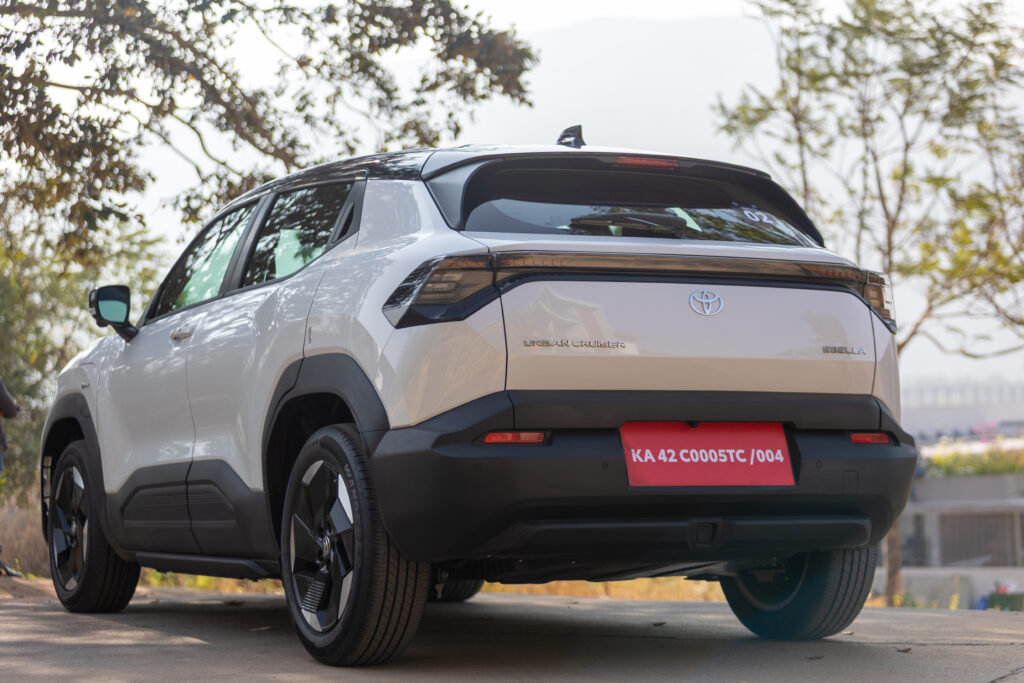
However, the Ebella is not without its charms. The visual overhaul at the front is genuinely successful, making it a much more attractive proposition than the Maruti Suzuki e Vitara. There is enough punch for any highway scenario, and the overall build quality is reassuring.
Who is this car for? It is for the buyer who prioritises the Toyota ownership experience and wants an EV that looks modern without being overly eccentric. It is a solid, albeit imperfect, urban commuter. While the bounciness and the cabin noise are flaws that cannot be ignored, the peace of mind offered by the Toyota badge will likely be enough to sway many.