
Hyundai Motor India has launched the new BAYON at an introductory starting price of ₹9,99,900 (ex-showroom), bringing generative AI voice assistance, dual…
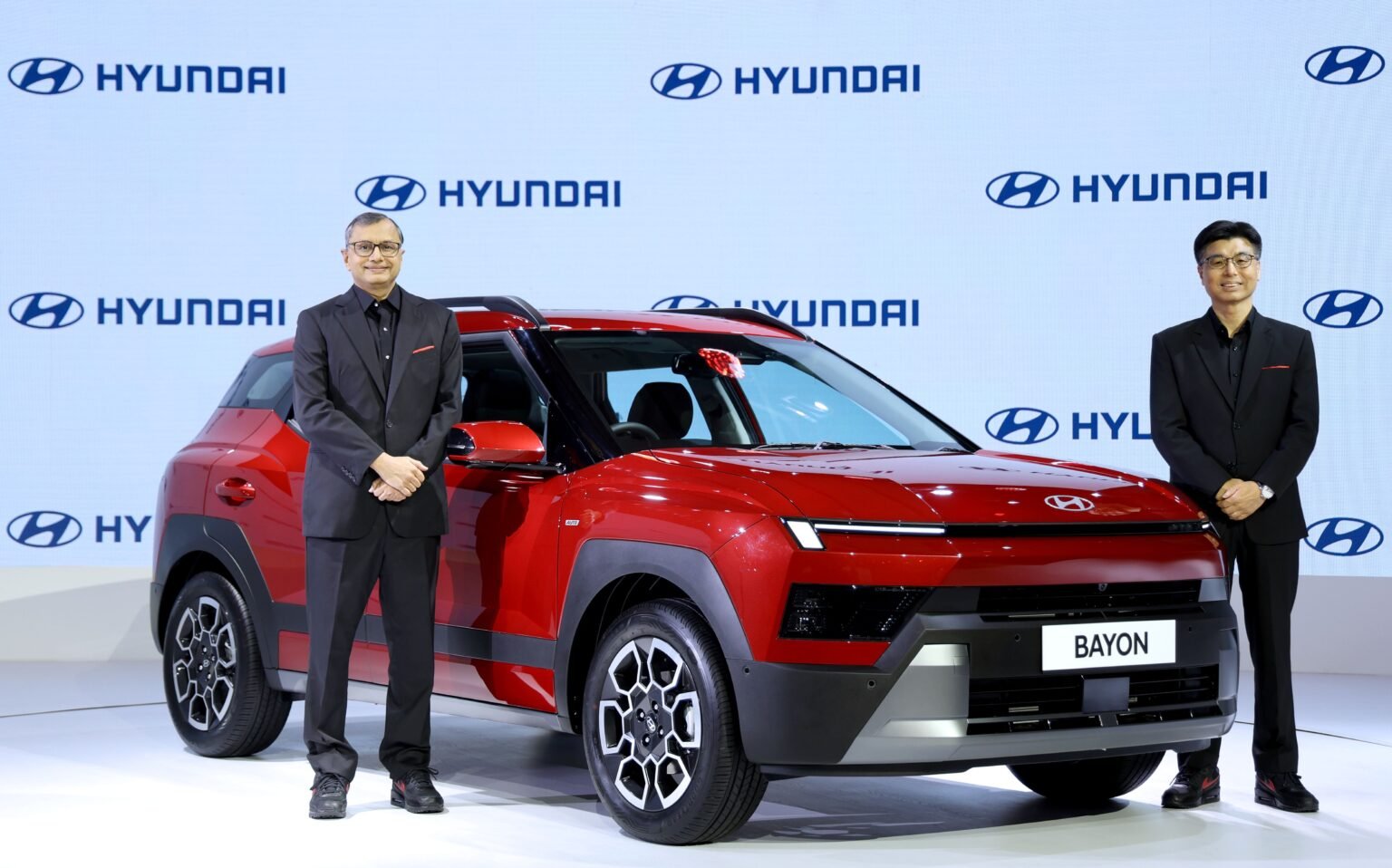
Hyundai Motor India has launched the new BAYON at an introductory starting price of ₹9,99,900 (ex-showroom), bringing generative AI voice assistance, dual 12.3-inch curved displays, advanced driver assistance technology and a 115 PS petrol engine to its latest SUV.
Hyundai Motor India Limited (HMIL) has introduced the Hyundai BAYON, an Intelligent Utility Vehicle developed around the philosophy of “Intelligence That Moves”. Officially launched on 26 October 2026, the new model combines connected-car technology, driver assistance systems, cabin comfort and a practical SUV design aimed at the evolving expectations of Indian customers.
The BAYON represents an important addition to Hyundai’s product portfolio, with technology taking centre stage in its approach to everyday mobility. According to the company, the SUV will be manufactured in India and exported to more than 50 international markets, reinforcing the country’s role in Hyundai’s global manufacturing and export operations.
Hyundai BAYON Price and Variants
The Hyundai BAYON starts at ₹9,99,900 (ex-showroom). The company will offer the SUV in multiple variants, with buyers able to choose between a six-speed manual transmission and an Intelligent Variable Transmission (iVT), depending on the variant.
The manual lineup comprises HX2, HX3, HX3+, HX5, HX6, HX8 and HX10. The iVT range includes HX5 iVT, HX6 iVT, HX8 iVT and HX10 iVT.
The starting price positions the BAYON as a new contender for buyers considering a technology-focused petrol SUV. However, the complete variant-wise pricing has not been provided in the launch announcement.
Generative AI Voice Assistant Takes Centre Stage
One of the Hyundai BAYON’s most notable features is HMIL’s first-ever generative AI voice assistant. Featuring intelligence by Perplexity and voice AI powered by SoundHound AI, the system is designed to let occupants interact with the vehicle through natural conversations.
The assistant can provide information and assistance relating to travel itineraries, weather, hotels, restaurants, news and sports. This approach aims to make everyday interactions with the vehicle more intuitive by bringing conversational AI into the driving environment.
The generative AI voice assistant currently supports interaction in English only. Hyundai also notes that AI-generated responses are intended for informational and convenience purposes and should not replace human judgement.
The digital experience extends to the Connected Car Navigation Cockpit (ccNC), accelerated by NVIDIA technology. The cabin features dual 12.3-inch curved panoramic displays, creating an integrated environment for navigation, vehicle information and connected services.
Other technology highlights include:
- More than 70 Hyundai Bluelink connected features.
- Over-the-air updates for up to 19 controllers, subject to Hyundai’s stated conditions.
- More than 500 embedded voice commands.
- Multi-language interfaces supporting 10 regional and two international languages.
- Wireless Android Auto and Apple CarPlay.
- A Bose premium sound system.
- Three years of complimentary Hyundai Bluelink subscription.
Together, these features make connectivity and digital convenience central to the BAYON ownership experience.
Hyundai BAYON Safety Features: Level 2 Pro ADAS
Safety is another key focus of the new SUV. Built on Hyundai’s Global K Enhanced Platform, the BAYON is engineered to meet the company’s stated five-star Indian safety standards, based on its internal assessment.
Its body structure incorporates 69% advanced multi-grade high-strength steel, including hot-stamped steel and different grades of high-strength steel designed to enhance structural rigidity, crash-energy management and occupant protection.
The BAYON offers more than 80 advanced safety features, including Hyundai SmartSense Level 2 Pro ADAS with 23 driver assistance features.
Key safety technologies include:
- Highway Driving Assist (HDA).
- Navigation-based Smart Cruise Control Zone.
- Navigation-based Smart Cruise Control Curve.
- Surround View Monitor.
- Blind-spot View Monitor.
- Three radars and 12 parking sensors.
- All-wheel disc brakes.
Hyundai states that more than 35 safety features are standard across all variants. These include six airbags, Electronic Stability Control (ESC), Hill-start Assist Control (HAC), a rollover sensor and a high-line Tyre Pressure Monitoring System (TPMS).
The availability and operation of certain ADAS functions may vary by variant and driving conditions. Hyundai also specifies that some navigation-based assistance functions are supported only on designated expressways covered by the relevant map data.
1.5-Litre Petrol Engine Produces 115 PS
The Hyundai BAYON is powered by a four-cylinder, 1.5-litre MPi petrol engine with a displacement of 1,497 cc. The engine produces a maximum power output of 115 PS at 6,300 rpm and peak torque of 143.8 Nm at 4,500 rpm.
Buyers can choose between a six-speed manual gearbox and Hyundai’s Intelligent Variable Transmission (iVT).
The iVT-equipped variants receive additional driving functions, including Dash Boost Mode, designed to improve responsiveness during overtaking, and Sporty Drive Tech for a more engaging acceleration experience.
Selectable Eco, Normal and Sport driving modes, steering-mounted drive-mode controls, paddle shifters and Idle Stop & Go further expand the powertrain’s convenience and driving functionality.
According to Hyundai, more than six lakh vehicles in India have been powered by this 1.5-litre engine since 2020, highlighting the powertrain’s established presence in the company’s domestic lineup.
Spacious Cabin and 505-Litre Boot
The Hyundai BAYON has a 2,600 mm wheelbase, which the company says helps provide generous headroom, legroom and shoulder room for occupants in both rows.
The cabin combines practical equipment with premium-oriented features, including front ventilated seats, an eight-way electrically adjustable driver’s seat, two-step rear reclining seats and fully automatic temperature control.
Additional comfort and convenience features include rear AC vents, a panoramic sunroof, a sliding front console armrest, a rear centre armrest with cupholders, wireless smartphone charging, Type-C USB charging ports and push-button start with a smart key.
The rear seats feature a 60:40 split-folding arrangement, while the claimed boot capacity stands at 505 litres under Hyundai’s stated measurement method. This configuration is designed to accommodate everyday luggage, family travel and weekend trips.
Progressive SUV Design With 17-Inch Alloy Wheels
The BAYON adopts an upright SUV stance, sculpted bonnet, pronounced fenders and a futuristic front fascia. Its exterior styling incorporates H-Edge LED daytime running lights, dual LED projector headlamps, geometric wheel arches and wrap-around door cladding.
Bridge-type roof rails and 17-inch diamond-cut alloy wheels add to its visual presence, while H-Edge LED tail lamps and a sporty rear spoiler complete the exterior design.
Inside, the SUV features a dual-tone Black and Olive Grey theme, leatherette seat upholstery, a soft-touch crashpad insert and ambient lighting integrated into the crashpad and door pockets. A two-tone D-cut steering wheel and the dual curved displays contribute to the modern cockpit layout.
The Hyundai BAYON measures 4,245 mm in length, 1,810 mm in width and 1,605 mm in height, including roof rails. It has a claimed ground clearance of 205 mm in an unladen condition and a turning radius of 5.16 metres.
Hyundai BAYON Colours and Specifications
Hyundai will offer the BAYON in 10 exterior colour options across monotone, dual-tone and matte finishes.
The monotone options are Titanium Black, Classy Blue, Atlas White, Fiery Red, Golden Bronze and Ecotronic Grey. Dual-tone choices include Atlas White with a Black Roof and Fiery Red with a Black Roof. The matte finishes are Titanium Black Matte and Classy Blue Matte.
The SUV has a 43-litre fuel tank and uses a MacPherson strut front suspension with a coupled torsion beam rear suspension. Tyre and wheel specifications vary by configuration, with options including 16-inch steel wheels and 17-inch styled or diamond-cut alloy wheels.
Hyundai BAYON: A Technology-Focused Addition to India’s SUV Market
With its starting price of ₹9.99 lakh, generative AI voice assistant, Level 2 Pro ADAS, dual panoramic displays and established 1.5-litre petrol powertrain, the Hyundai BAYON brings together several features that are increasingly relevant to technology-conscious SUV buyers.
Its combination of connected services, driver assistance, cabin comfort and practical luggage capacity gives it a distinct technology-led proposition. The extent to which it appeals to buyers will also depend on the final variant-wise pricing, equipment distribution and comparisons with other SUVs available in the Indian market.
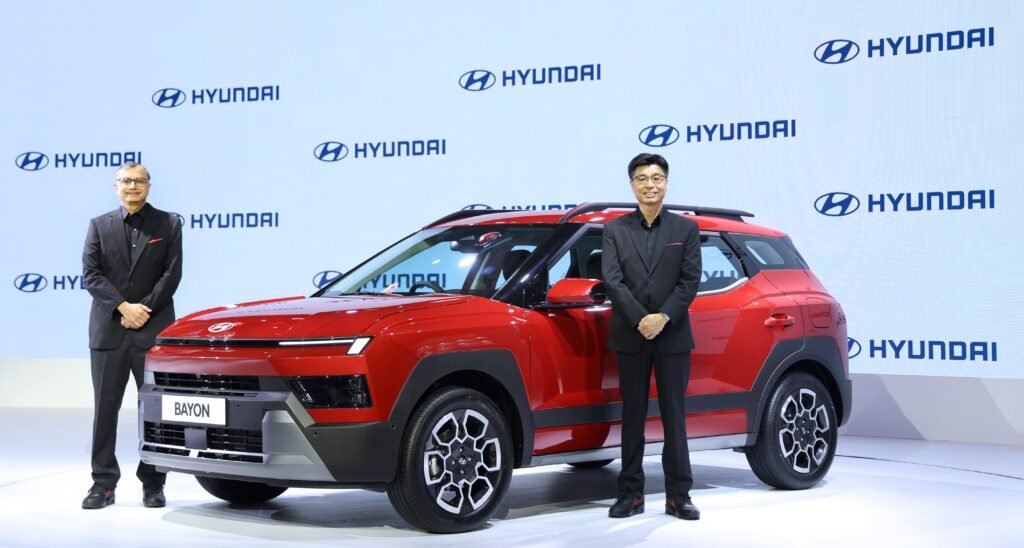
Hyundai’s plan to manufacture the BAYON in India and export it to more than 50 markets adds an international dimension to the launch.
Would you consider the Hyundai BAYON for its generative AI technology and advanced safety features, or would you prioritise engine performance and overall value when choosing your next SUV?