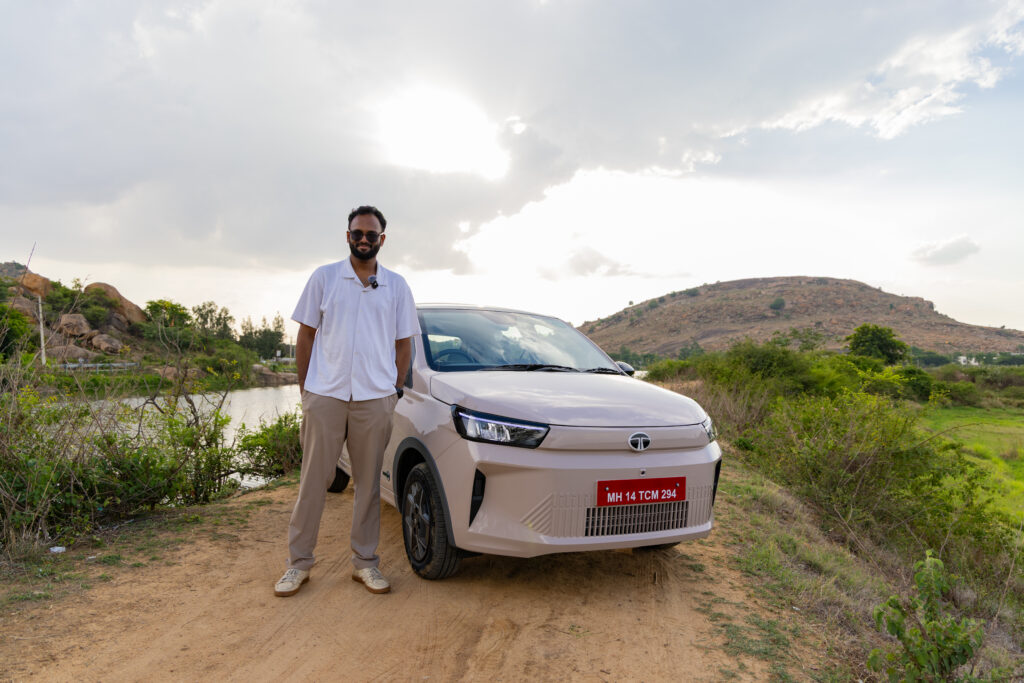
The Tata Tiago EV was already the most affordable EV in the country. This update adds features and improves the cabin experience…
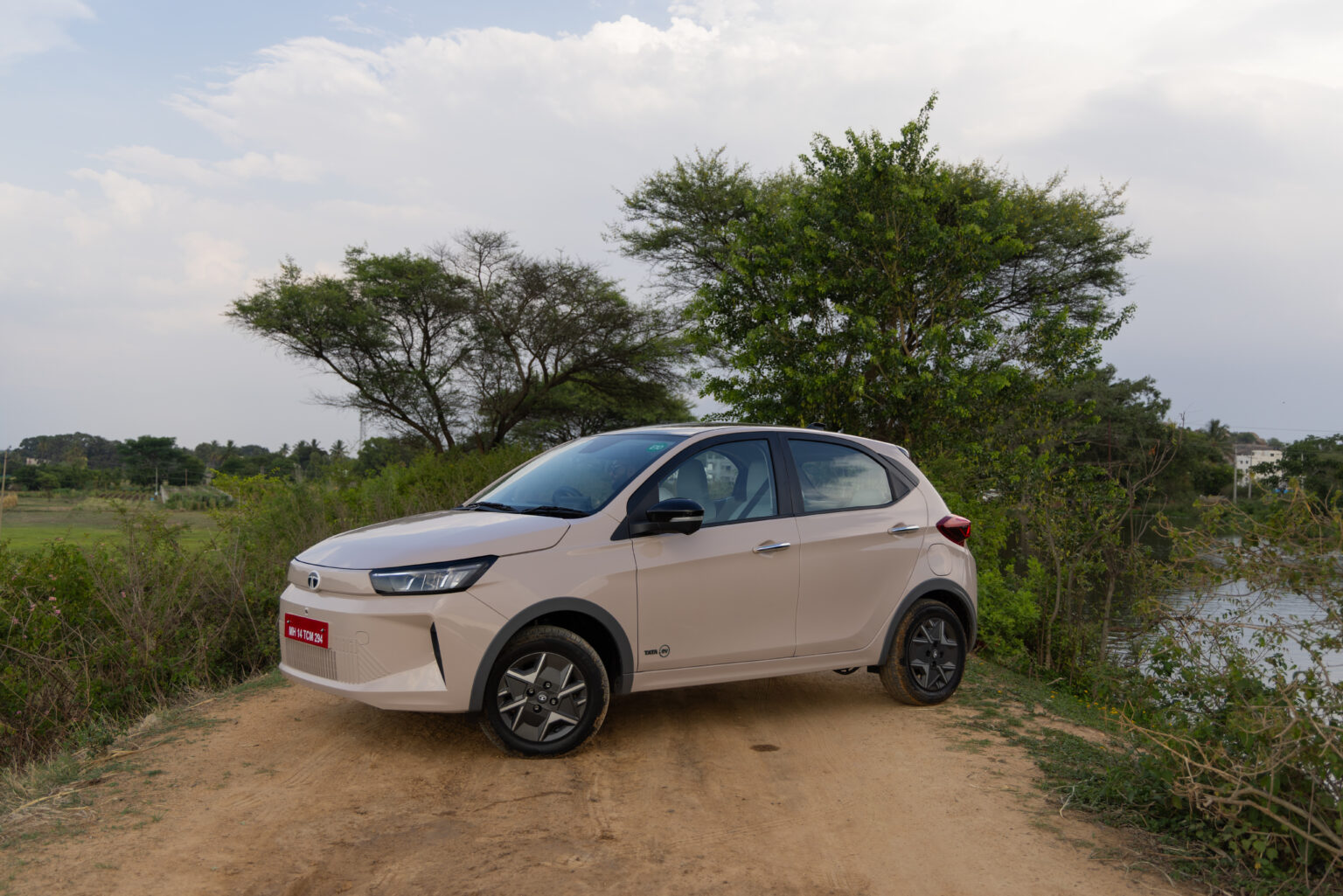
The Tata Tiago EV was already the most affordable EV in the country. This update adds features and improves the cabin experience while making it even more affordable
There is a number that keeps coming up when you talk about Tata’s EV business. Ten thousand. That is roughly how many electric cars they sell in a month in India right now. It is not one product doing the heavy lifting. It is an ecosystem, from the Harrier EV at the top to the Tiago down here at the entry point. And of all the cars in that range, the Tiago makes the most consequential argument. Not the most glamorous one, not the most technically impressive one. The most consequential one.
Because an electric car at Rs 6.99 lakh, which is where the updated Tiago EV now starts, a full lakh less than before, is not a niche product for a buyer with a specific profile and a solar panel on the roof. It is an option for someone who has never seriously considered an EV at all. That shift in who this car speaks to is, I think, the real story of this update. The rest of it, and there is quite a bit of rest, is detail on top of that.
The Outside
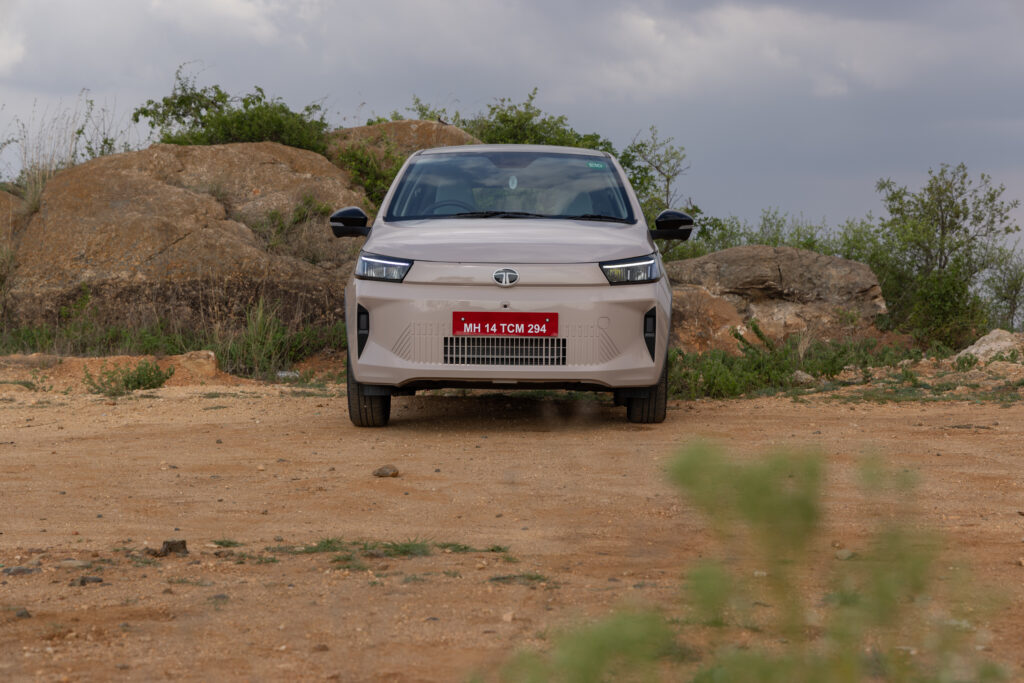
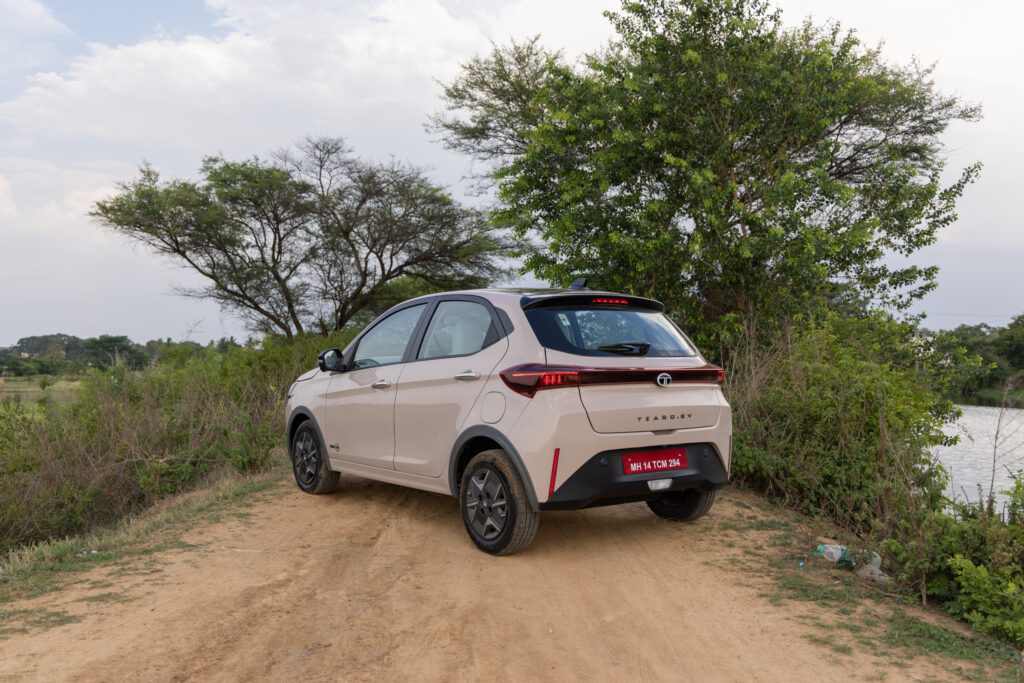
The Tiago EV and the updated ICE Tiago share most of their visual language, which makes sense given they are built on the same foundation. The front end is sharper than the outgoing car’s, more upright and resolved, and the headlamps are new. I like the direction of the new design. It is more conventional, more mature than what it replaces, and I think it will age better for it. Cars that try too hard at this end of the market tend to look awkward in a few years. This one should be fine.
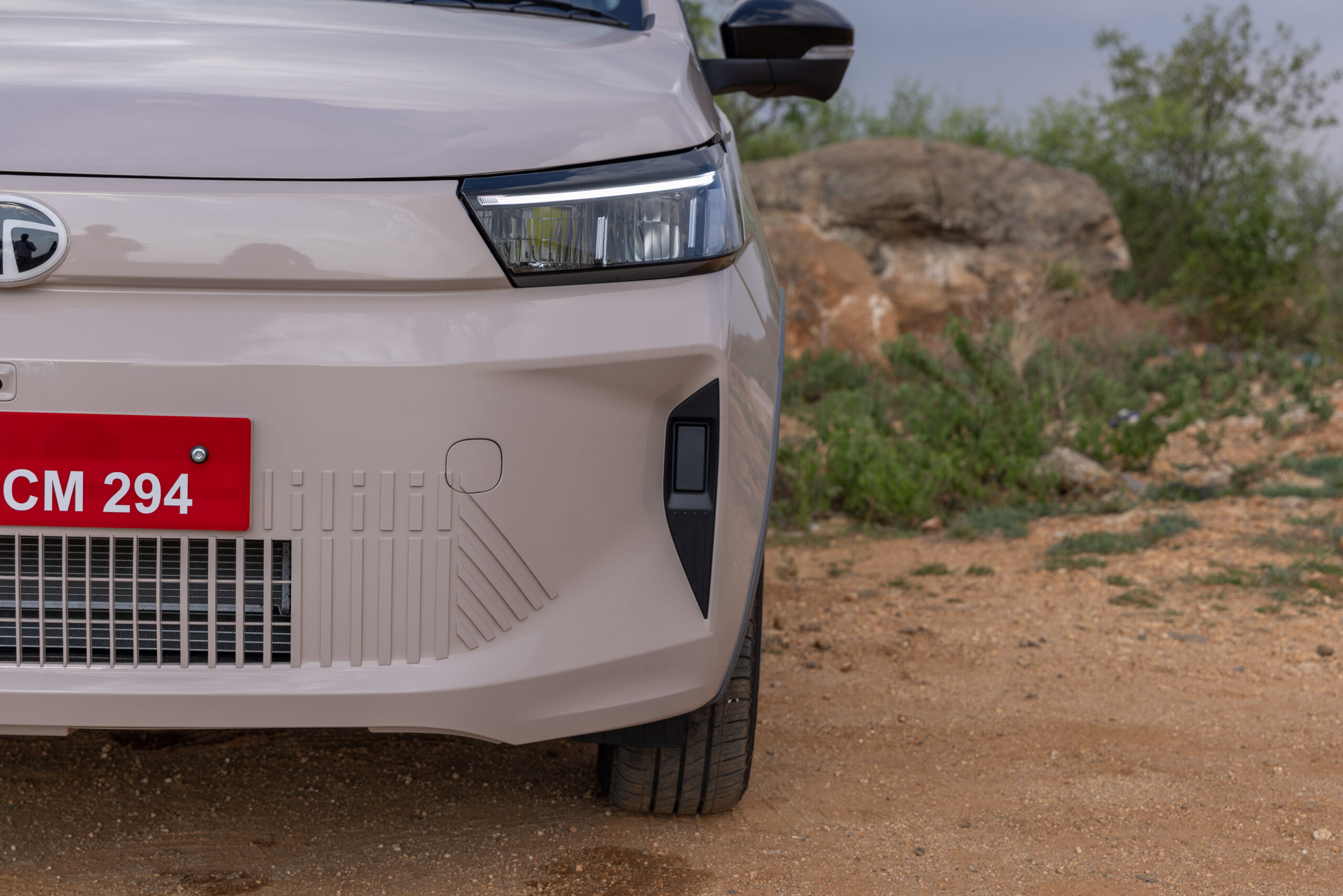
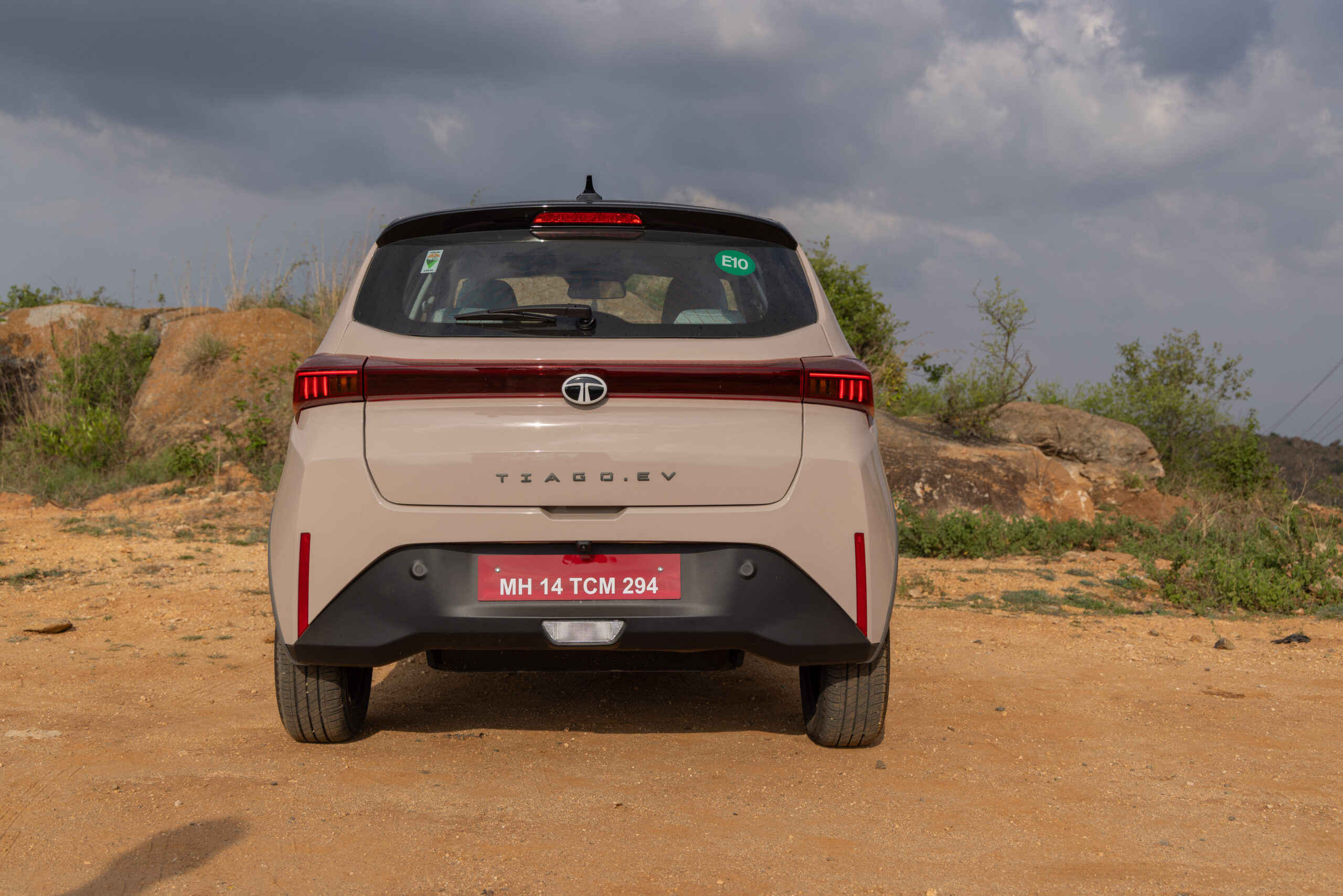
What distinguishes the EV from the petrol are small but deliberate details. The grille is closed off and body-coloured rather than open. The bumper gets revised faux air vents at the edges. New 14-inch wheels with contrasting wheel arch cladding. Connected LED tail-lamps at the rear. None of this screams electric in the way that some manufacturers feel compelled to signal it. It is subtle, and that suits the car.
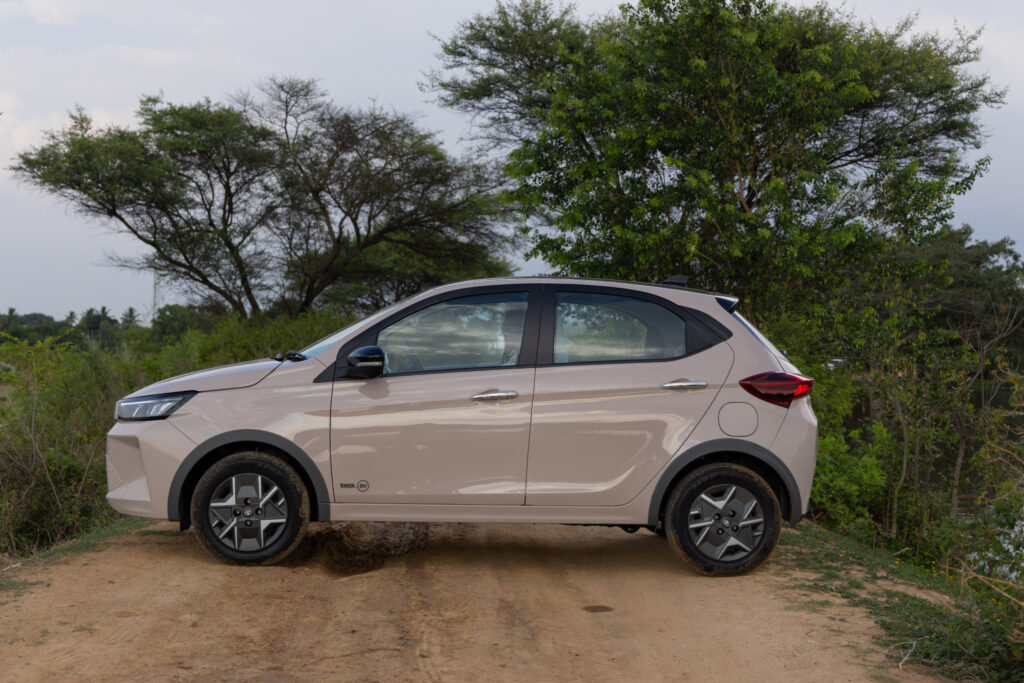
The colour palette is worth lingering on. Dehradun Dew, Sobo Surge, Pangong Pulse, Matheran Monsoon, Pure Grey, Pristine White. I spent my time with the car in Sobo Surge, which is a warm, muted orange-adjacent shade. I’ll be honest: it is not one I would choose. It photographs better than it looks in person, and in certain light it reads as a little flat. The Pangong Pulse is the one I keep coming back to; that works properly on this shape. The pastels are the interesting part of the palette, and a few of them genuinely suit the car. Whether buyers in this segment will actually move away from white and silver is hard to predict, but the options being there still matters.
The Inside
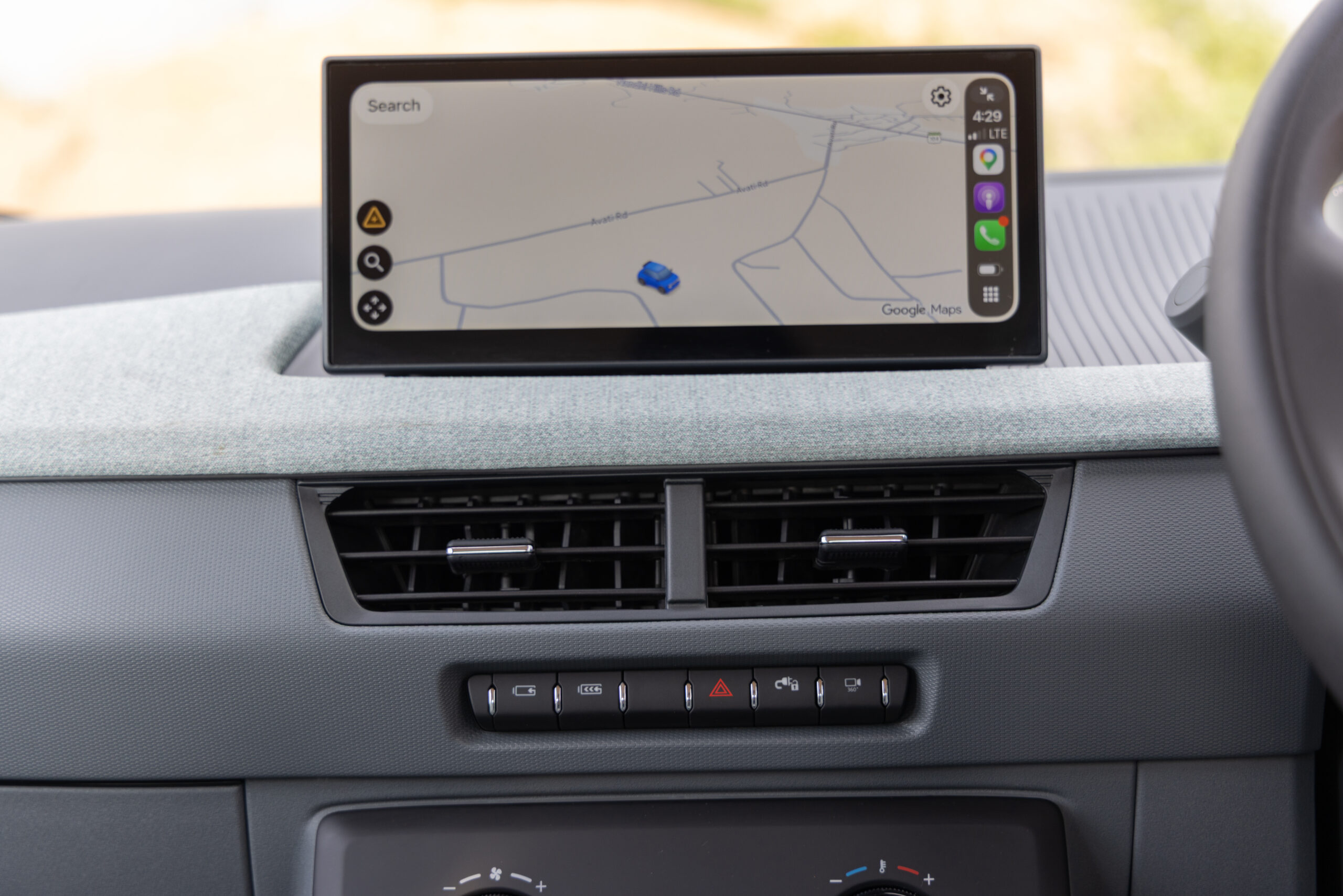
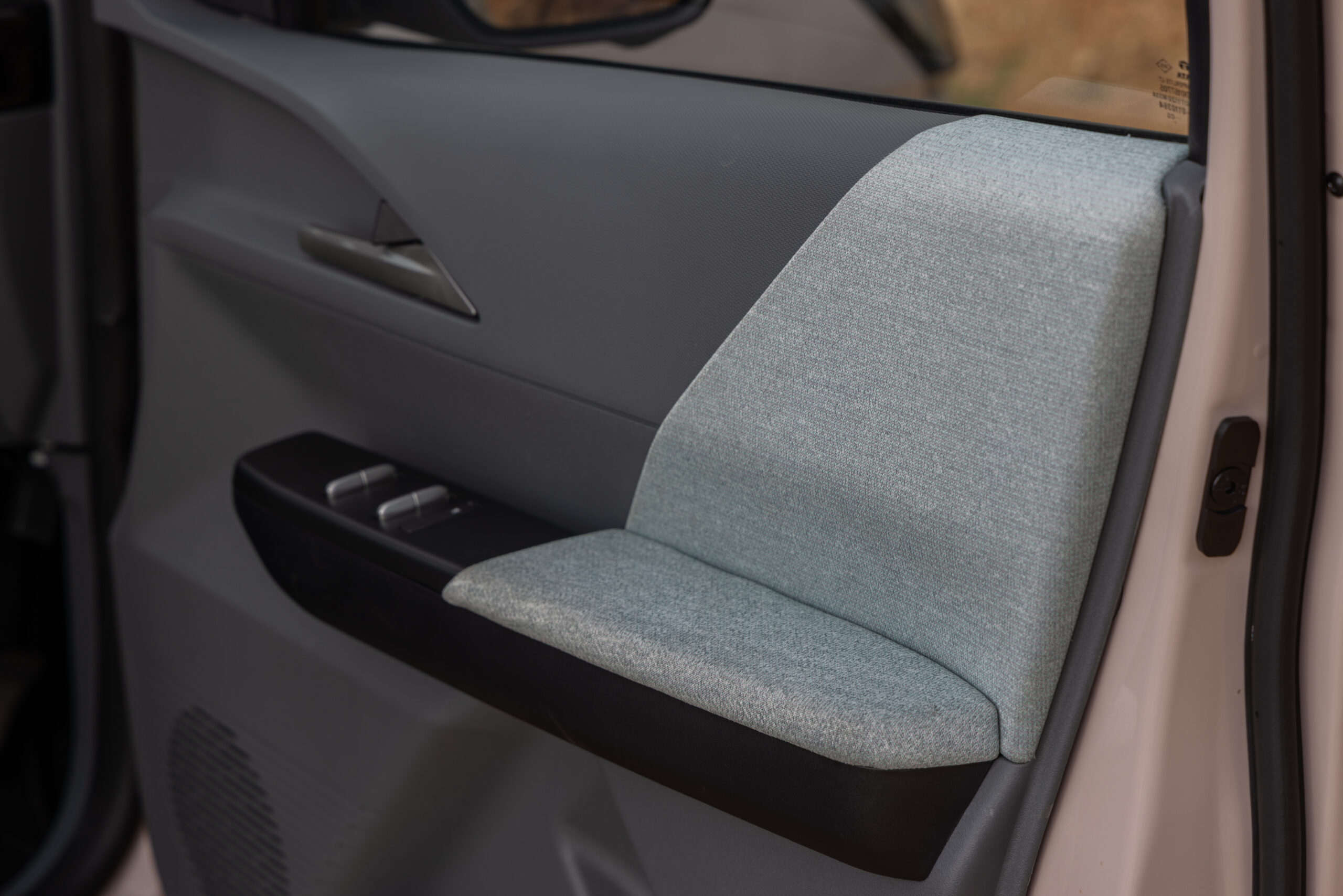
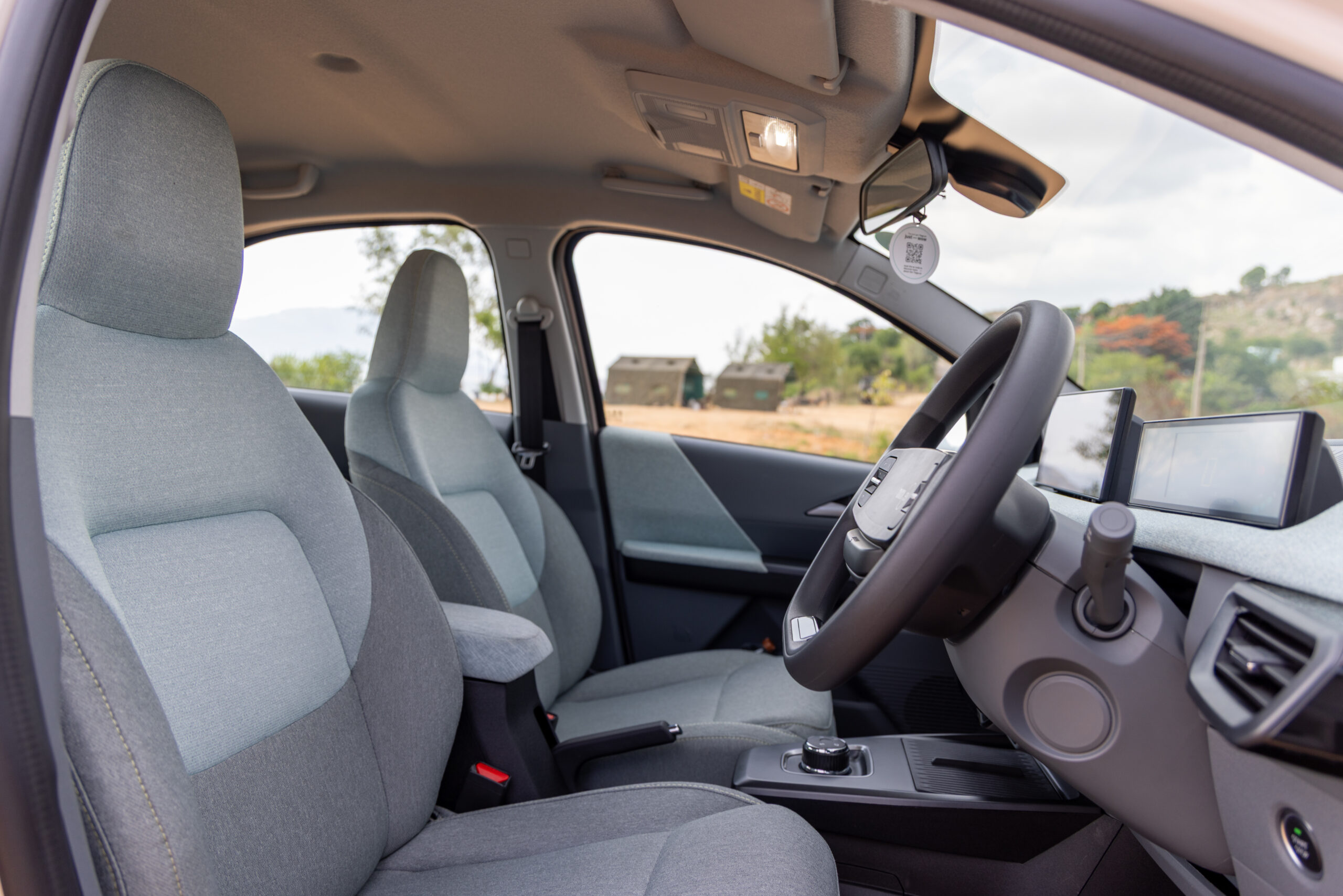
The outgoing Tiago EV had a cabin that slightly undercut the forward-thinking nature of the product. You’d sit in this progressive, affordable electric car and then immediately be reminded that corners had been cut. The 2026 car has addressed that. The dashboard has been completely redesigned: a dual-tone layout now, with a free-standing 10.25-inch touchscreen and a new TFT instrument cluster that also supports Bluetooth. New door pads, a front centre armrest, a gloss-black centre console, and a rotary drive selector that works better than the setup it replaces. The two-spoke steering wheel is carried over but gets a new Tata.ev logo, and the gloss piano black trim has been replaced with a matte grey that looks considerably better. The AC vents have been repositioned too, angled more directly toward the front passengers. A small thing, but one you notice on a hot day.
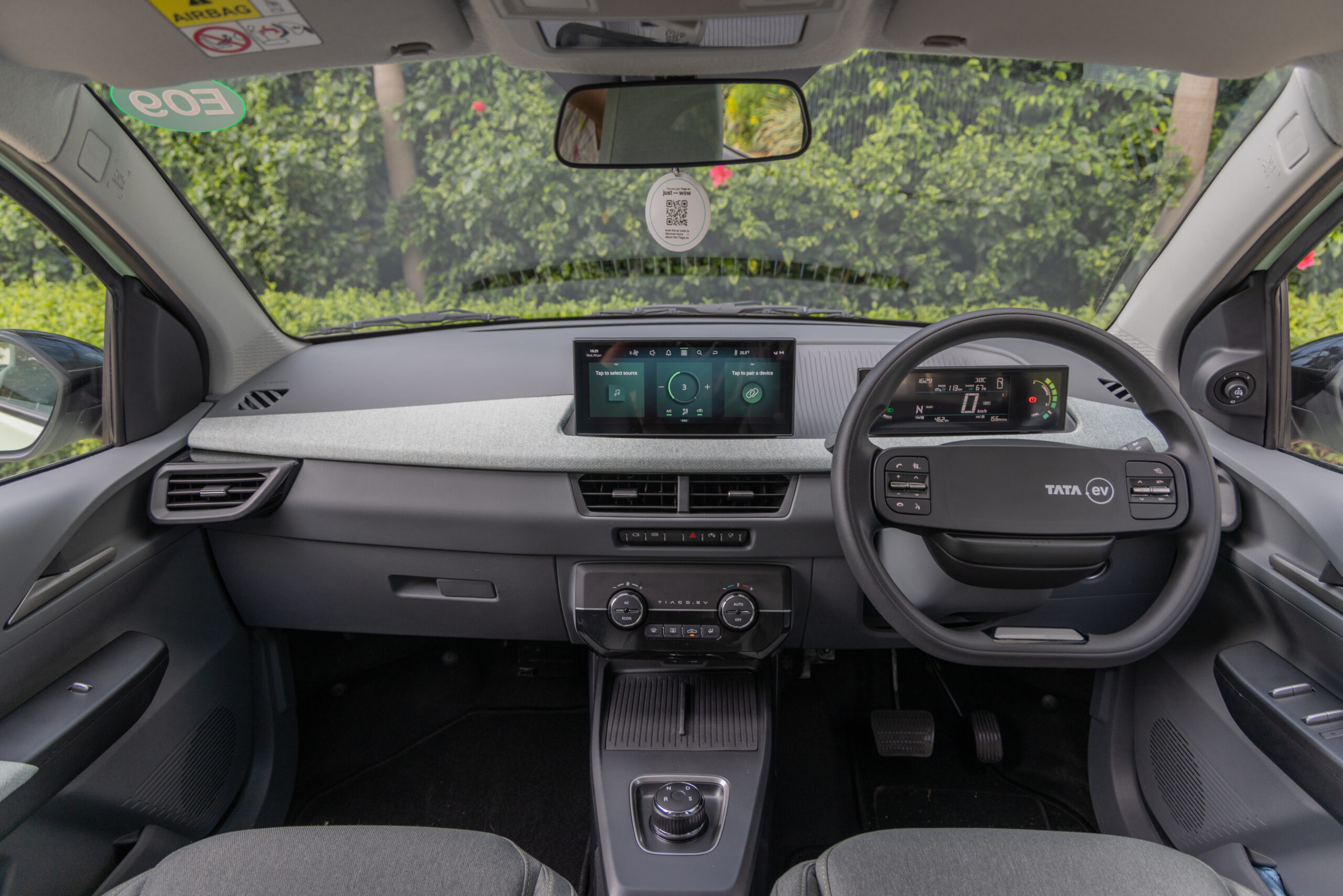
The materials tell a story of considered choices within real constraints. This is not a premium car, and Tata isn’t trying to convince you otherwise. But the grey fabric upholstery, the texture variety across the cabin, the way different materials have been placed. It shows thought. I’ve always felt fabric seats are the right call for our climate anyway, and the ones here are among the better options at this price.
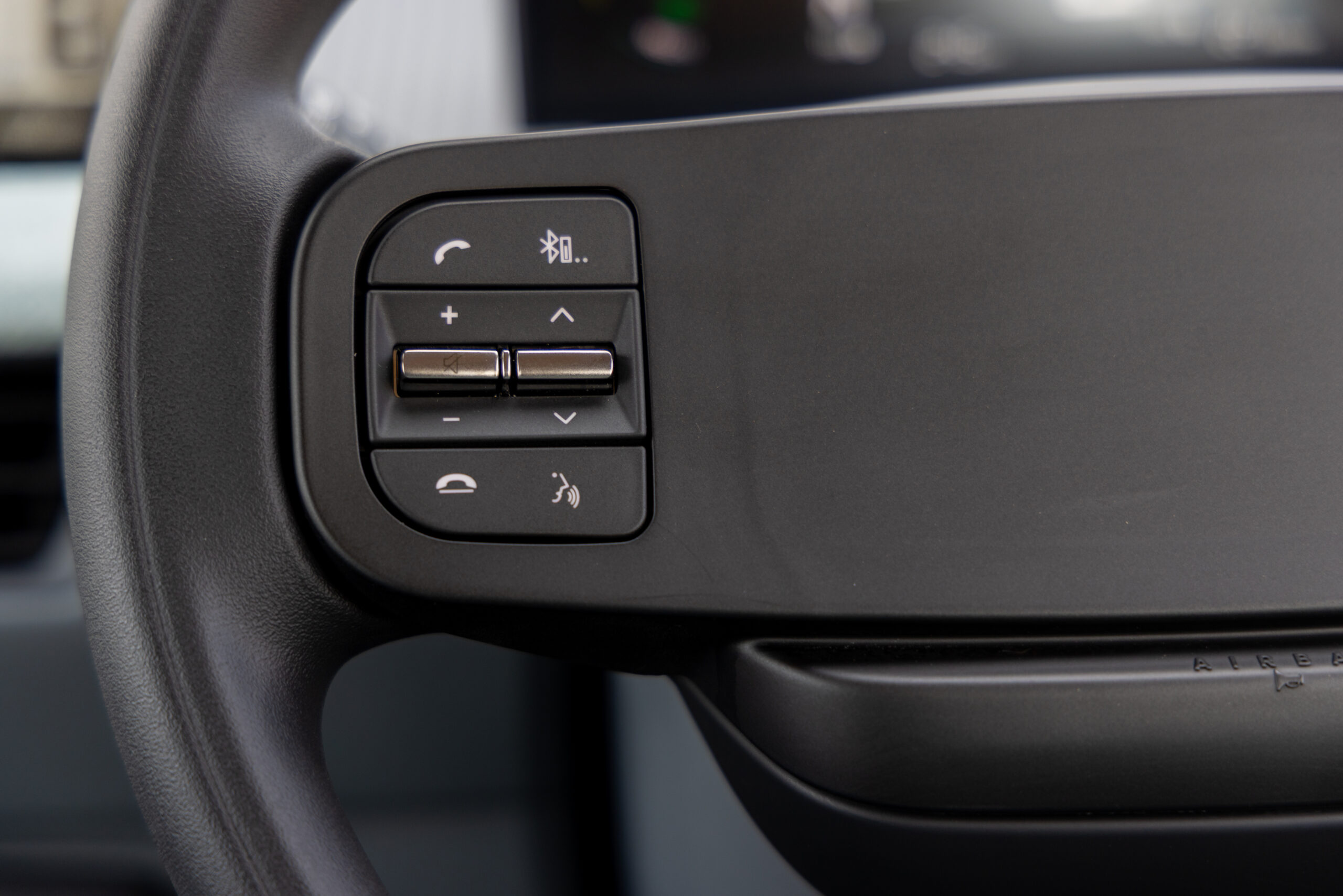
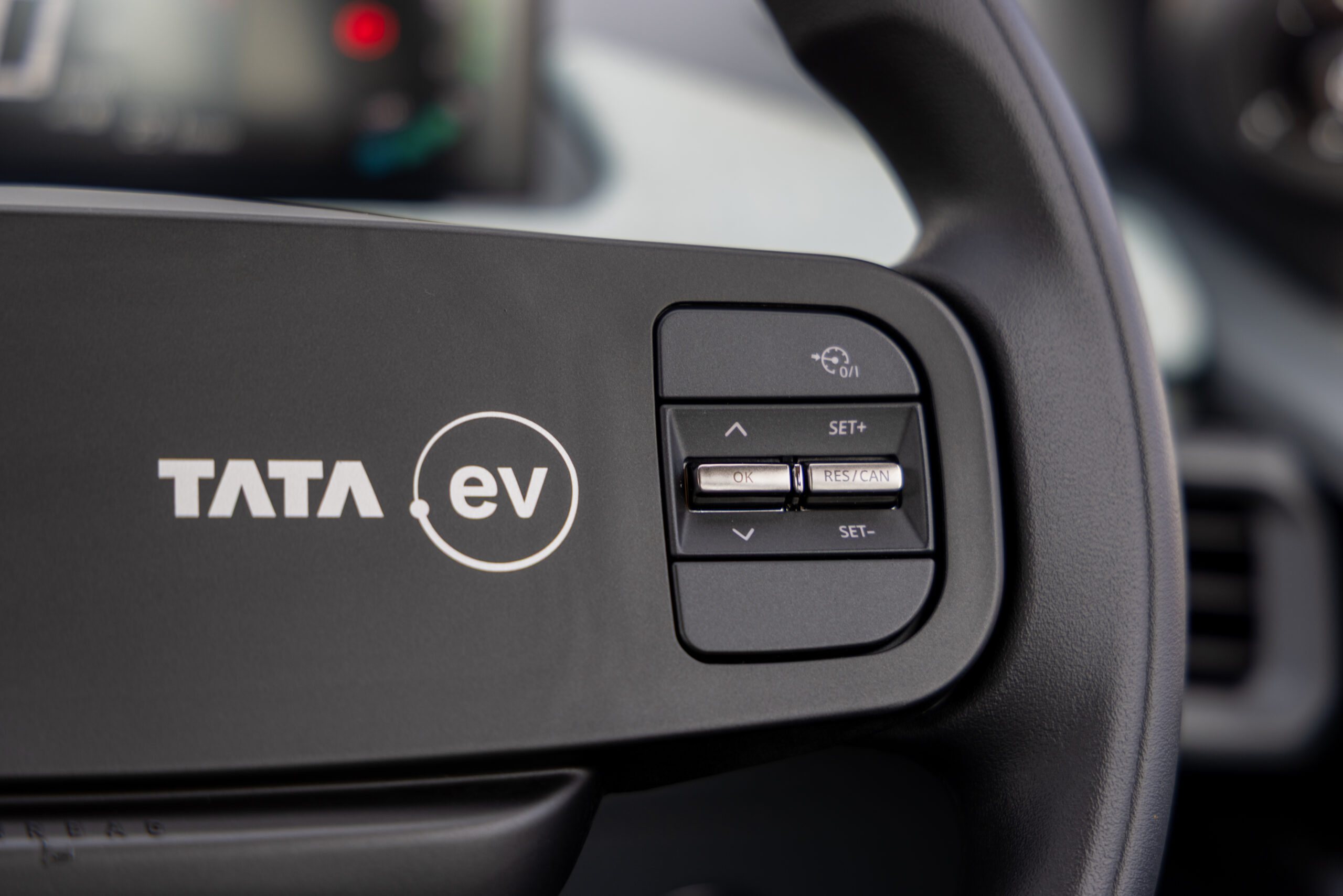
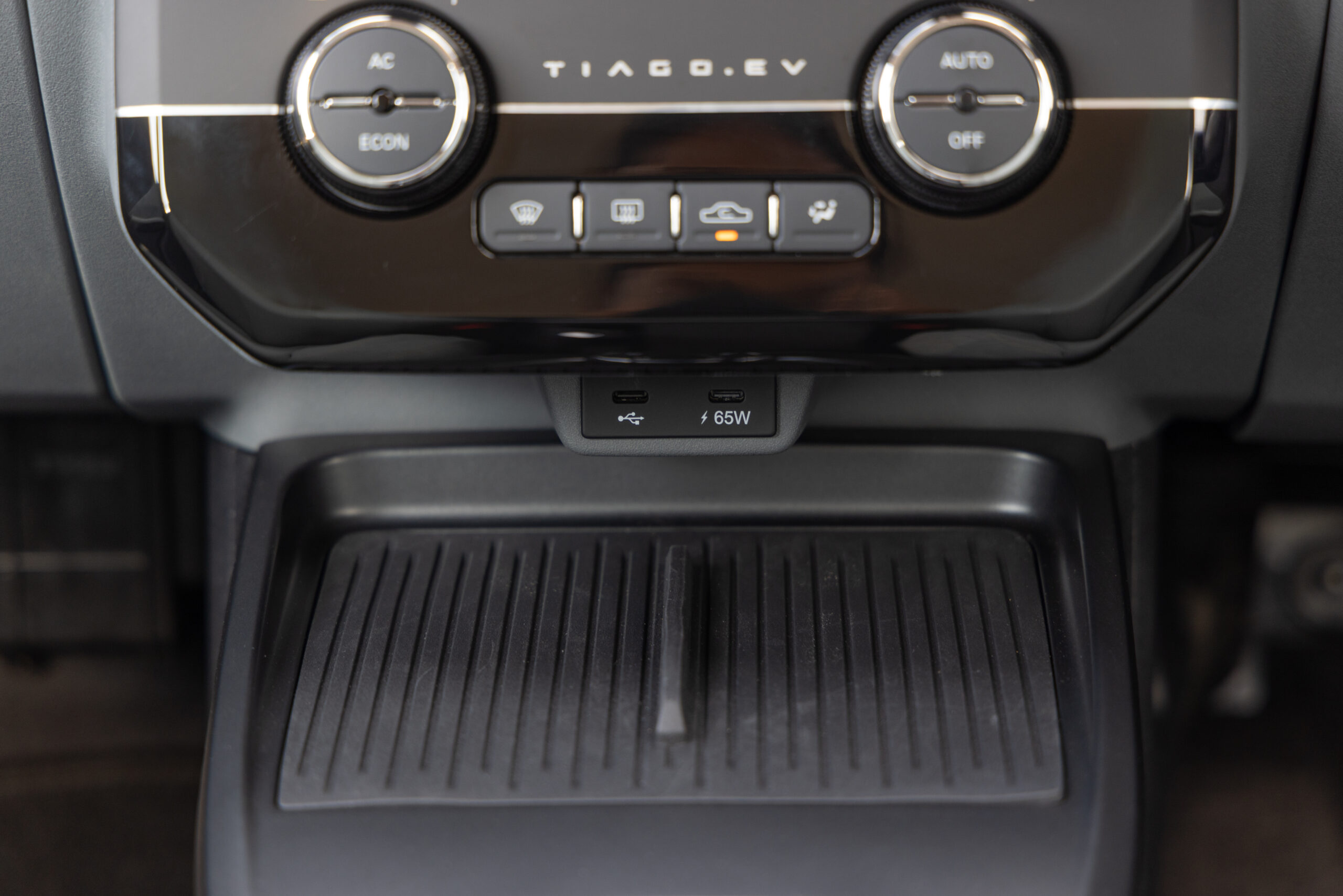
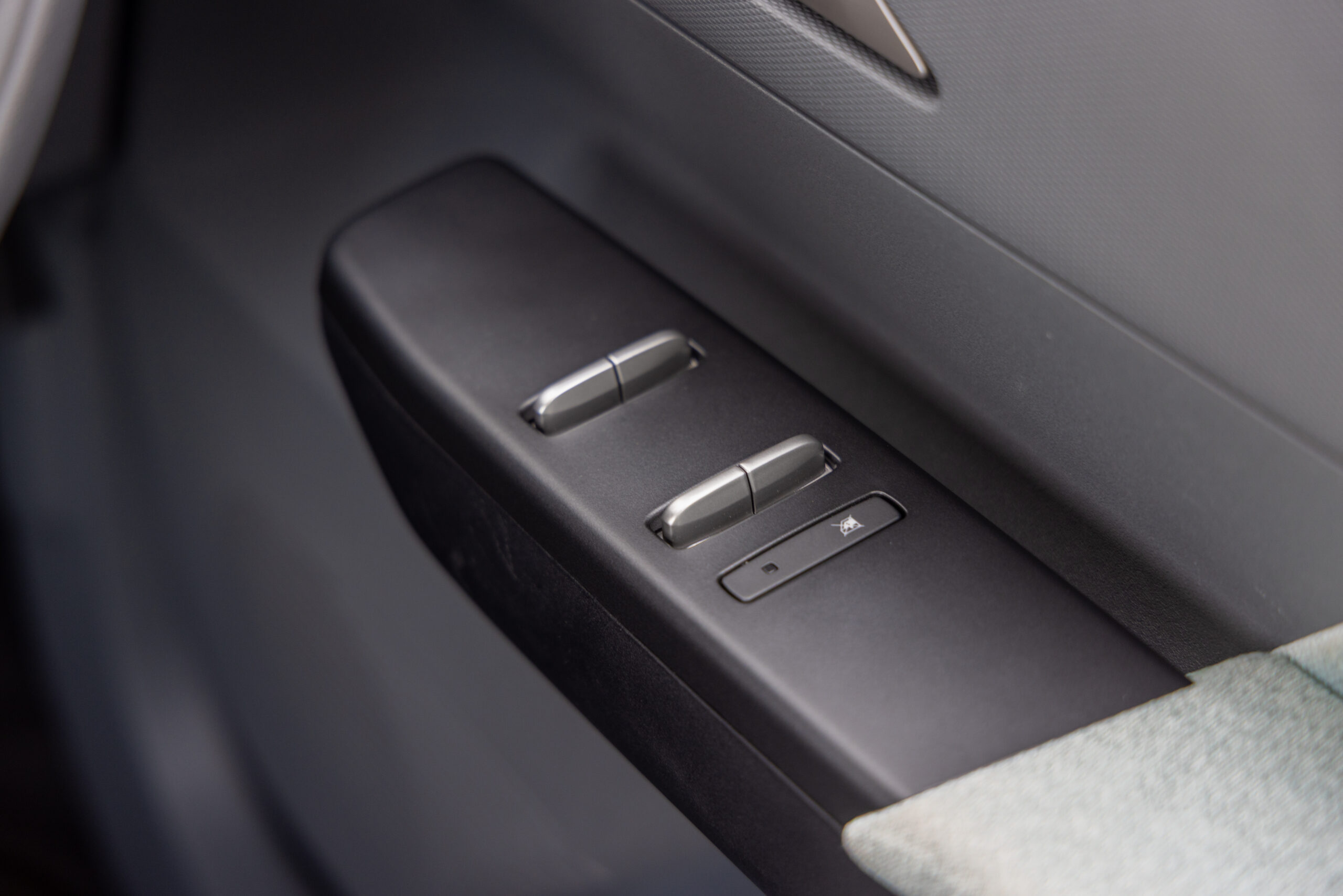
Tata has gone reasonably deep on features. Wireless CarPlay and Android Auto, automatic climate control, connected car tech with over forty functions, cruise control, rear AC vents, a cooled glove box, auto-folding ORVMs, a height-adjustable driver’s seat. Safety is where the biggest jump has happened: six airbags are now standard across the range, up from two on the outgoing car. That alone is a significant step. The 360-degree camera with multiple viewing modes, a blind-view monitor, ESP with traction control, hill-hold assist and TPMS complete a package that is, genuinely, not what you’d expect at this price.
On the Road
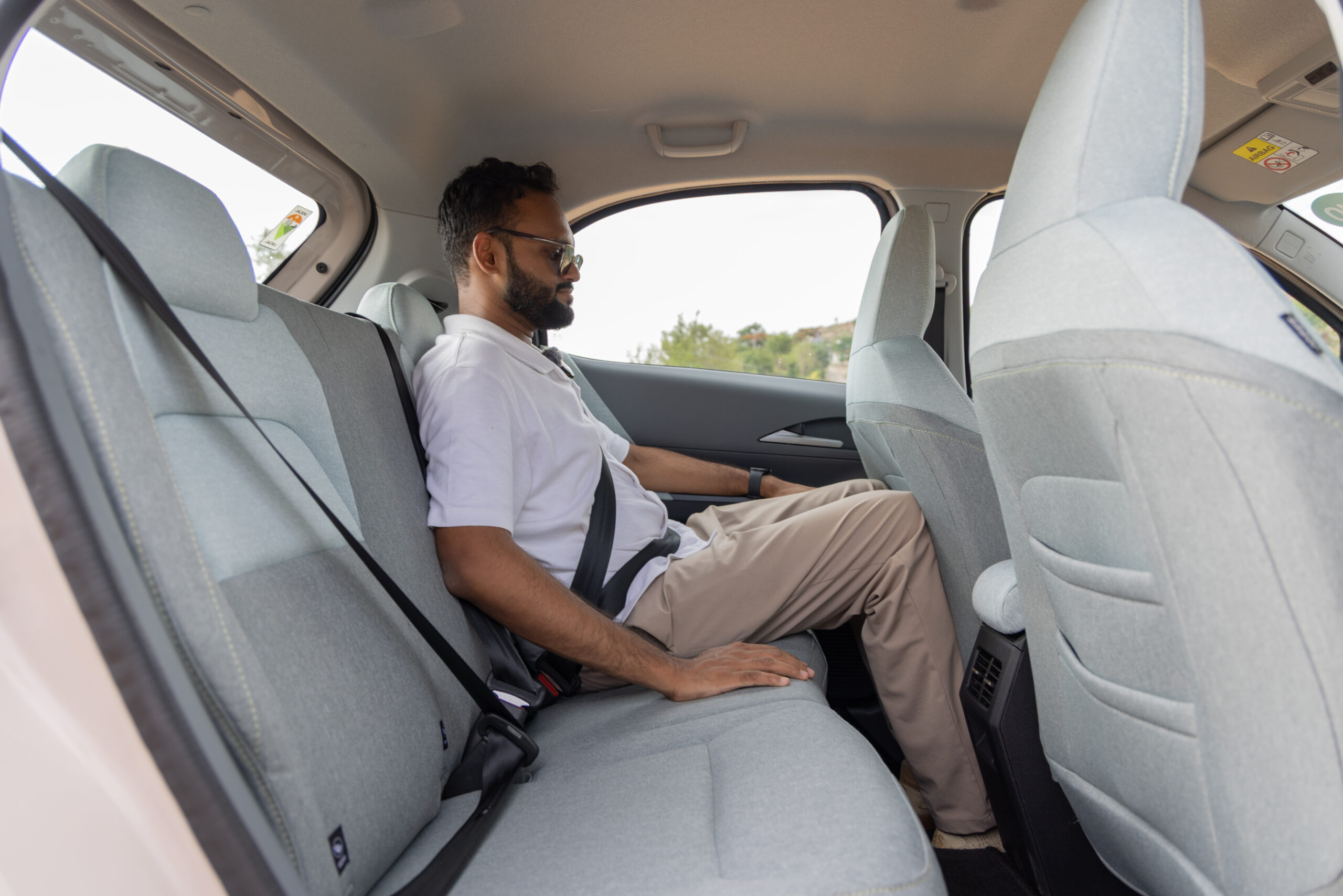
The Tiago EV is not a different kind of car from the Tiago. It is the same car, done better. The strengths that made the ICE version work, the ride quality that quietly outclasses the segment, the cabin efficiency, the sense that the money has been spent in the right places, all of that carries over. The suspension on the EV does feel a little softer than the ICE car, which means it is even more absorbent over broken road and potholes, but there is a noticeable increase in body roll through corners. For most buyers in this segment that is a reasonable trade. Comfort on the daily commute will matter more than composure on a sweeping bend. The electric powertrain removes a few other compromises and adds a layer of smoothness to everything else. There is no three-cylinder grumble, no gear to hunt for in traffic, no hesitation when you need to move. It is simply more relaxed to operate.
Two battery packs: a 19.2kWh unit making 61 bhp and 110Nm, and a 24kWh making 75 bhp and 114Nm. On paper, MIDC range is 226km and 285km respectively. In the real world, and Tata’s own C75 figures are the ones to plan around, that becomes 160 to 170km on the smaller pack and 205 to 215km on the larger. The 19.2kWh is, plainly, a city car. The 24kWh has enough range for most daily use with some planning on longer runs. Know which one describes your life before you decide.
Charging has improved significantly: forty percent faster than before, with 100km of range added in 18 minutes, and both packs from ten to eighty percent in 35 minutes on a 30kW DC fast charger. The 0-60 time on the 24kWh is 5.7 seconds, which is quick enough to be genuinely useful in city traffic without being theatrical about it.
The one thing worth flagging separately is the lifetime, unlimited-kilometre battery warranty that Tata is now offering on the 24kWh variant for the first registered owner. Battery longevity has been the anxiety that sits behind most EV purchase hesitations, even when people don’t articulate it that way. A lifetime warranty removes that concern entirely. The 19.2kWh continues with an eight-year, 1.6 lakh km warranty, which is still significantly better than what most competitors offer.
The Verdict
If the entry price of Rs 6.99 lakh is still too much upfront, Tata’s Battery-as-a-Service scheme brings the car down to Rs 4.69 lakh, with the battery charged at Rs 2.6 per kilometre driven. That is the same model they use on the Punch EV: reduce the barrier, let usage pay for the battery over time. The top variant is Rs 9.99 lakh, which is considerably below where the outgoing top trim sat.
The 2026 Tiago EV is a better car in almost every way that matters: the interior, the safety spec, the charging speed. And it costs less than the car it replaces. That combination is unusual enough to deserve attention. For a first car, for a second car, for a city buyer who has been waiting for an EV that makes straightforward financial sense, the argument here is as strong as it has ever been. The range limits what it is. But within those limits, it is very good at being exactly what it is.