
The ninth-generation Hilux keeps the engine, the chassis and the leaf-sprung rear that made its reputation, and modernises everything else. For the…
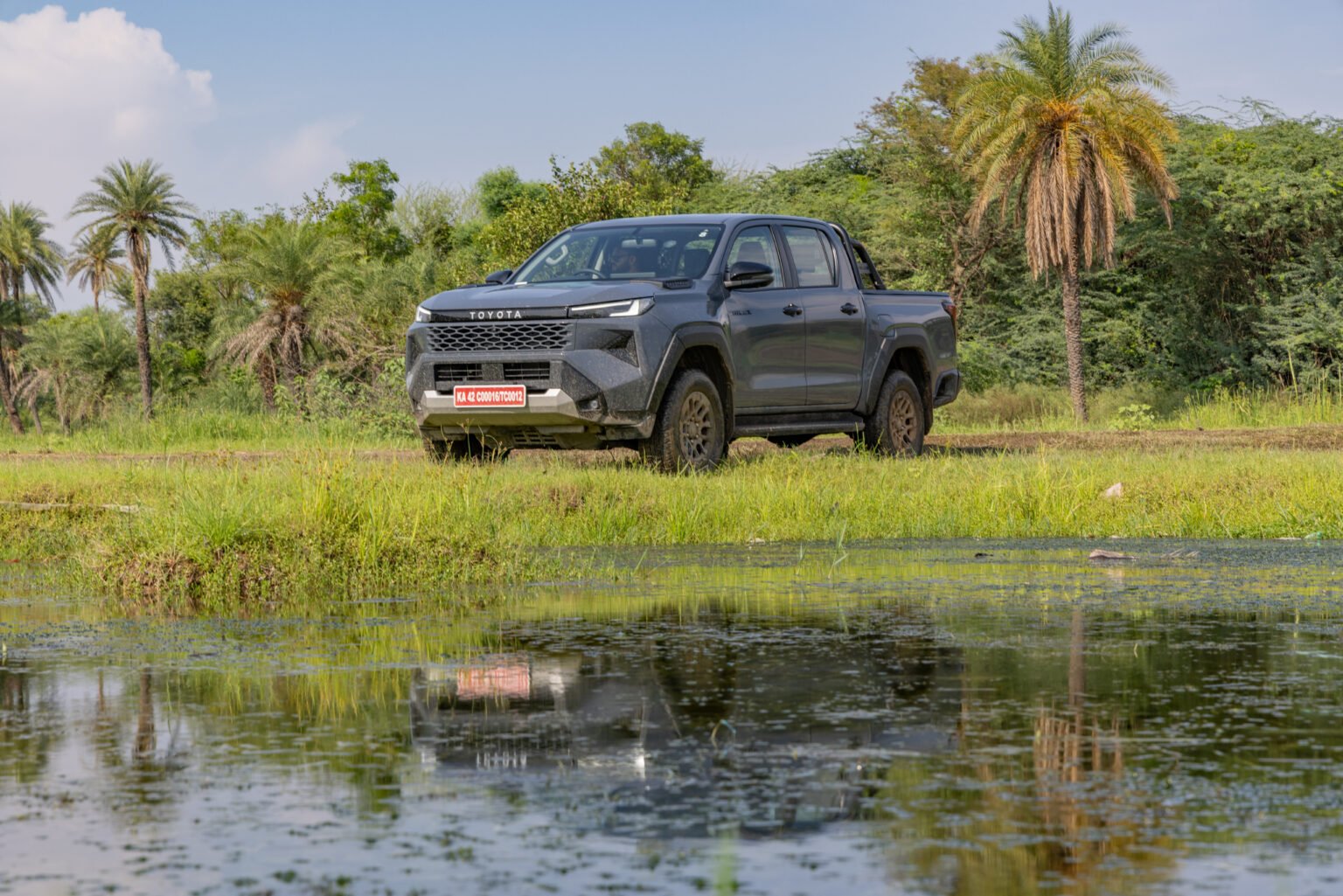
The ninth-generation Hilux keeps the engine, the chassis and the leaf-sprung rear that made its reputation, and modernises everything else. For the first time, that makes it a pickup worth wanting rather than just respecting.
I have never wanted a Hilux. Respected it, certainly. Anyone who has watched one shrug off a decade of abuse without complaint understands why this badge means what it does in India. But want is a different thing, and the old Hilux never got there for me. It felt dated inside in a way that had stopped being charming, and I care about the place I sit in for hours at a time. The ninth-generation car changes that, and it does so by being unusually disciplined about what it left alone. The engine is untouched, and so is the leaf-sprung rear end, which still behaves exactly as leaf springs do, for better and for worse.
THE OUTSIDE
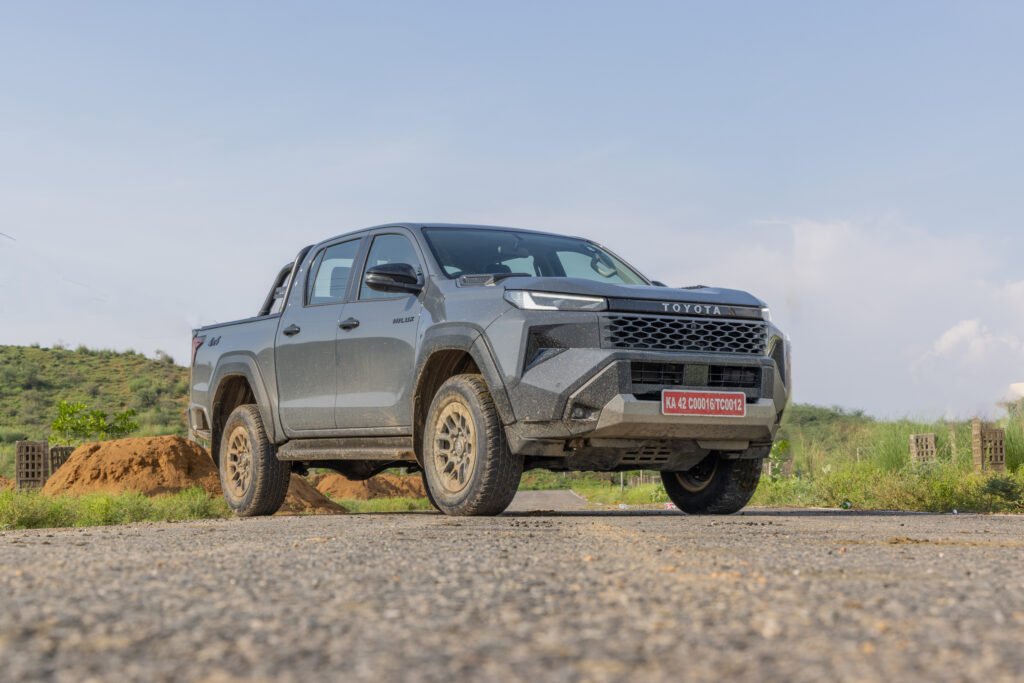
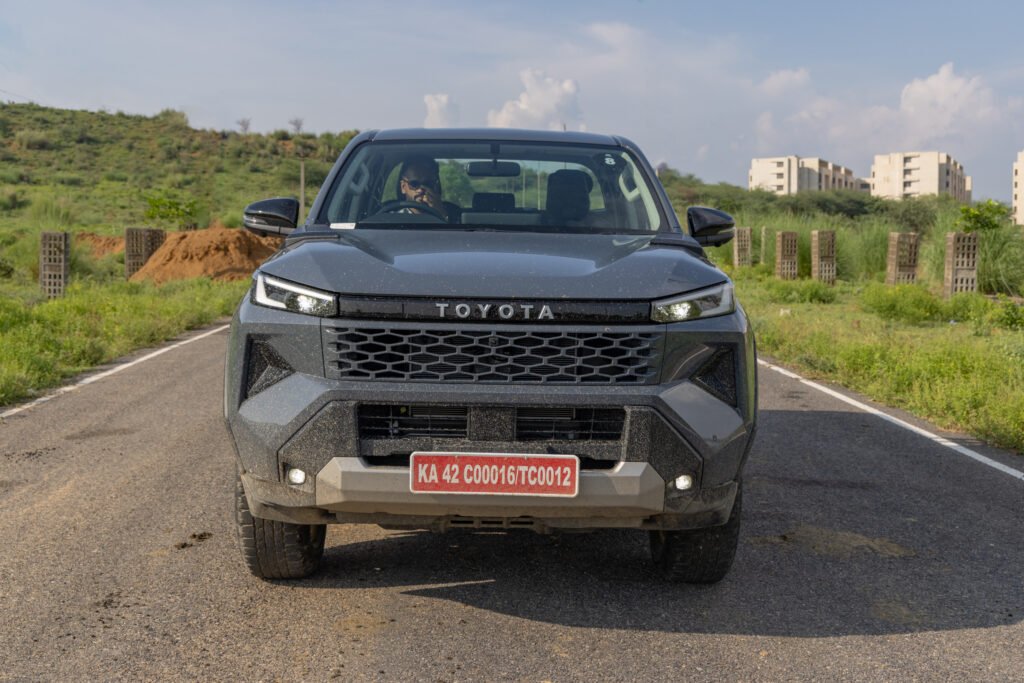
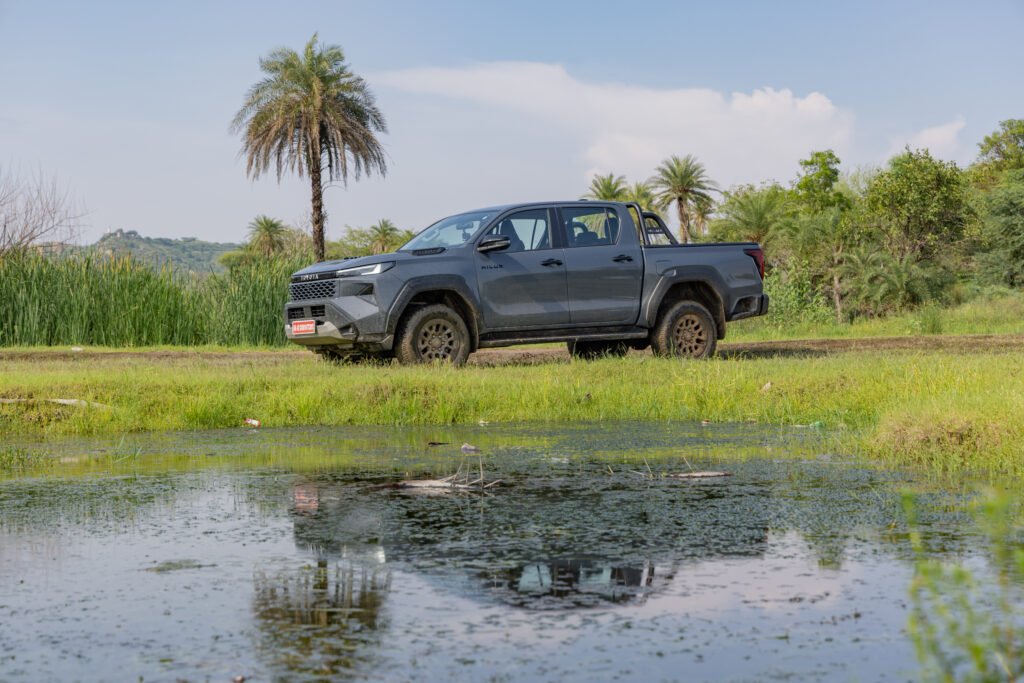
The nose stands more upright now, and instead of the familiar badge, the Toyota name is spelt out across the grille. It is a small thing that I expected to find gimmicky and did not. The headlamps are slim LED units with integrated running lamps, and the grille has a honeycomb pattern that gives the front some texture rather than the flat slab we had before. Lower down, there is proper aggression, deep creases, wide intakes, a silver skid plate and a pair of LED fog lamps.
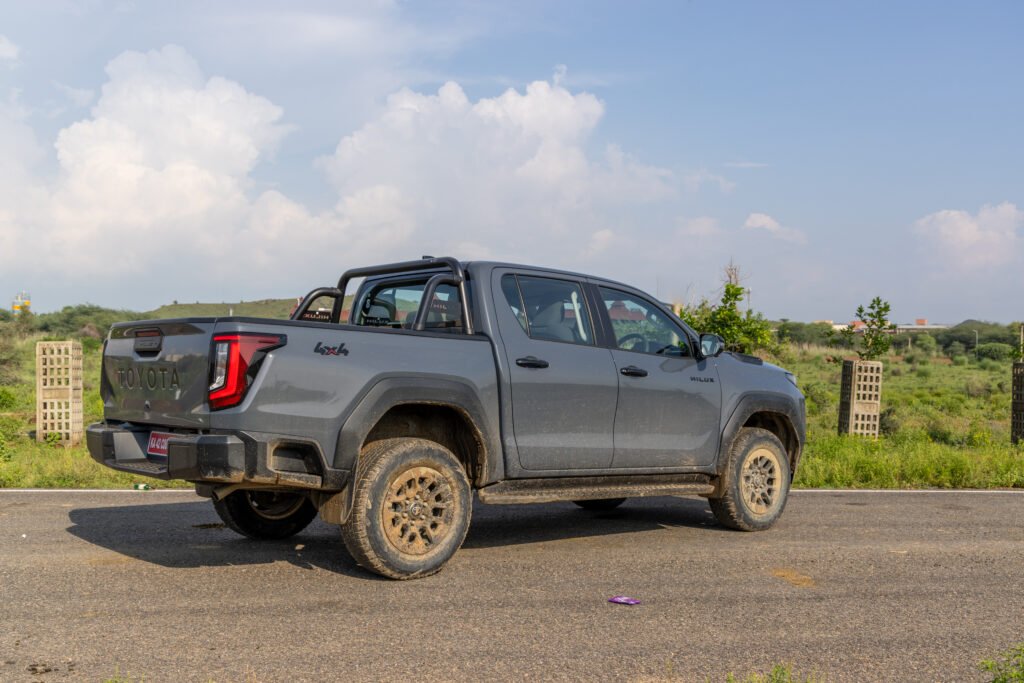
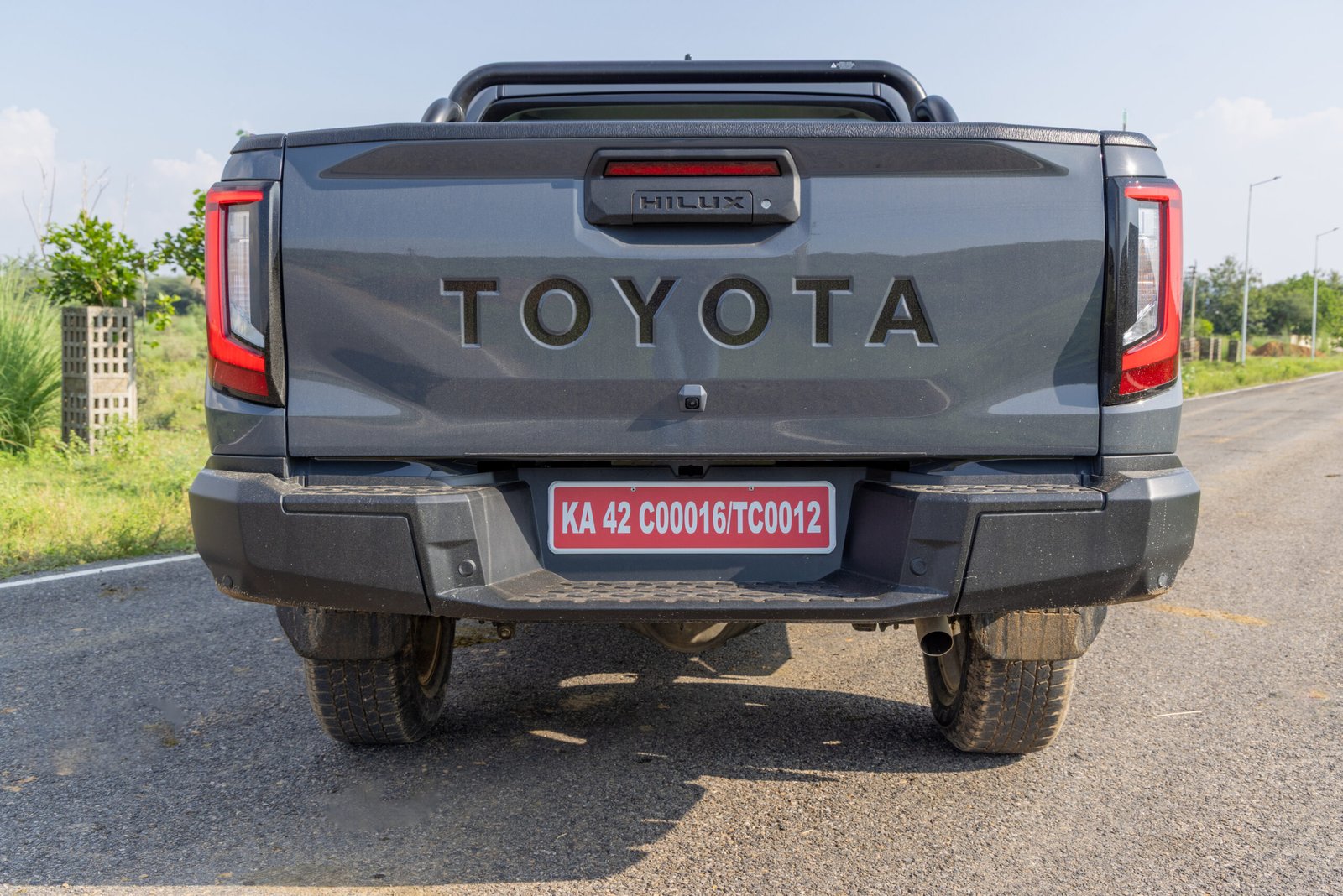
The rest is more familiar. Black cladding over the arches, roll bars behind the cabin, seventeen-inch alloys and a footboard you will use every time you climb in. At the rear, the tail-lamps are now stacked vertically with a C-shaped signature, and the name is spelt out across the tailgate. The step in the rear bumper carries over from before, but what is new are the steps built into the sides of the load bay, which make reaching over into the back far less of a chore than it used to be.
My test car came in the ash grey, which I ended up liking more than I expected, though it is the Sulphur yellow that really got me. Yellow on a pickup should be ridiculous. It absolutely is not. It suits this shape better than any of the greys will, and it is the one I would order. Six colours are on offer in total.
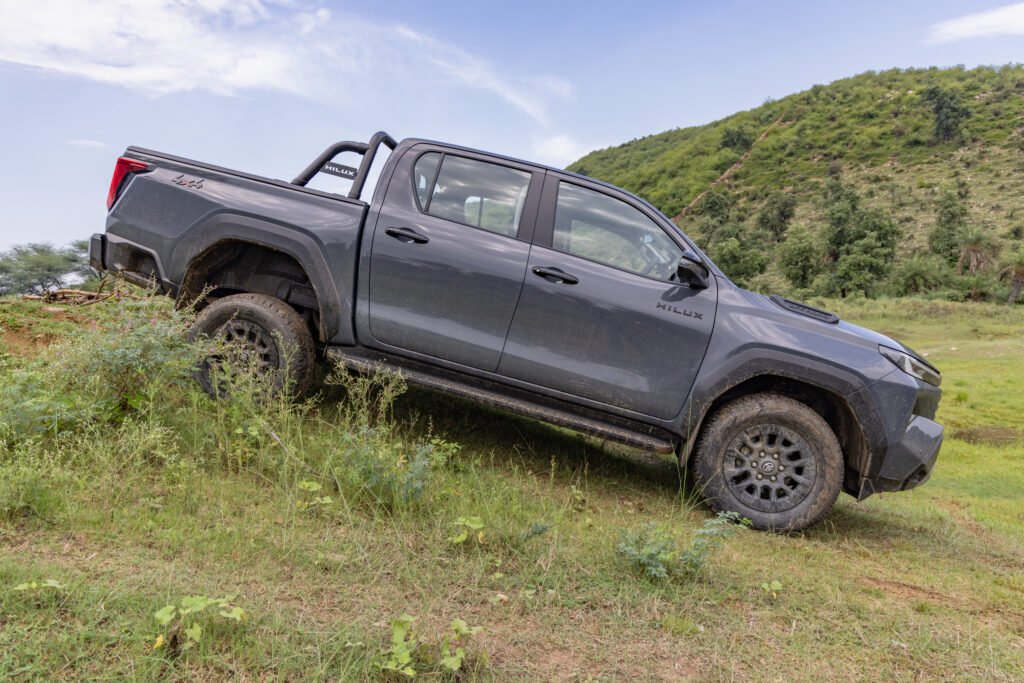
What has not changed are the dimensions. This is essentially the same footprint as before, on the same ladder-frame IMV platform, in the same double-cab body. Toyota knew exactly which parts of this vehicle it had no business touching.
THE INSIDE
This is the transformation. The old Hilux and the old Fortuner had cabins that felt a full decade behind the rest of the vehicle. You would sit in something costing north of thirty lakh and feel short-changed by the dashboard staring back at you. That is gone. There is an entirely new dash here, a 12.3-inch touchscreen, and a new three-spoke steering wheel with the Toyota lettermark on it. The whole thing finally feels like it belongs to this decade.
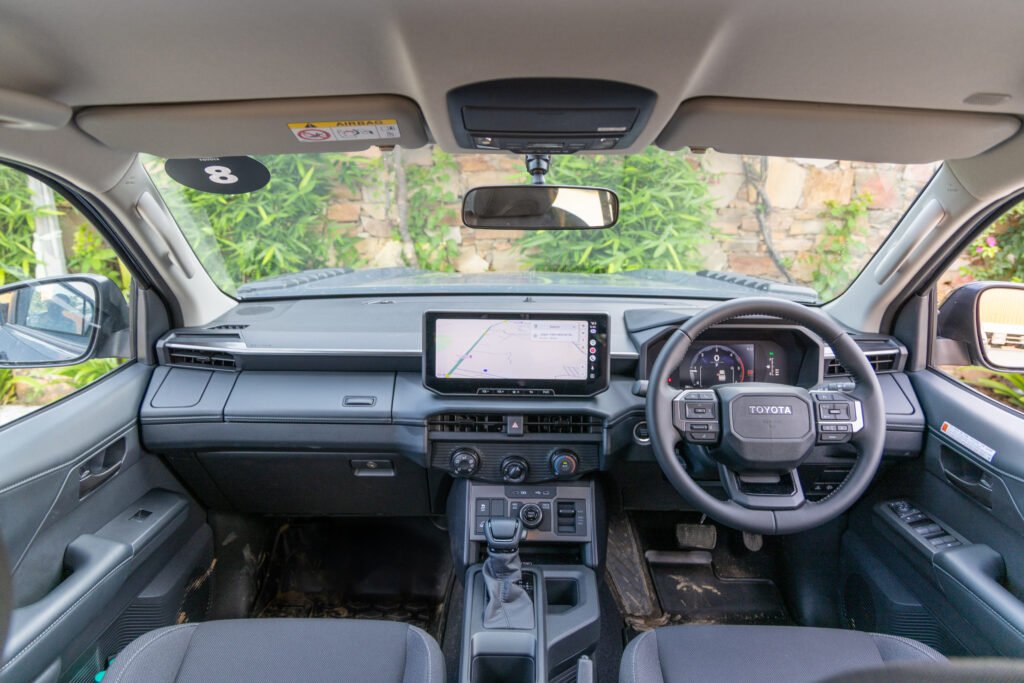
Critically, it has done that without surrendering the construction quality this badge is built on. Everything feels screwed together to outlast me. There is leatherette where your arms fall and hard plastic lower down, and in a vehicle designed to be used rather than admired, I have no problem with that at all.
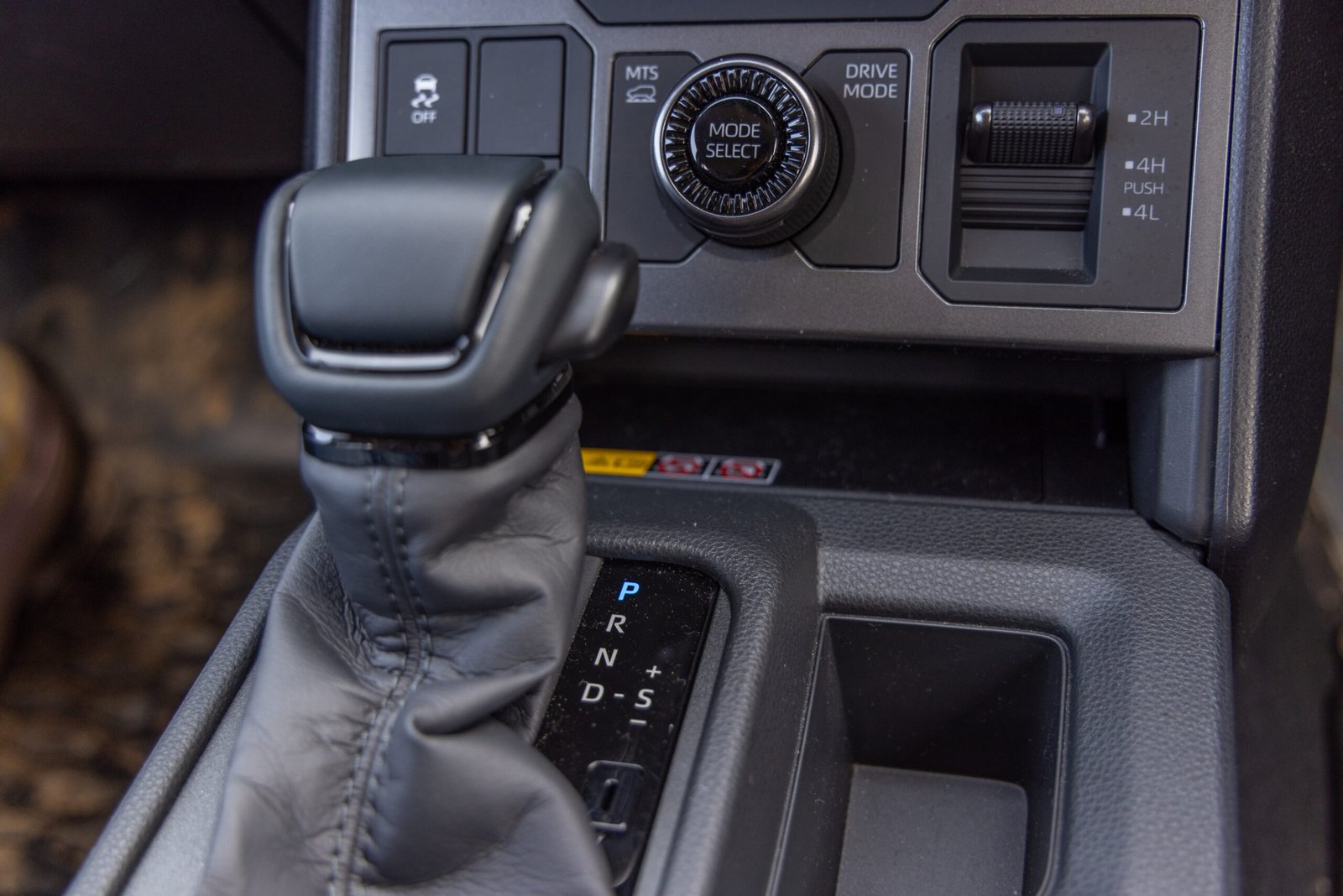
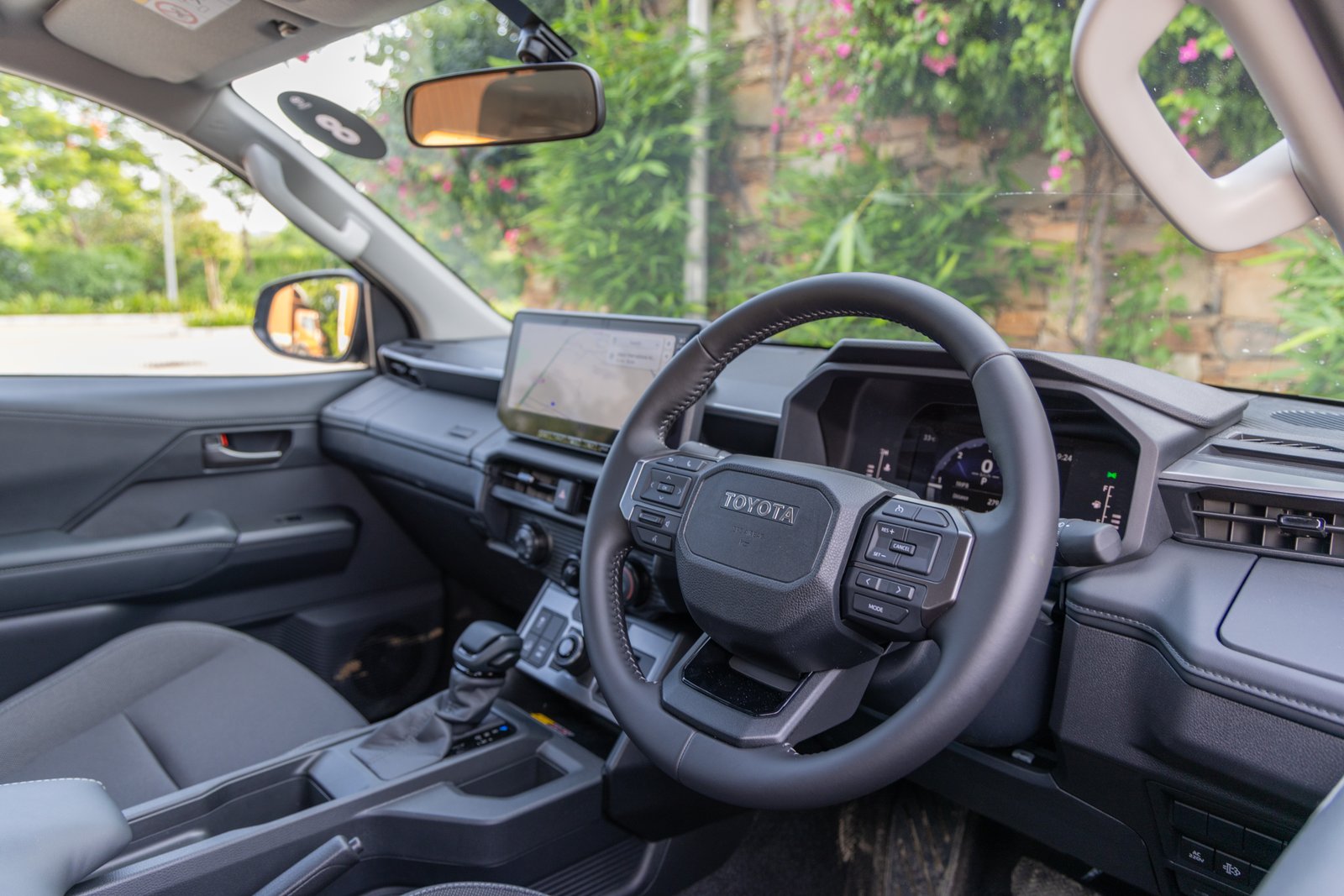
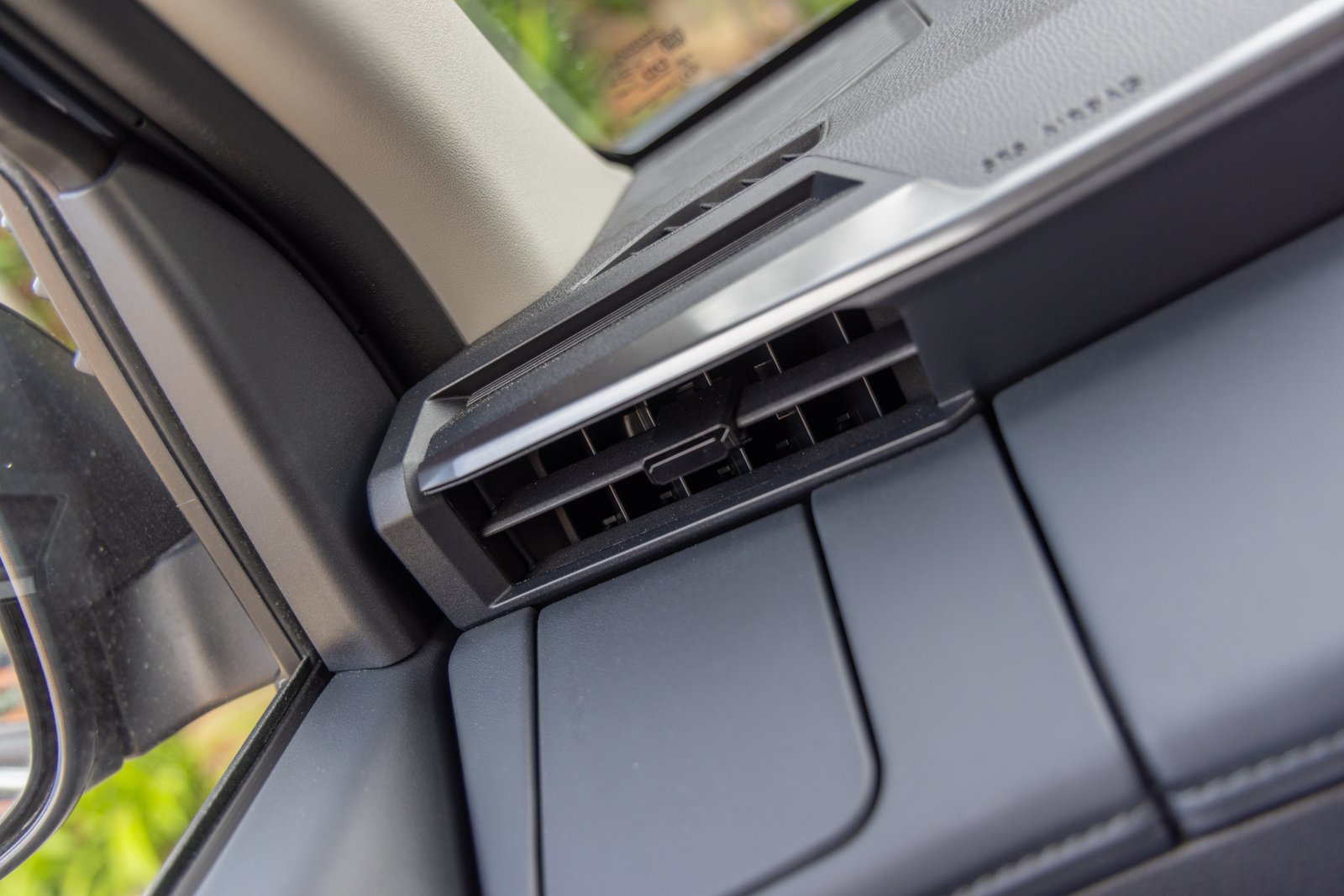
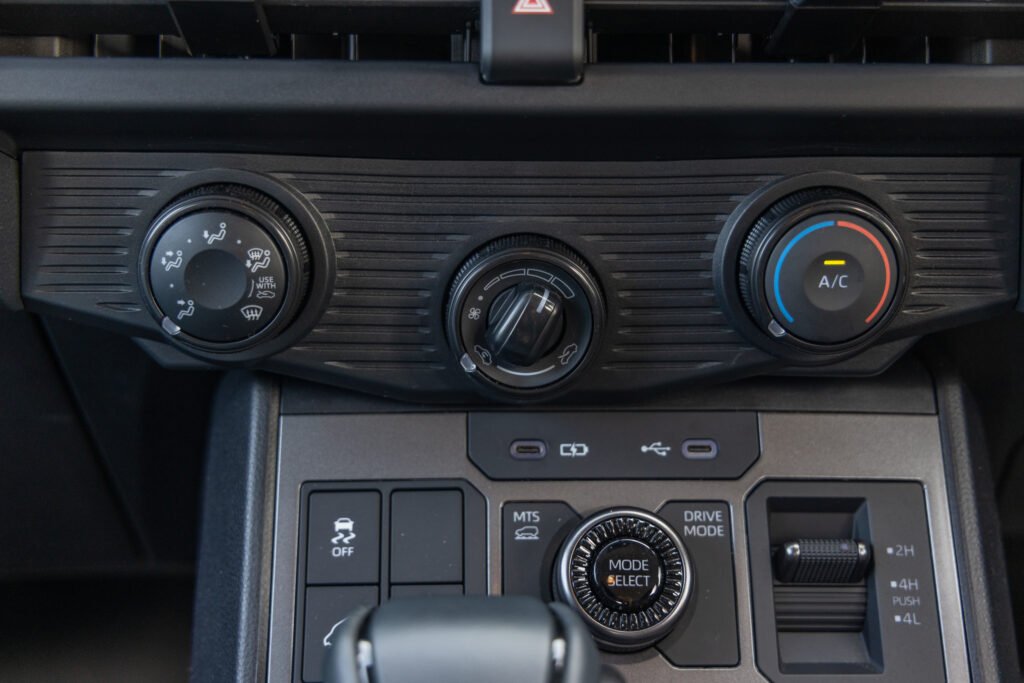
Mostly I am relieved. For years we watched other markets get modern, contemporary Toyotas while India got the version that felt left behind. This is finally the good stuff. And the thing I appreciate most in here is the sheer number of physical controls. Real buttons and real knobs for the functions you reach for constantly. On a trail, with the vehicle moving, being able to find them without looking matters a great deal.
The equipment list covers what you need. Wireless Apple CarPlay and Android Auto, a wireless charging pad, cruise control, connected car tech, an eight-speaker system, a cabin air filter, an armrest with cupholders for those in the back, and a 360-degree camera. Three drive modes: Eco, Normal and Sport. On safety, seven airbags, stability control, ABS with brake assist, parking sensors at both ends, a tyre-pressure monitor and Isofix mounts.
WHAT IS MISSING
I have to be straight about this, because the India-spec car does not get everything the global one does. There is no ADAS. The front seats are not ventilated. Instead of the larger digital cluster, we get a smaller seven-inch display. And the air conditioning is manual rather than dual-zone automatic. That is four things off the list, and I am not going to pretend they are trivial.
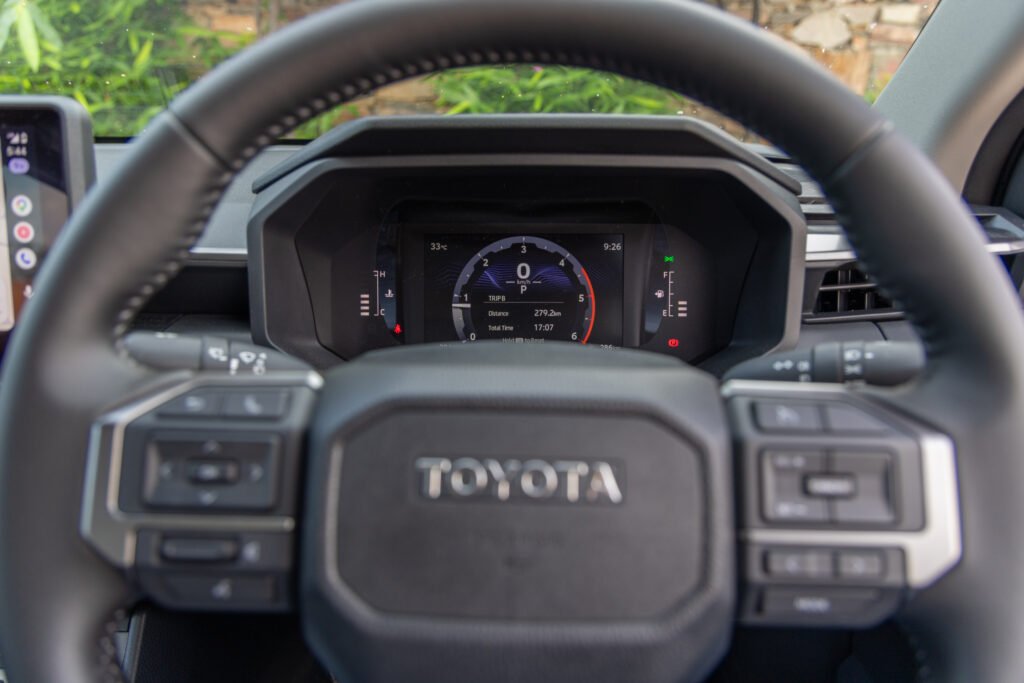
My honest read, though, is that two of them barely register. ADAS on a body-on-frame pickup that will spend its life on broken roads is, in my experience, more likely to nag you than assist you. I have never needed a second climate zone in a cabin this size. The smaller cluster is a shame but not a dealbreaker, because the big screen beside it does the heavy lifting. The one I would genuinely have fought for is ventilated seats. In an Indian summer, in a cabin this large with this much glass, they make a real difference to how you feel after a few hours.
ON THE ROAD, AND OFF IT
The powertrain is untouched, and I am glad. The 2.8-litre four-cylinder diesel still makes 204hp and 500Nm. What has changed is the gearbox situation. The six-speed torque converter automatic is now the only choice; the manual has been dropped, and Toyota has added a rear-wheel-drive variant below the four-wheel-drive cars. Unlike the Fortuner, there is no mild-hybrid assistance.
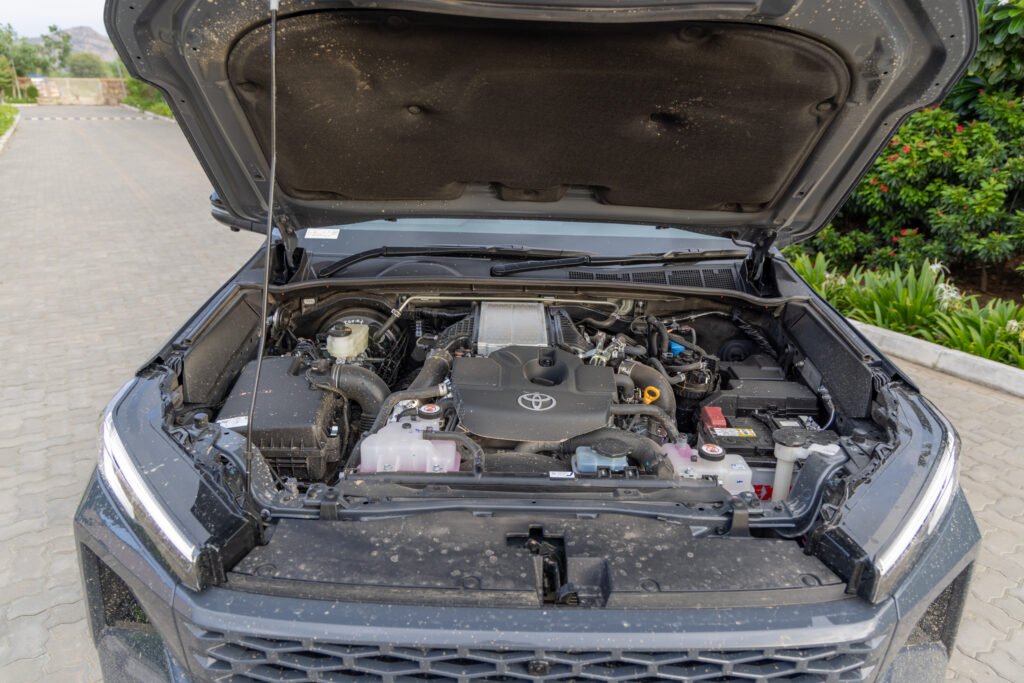
On the trail outside Jaipur, that engine made its case immediately. What you have is an endless supply of torque, delivered so low and so calmly that off-roading becomes almost undramatic. You are not managing revs or hunting for momentum. You lean gently on the throttle, and the Hilux walks over things. The four-wheel-drive cars come properly equipped for it too, with a low-range transfer case, an electronic differential lock, terrain modes, downhill assist, traction control and an auto limited-slip differential. Out there, the 360-degree camera stops being a parking aid and becomes a tool for placing your wheels.
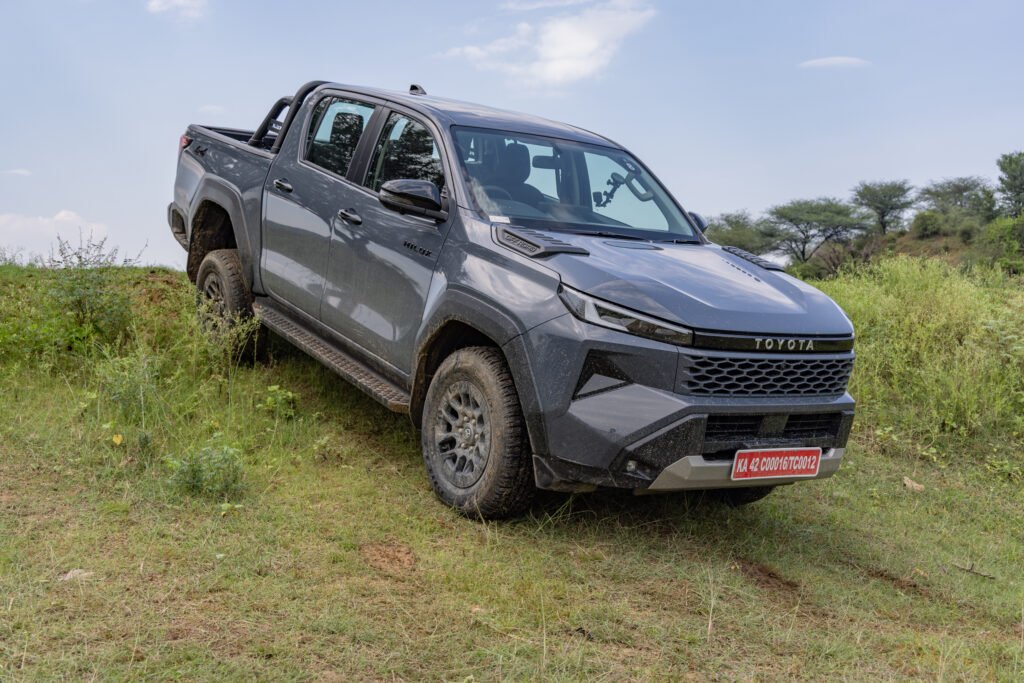
The ride, though, deserves an honest caveat. At low speeds, over smaller bumps and surface imperfections, and with nothing in the back, the Hilux does bounce about a fair bit. There is a characteristic shimmy to it that Toyota’s claimed chassis work has not entirely dialled out, and you feel it most in exactly the situation most owners will spend a lot of time in, which is pottering around unladen. Get onto genuinely challenging terrain, though, and the same suspension glides over everything effortlessly. Both behaviours come from the same source. Leaf springs at the rear are calibrated with a load in mind, so they need weight over them to settle, and they will always feel busiest when the bed is empty. It is the trade you accept for a vehicle built to carry things, and it is worth knowing before you buy rather than after.
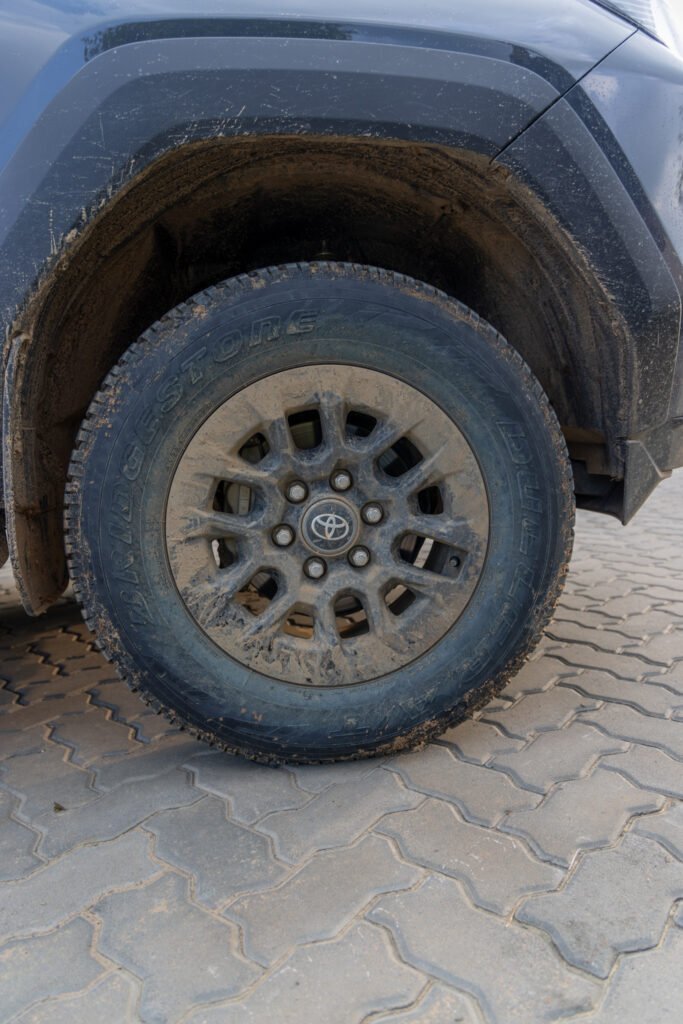
The decision I want to credit most, though, is the wheels. Toyota has kept them at seventeen inches, which means a tall sidewall with real cushioning in it. Leaf springs and low-profile tyres would have been genuinely punishing on our roads. That extra rubber does quiet, thankless work every single day, and the ride is significantly better for it than it has any right to be.
THE VERDICT
Prices run from Rs 31.99 lakh for the rear-drive automatic, through Rs 33.69 lakh for the four-wheel-drive version of that trim, to Rs 36.69 lakh for the top VX, all ex-showroom. The entry price has climbed noticeably over the old car. But at the top of the range, where the vehicle is new inside and out, it is only around seventy thousand rupees more than before. For an entirely new generation, that is restrained, and it explains the missing equipment.
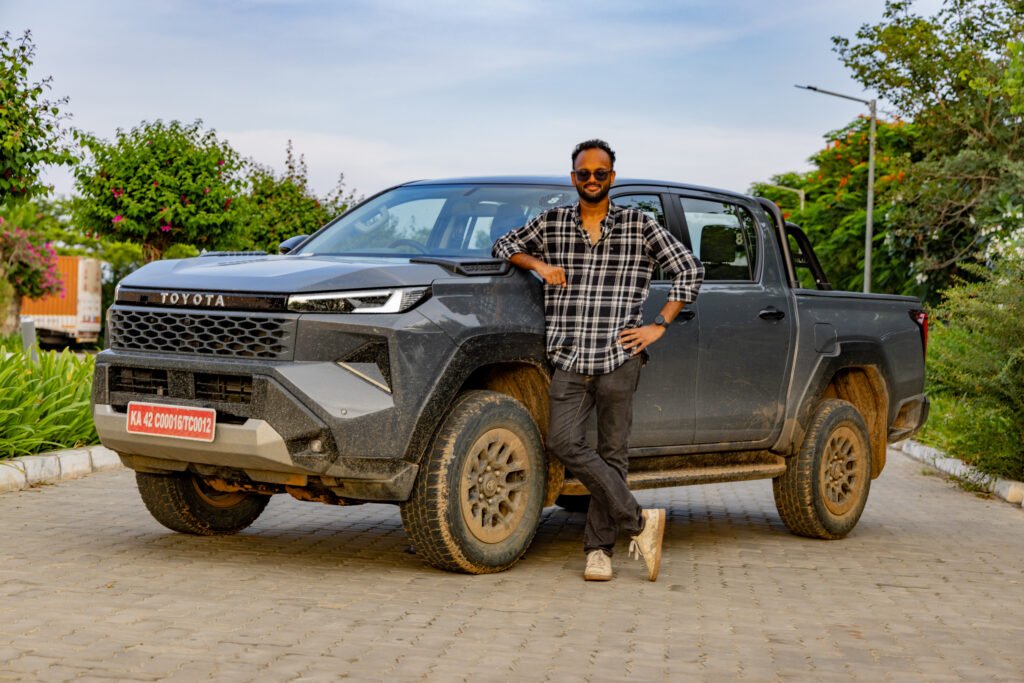
Toyota has been smart here. It left the engine alone, left the chassis alone, kept the wheels sensible, and spent the money where these vehicles actually needed it. A city boy like me would have liked the creature comforts, the cooled seats especially, and I will admit to missing them. But I will take this trade. And for the people actually considering a Hilux, who want a vehicle that works and keeps working, I suspect those omissions will not be dealbreakers either.
This is the first Hilux I would want for reasons beyond respect for its toughness. Modern, contemporary, and still built to outlast me. That combination has been available elsewhere for years. It is good to finally have it here.
Shot by: Shreya Somani for DAG INDIA