
The petrol-powered Mercedes-Benz V-Class proves luxury isn’t always measured by horsepower. There comes a point in life when luxury begins to mean…
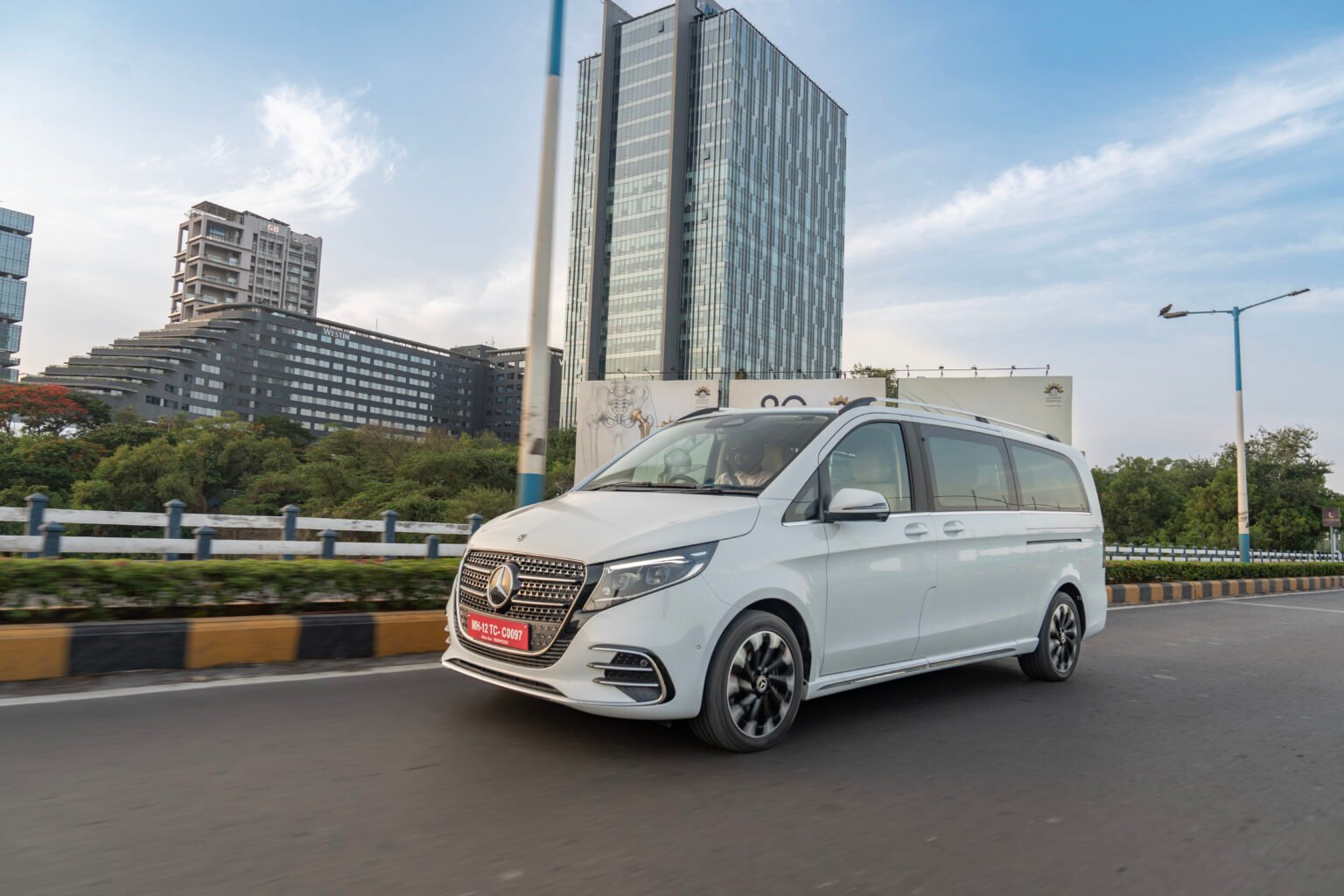
The petrol-powered Mercedes-Benz V-Class proves luxury isn’t always measured by horsepower.
There comes a point in life when luxury begins to mean something entirely different. In your twenties, it may be about owning the quickest car. A decade later, perhaps it’s about the badge parked in your driveway.
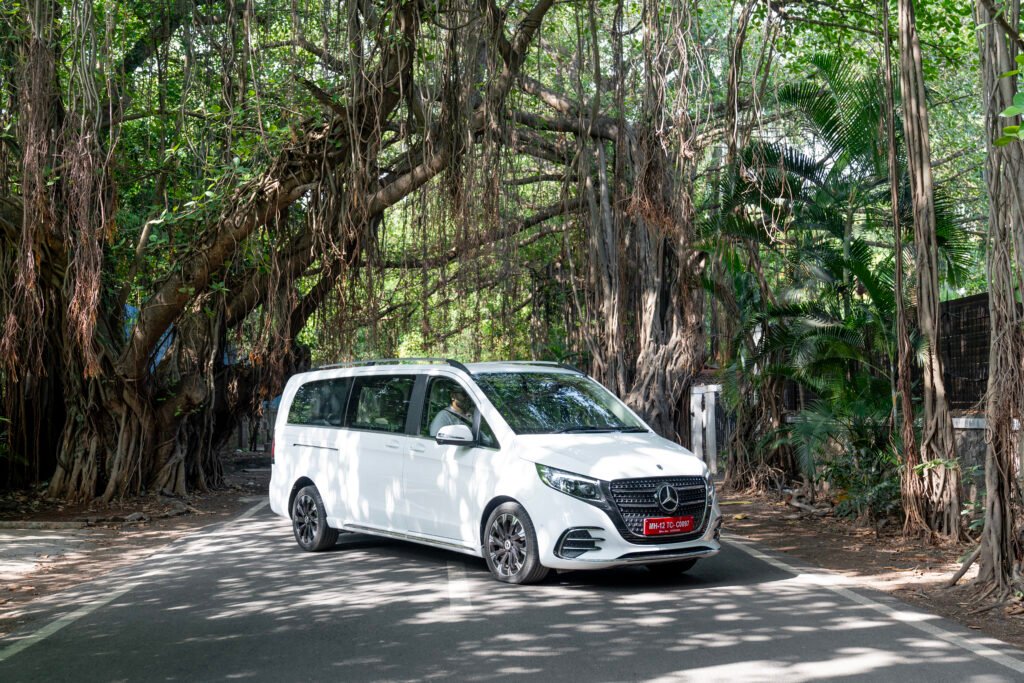
But somewhere along the way, priorities quietly evolve. Time becomes more valuable than speed, comfort starts outweighing outright performance, and arriving refreshed often matters more than arriving first.
That shift in perspective is perhaps best embodied by the new Mercedes-Benz V-Class.
STEPPING INSIDE
Unlike most luxury cars that begin their story from behind the steering wheel, the V-Class asks you to start somewhere else.
Mercedes hasn’t designed this vehicle around the driver. It has designed it around everyone travelling with them.
That philosophy becomes evident the moment the powered sliding door glides open…
EVERY SEAT MATTERS
Most luxury vehicles quietly admit that the third row exists only because customers expect one. Mercedes never makes that apology.
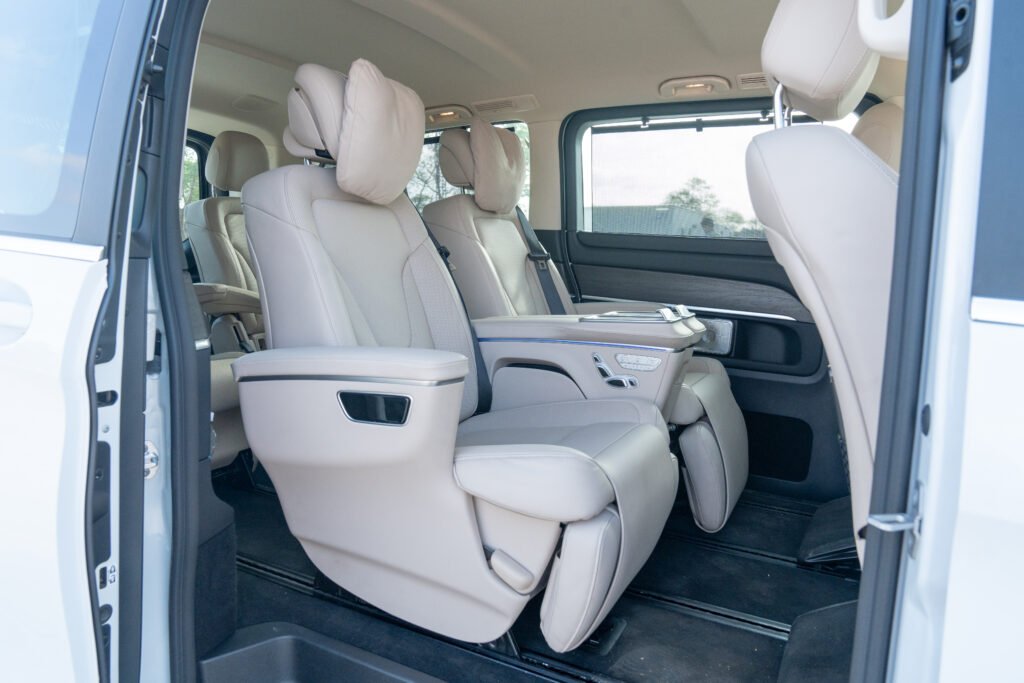
Even the final row feels intentionally designed rather than reluctantly accommodated. Adults can genuinely spend hours here without feeling like they’ve drawn the short straw. Headroom remains generous, legroom is surprisingly accommodating and dedicated climate vents ensure cooling reaches every passenger equally.
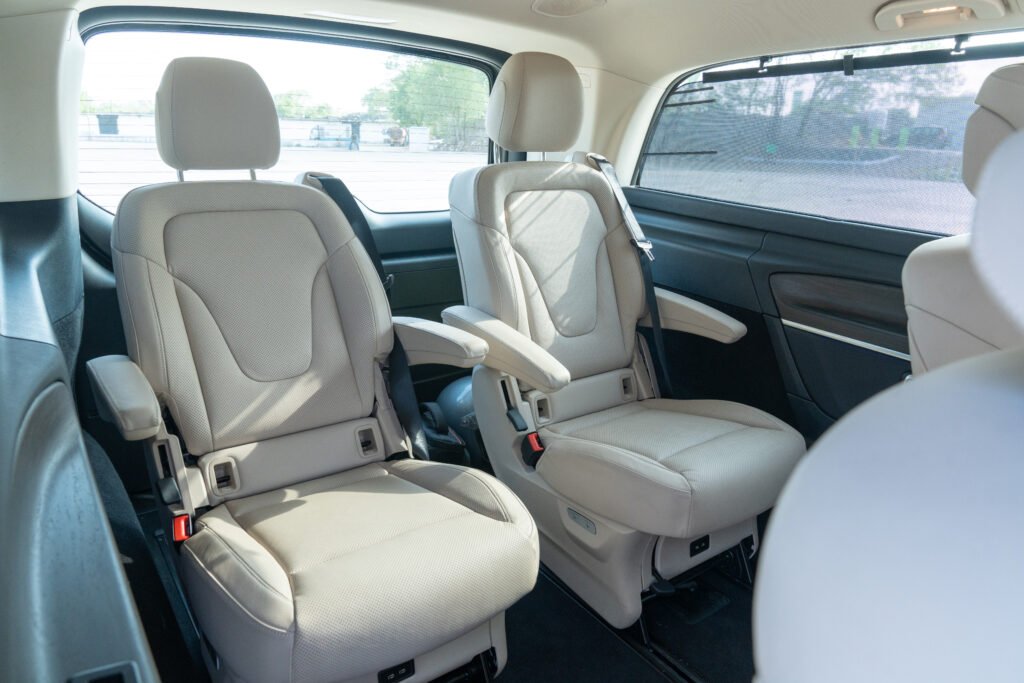
What impressed us even more was the seating’s flexibility. Mercedes offers multiple cabin configurations, including one in which the rear-most seats face the second-row captain’s chairs, transforming the V-Class into something resembling a private boardroom on wheels.
Whether it’s discussing business between meetings or simply enjoying uninterrupted conversations during a family road trip, the layout fundamentally changes how people interact inside the vehicle. Very few luxury cars encourage conversation. The V-Class quietly enables it.
Nobody feels like the least important passenger.
MORE THAN ONE PURPOSE
That versatility is ultimately what separates the V-Class from traditional luxury sedans. An S-Class may deliver one of the finest rear seats in the automotive world. A GLS combines luxury with SUV capability.
The V-Class chooses a completely different path. It democratises luxury.
Instead of reserving the best seat for one individual, it extends comfort across almost every occupant. Families travelling together, hospitality businesses transporting discerning guests, corporate executives moving between meetings or entrepreneurs covering thousands of highway kilometres every month all experience the same exceptional sense of space.
Few luxury vehicles adapt to so many lifestyles quite so effortlessly.
NOT WITHOUT COMPROMISE
Perfection, however, remains an ambitious target.
At this price point, electrically operated rear sunblinds would have strengthened the premium experience, while fold-out airline-style tables and integrated rear entertainment screens feel like obvious omissions in a vehicle designed for long-distance travel.
There were also moments when the V-Class reminded us that beneath its beautifully executed cabin lies a platform engineered with practicality in mind. Certain hard plastic surfaces, although well finished, don’t quite match the otherwise luxurious ambience.
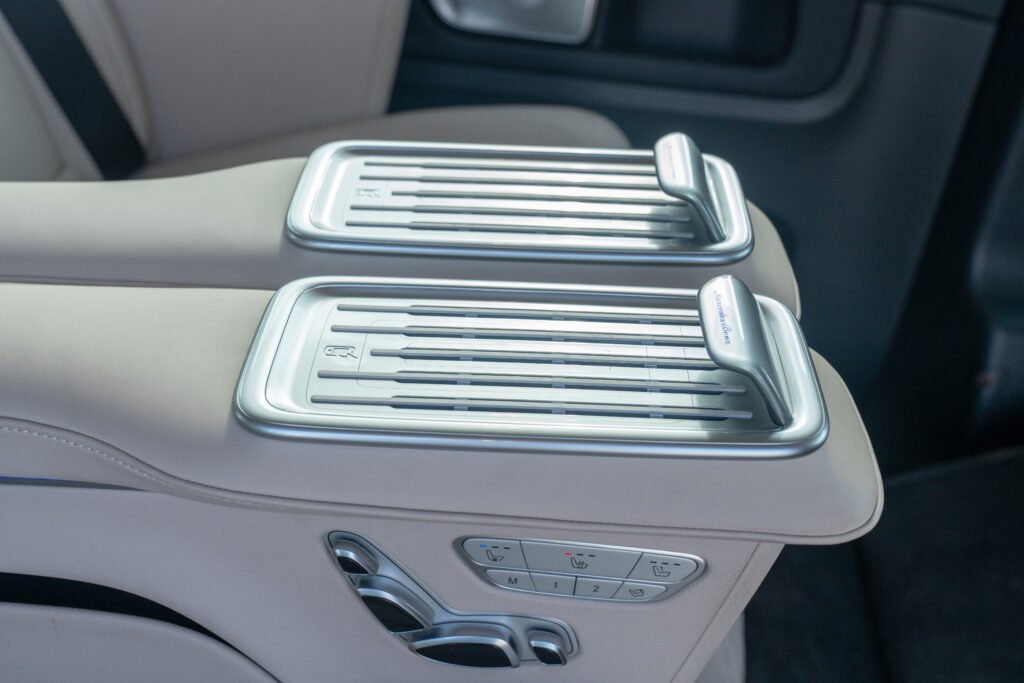
The exposed floor rails deserve a mention too. While they allow the cabin to be reconfigured into different layouts, manually sliding the substantial captain chairs, each weighing well over a hundred kilograms, is hardly effortless.
Likewise, third-row access requires moving the second-row seats, a process that feels less elegant than the rest of the experience.
Curiously though, the longer we spent inside the V-Class, the less these shortcomings seemed to matter. They never disappeared. They simply became irrelevant.
Because Mercedes-Benz has achieved something considerably more valuable than feature superiority. It has created an atmosphere. One that lowers your pulse, softens the outside world and transforms every journey into an opportunity to slow down.
And perhaps the most remarkable part? We’ve arrived nearly halfway through this review without discussing the driver’s seat or the engine. That alone tells you everything you need to know about what the Mercedes-Benz V-Class was always meant to be.
PRESENCE WITH PURPOSE
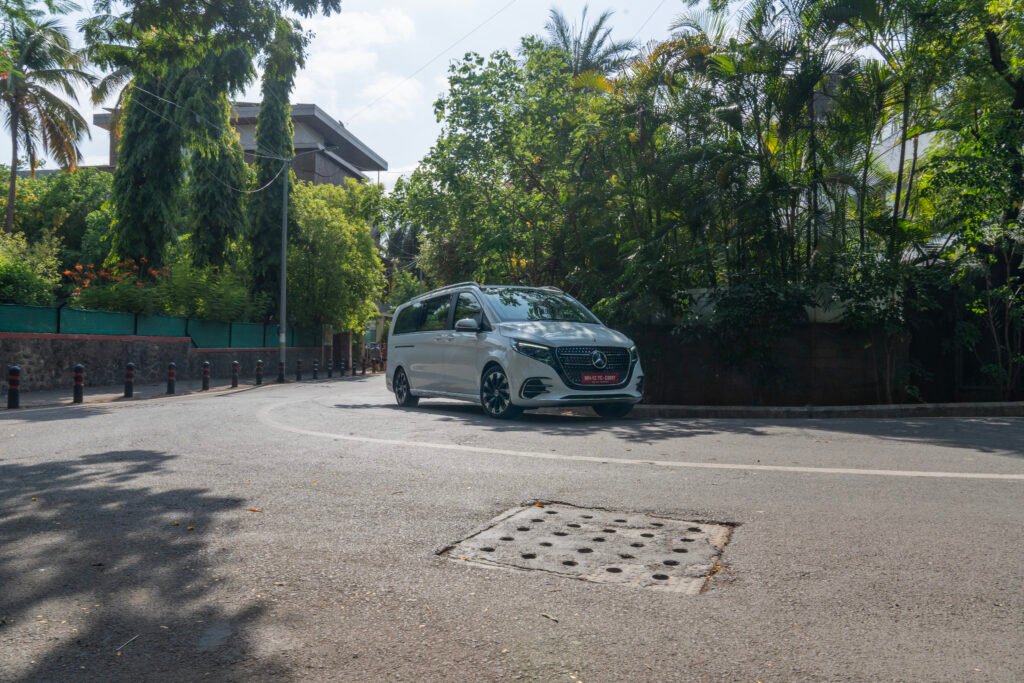
If the cabin is where the V-Class earns your admiration, its exterior is where it quietly earns your respect.
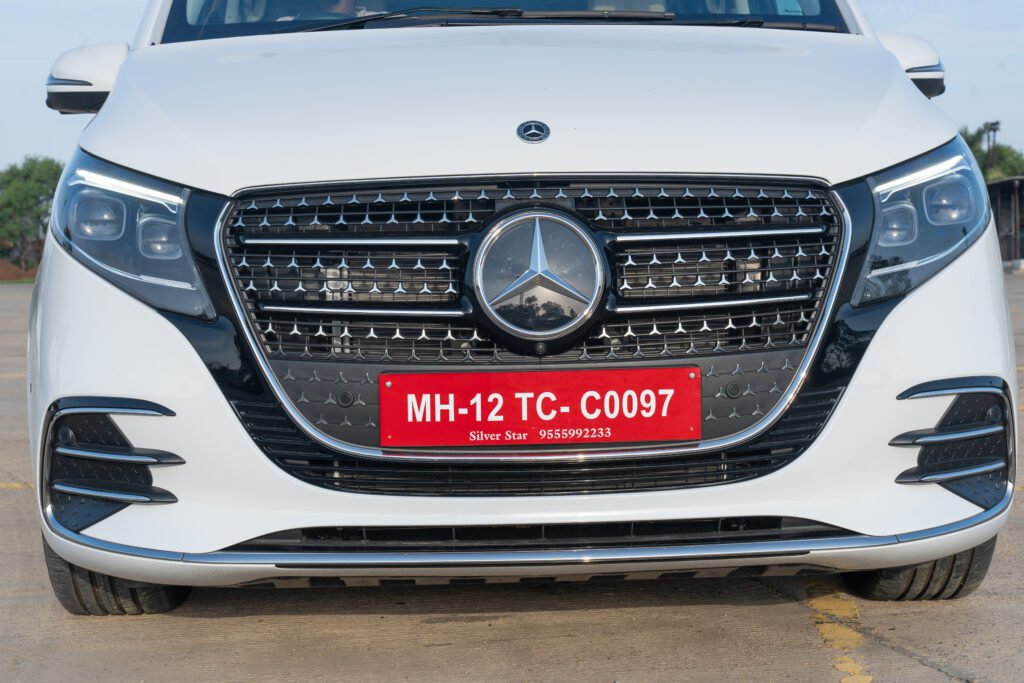
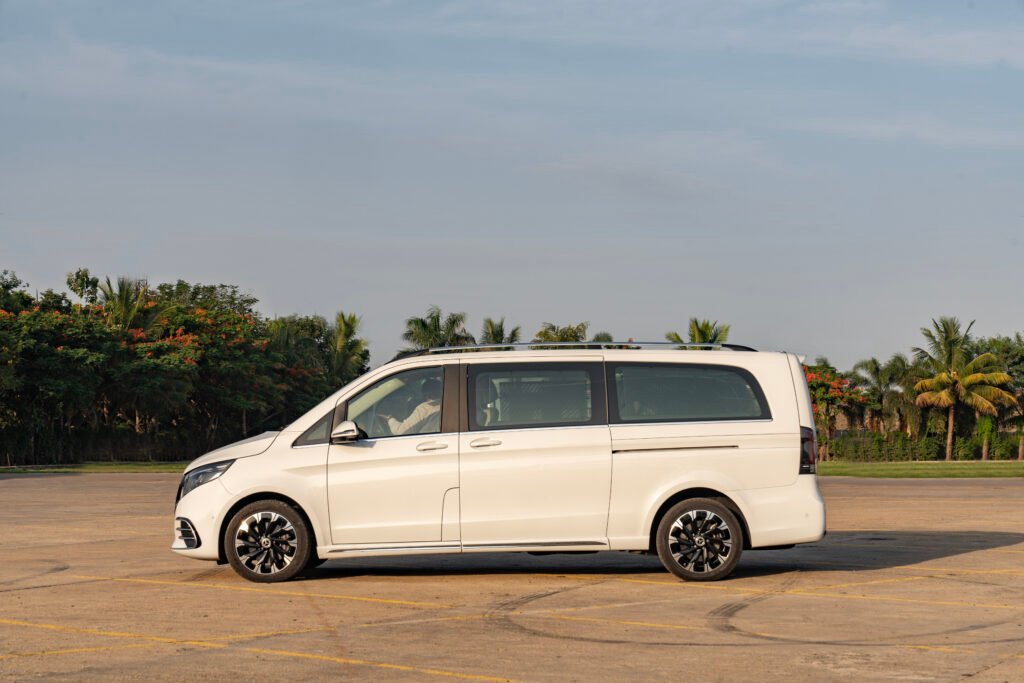
There is no attempt to disguise what it fundamentally is. It remains tall. Long. Unapologetically van-like. And that is precisely where its confidence lies.
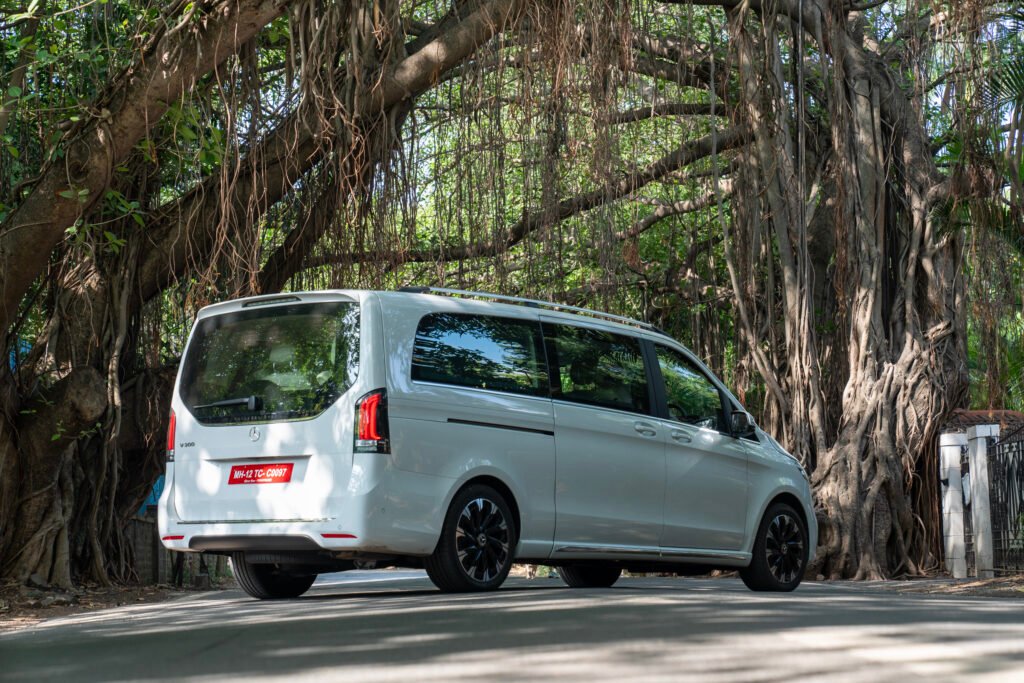
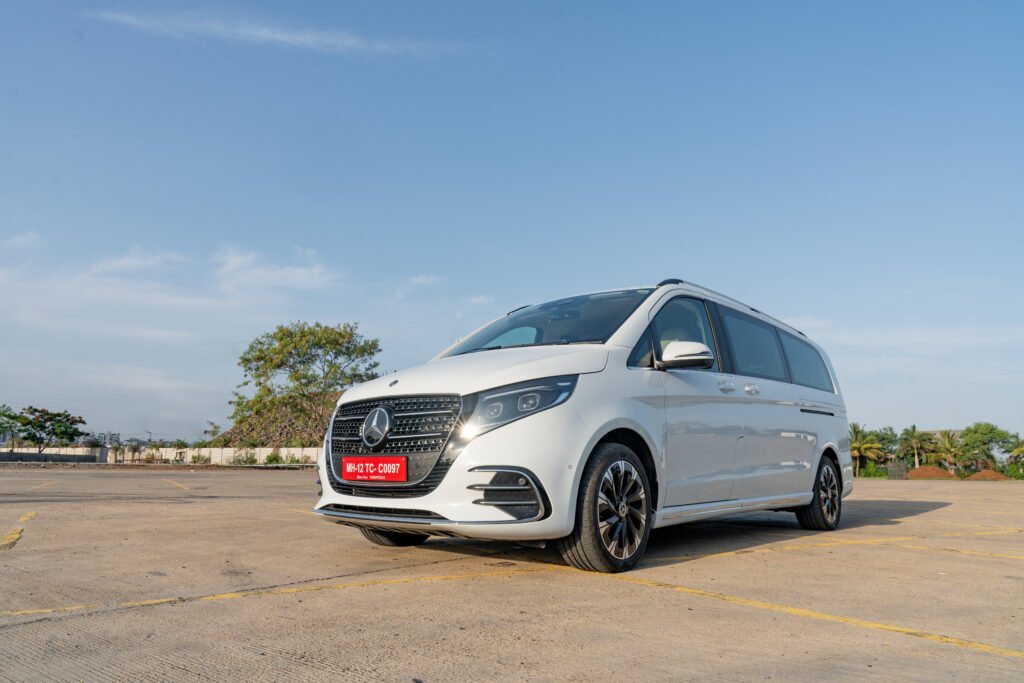
At over 5.3 metres in length, the V-Class immediately establishes itself as one of the largest passenger vehicles wearing the three-pointed star. Yet unlike many luxury MPVs that rely on oversized chrome grilles and dramatic styling to announce their arrival, the Mercedes approaches luxury with restraint.
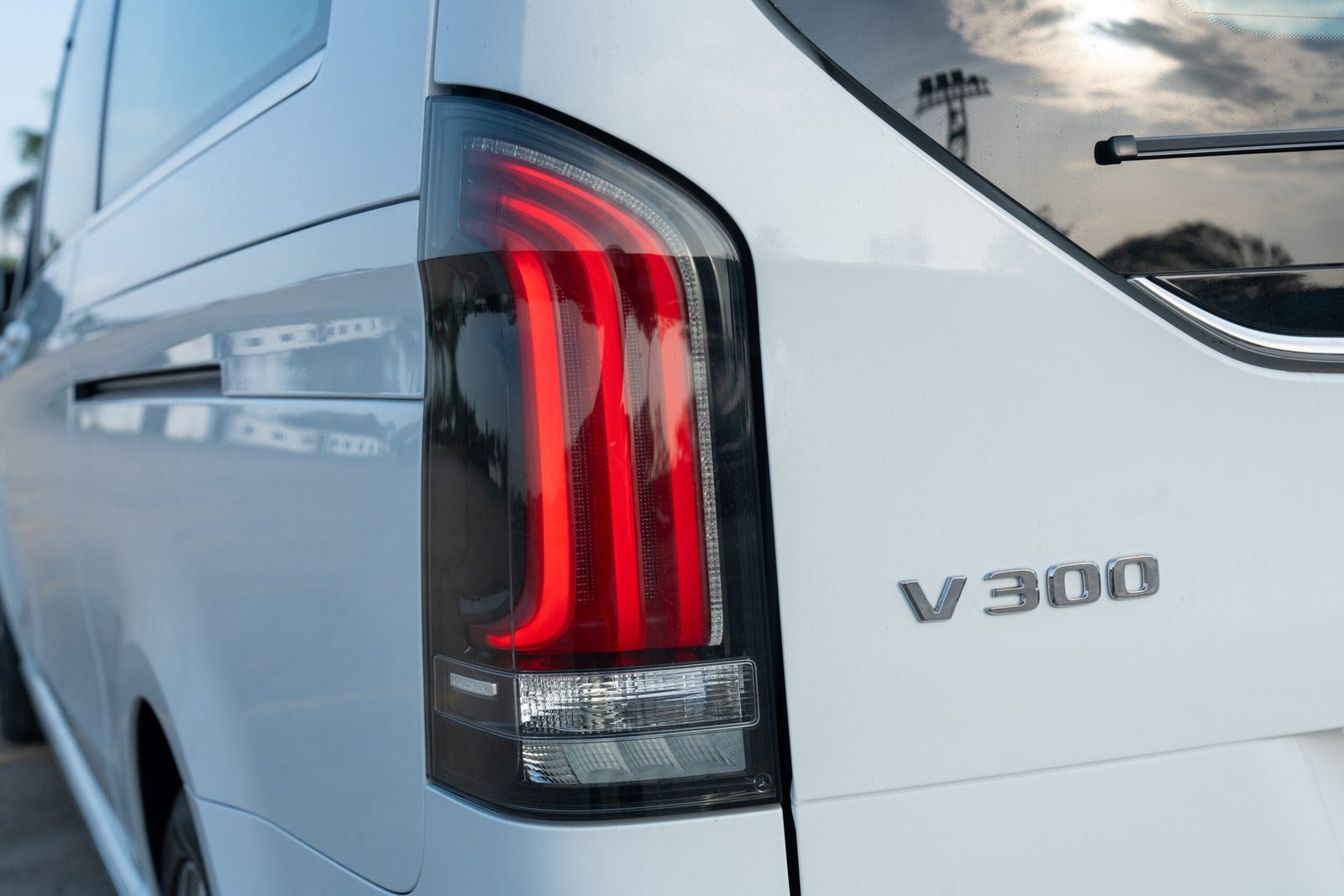
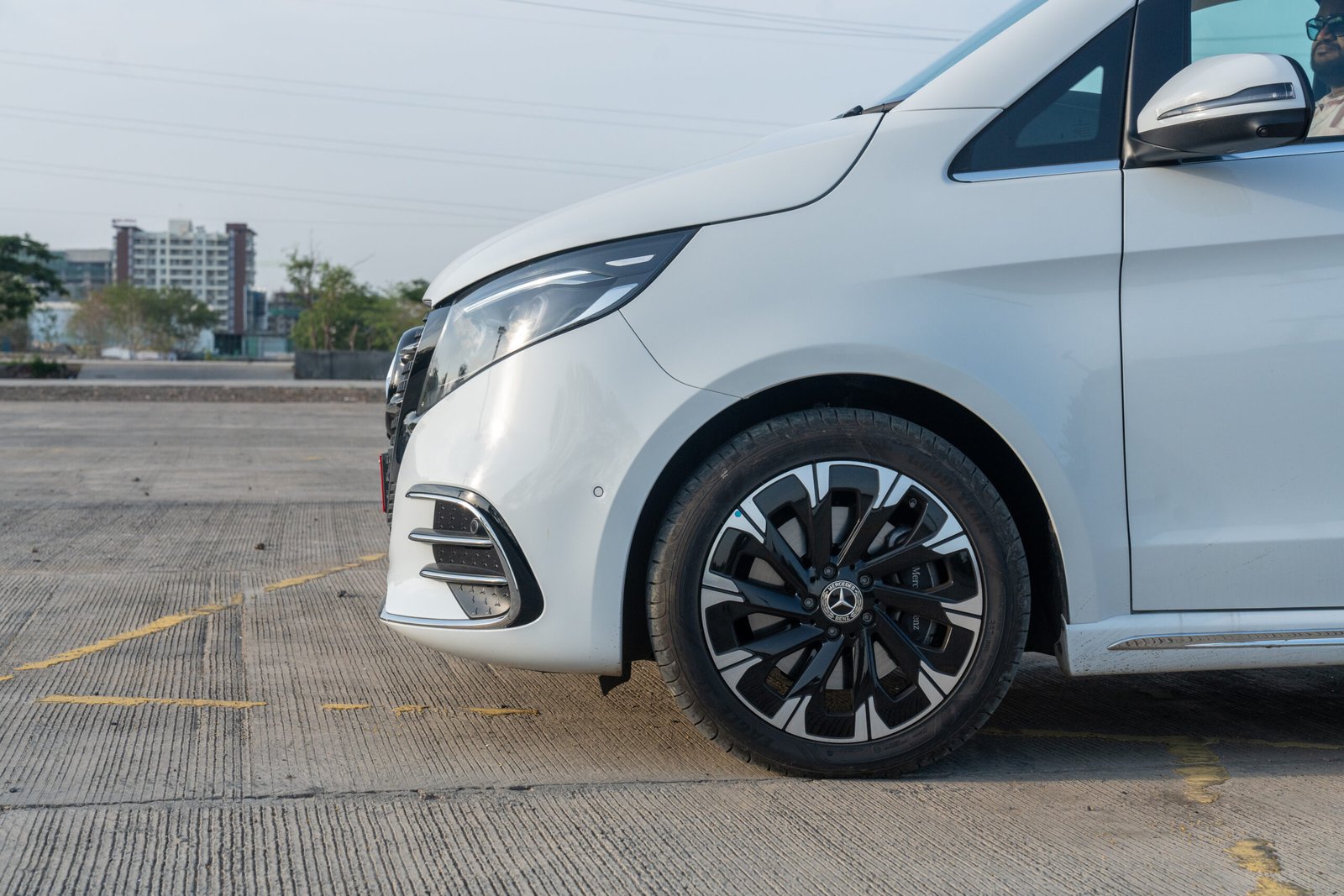
The facelift has certainly elevated its presence. The standard AMG Line package lends the front fascia a sharper identity, while the illuminated grille, redesigned bumper and multibeam LED headlamps give the V-Class a sophistication that feels contemporary without chasing trends.
It commands attention, but never demands it.
Walk around the vehicle, and one thing quickly becomes apparent. Nothing here exists purely for visual drama.
Every upright panel, every straight surface and every millimetre of height serves a purpose. The silhouette isn’t sculpted inside a wind tunnel to create drama. It has been designed around people, luggage and the simple luxury of generous interior volume.
There’s an honesty to its design that grows on you. In a world where luxury vehicles increasingly rely on exaggerated styling, the V-Class feels refreshingly confident in simply being itself.
A FAMILIAR WORKPLACE
Step into the driver’s seat and the atmosphere changes. While the rear cabin feels unique to the V-Class, the cockpit immediately feels familiar to anyone who has spent time in a modern Mercedes-Benz. That familiarity is reassuring rather than disappointing.
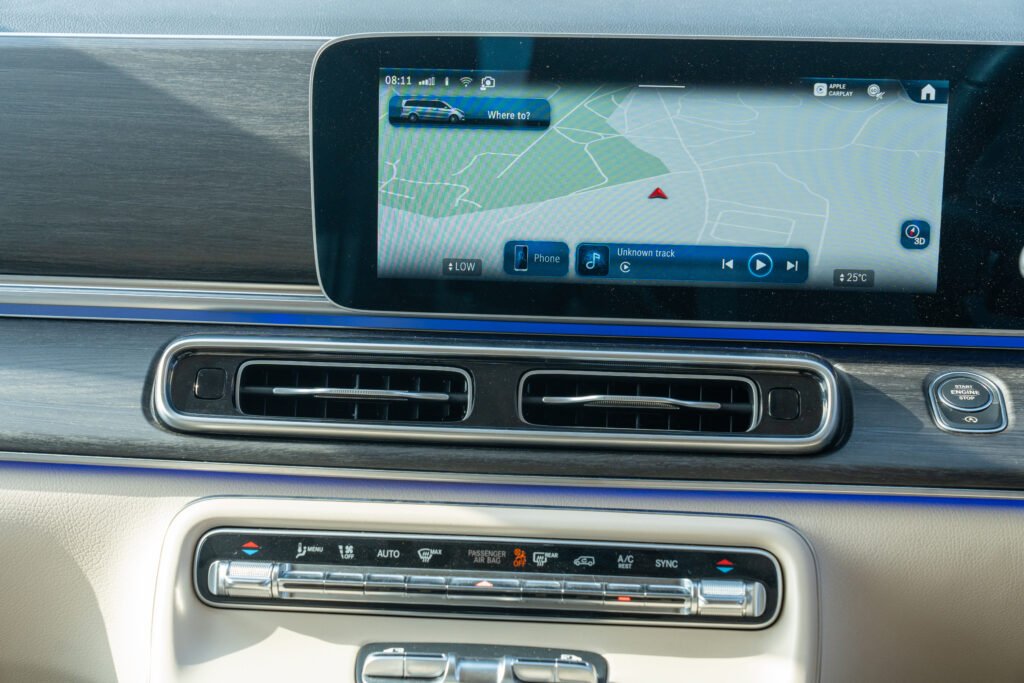
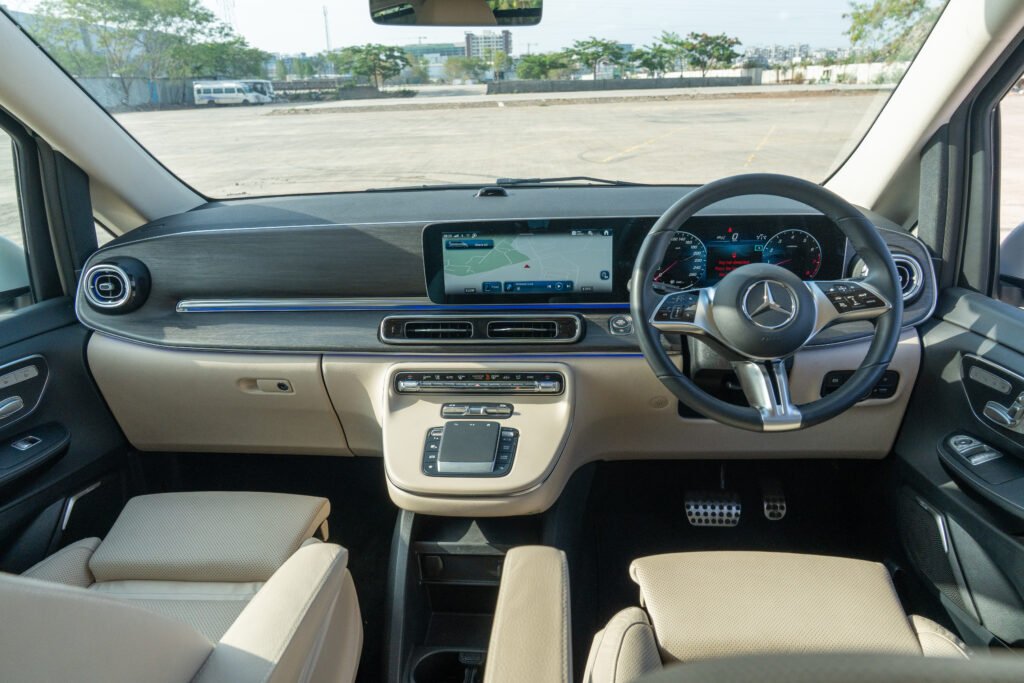
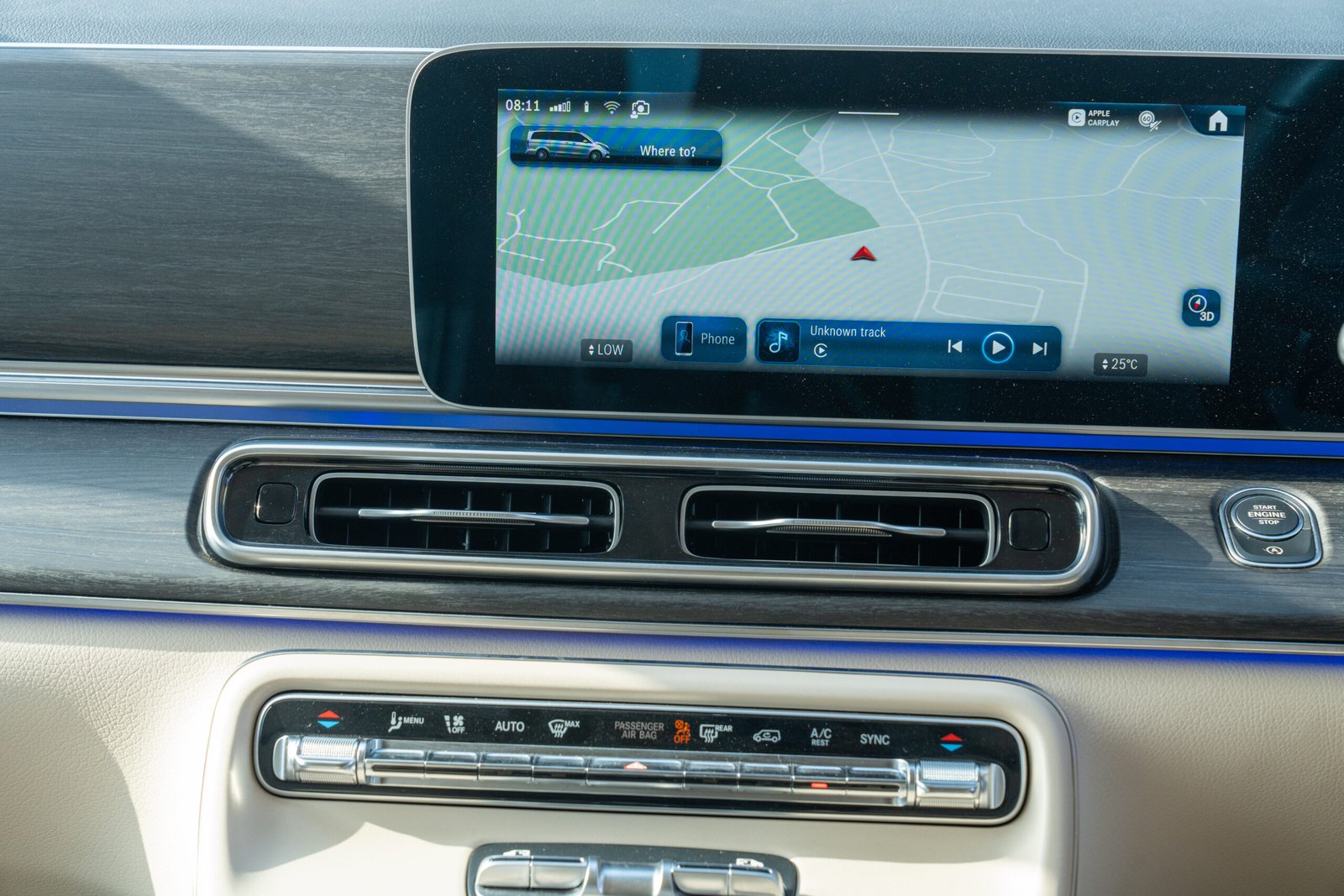
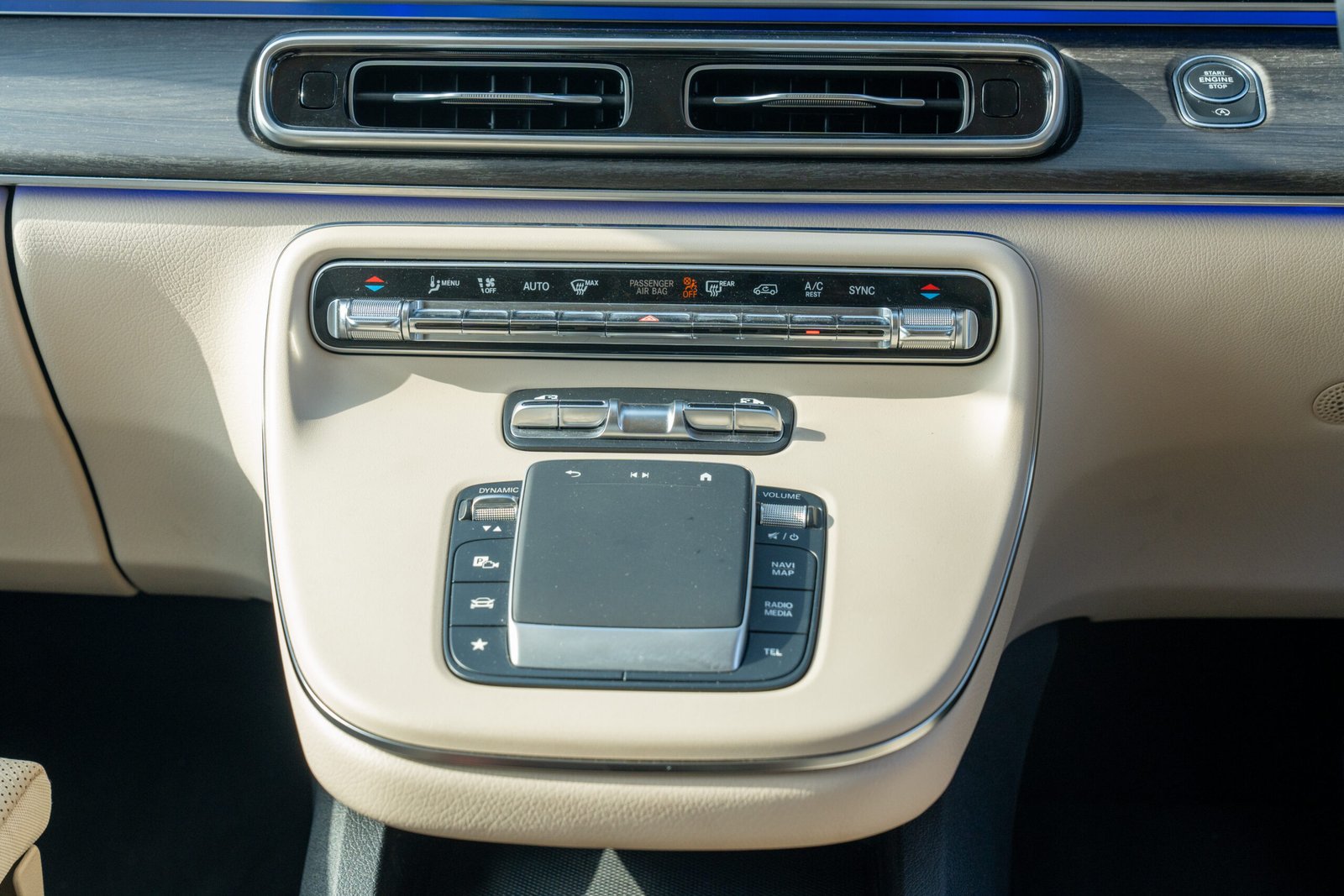
Twin 12.3-inch displays dominate the dashboard, bringing instrumentation and infotainment together in a clean, uncluttered layout. The latest MBUX interface remains intuitive, while the combination of physical buttons, steering-mounted controls and the touchpad means frequently used functions never require unnecessary menu diving.
It’s an environment that prioritises usability over visual theatre.
The seating position is commanding, offering an almost panoramic view through the enormous windscreen. Initially, the sheer size of the V-Class appears intimidating, but the expansive glass area and upright driving position quickly inspire confidence.
Visibility, quite simply, is exceptional.
That confidence extends to the front seats themselves. Electrically adjustable with memory functions, extending thigh support and generous cushioning, they ensure that even the chauffeur enjoys a level of comfort befitting the badge on the bonnet.
Because while the V-Class may be designed around its passengers, Mercedes clearly hasn’t forgotten the person responsible for getting them there.
THE PETROL SURPRISE
This is where our experience diverged from almost everyone else’s. While most of the automotive fraternity spent their time behind the wheel of the torque-rich V300 d diesel, Mercedes handed us the keys to the petrol-powered V300.
Initially, it seemed like the shorter straw. But, by the end of the drive, it felt like the more interesting one.
Luxury MPVs traditionally favour diesel engines for understandable reasons. They carry weight, transport multiple occupants and spend countless hours covering long distances. On paper, abundant torque appears to be the obvious answer.
The petrol takes an entirely different approach. Its greatest strength isn’t performance but its refinement.
Press the starter button, and there’s almost a moment of uncertainty. Has the engine started? There is no diesel clatter announcing itself through the firewall. No vibrations gently reminding you that two tonnes of machinery have come to life.
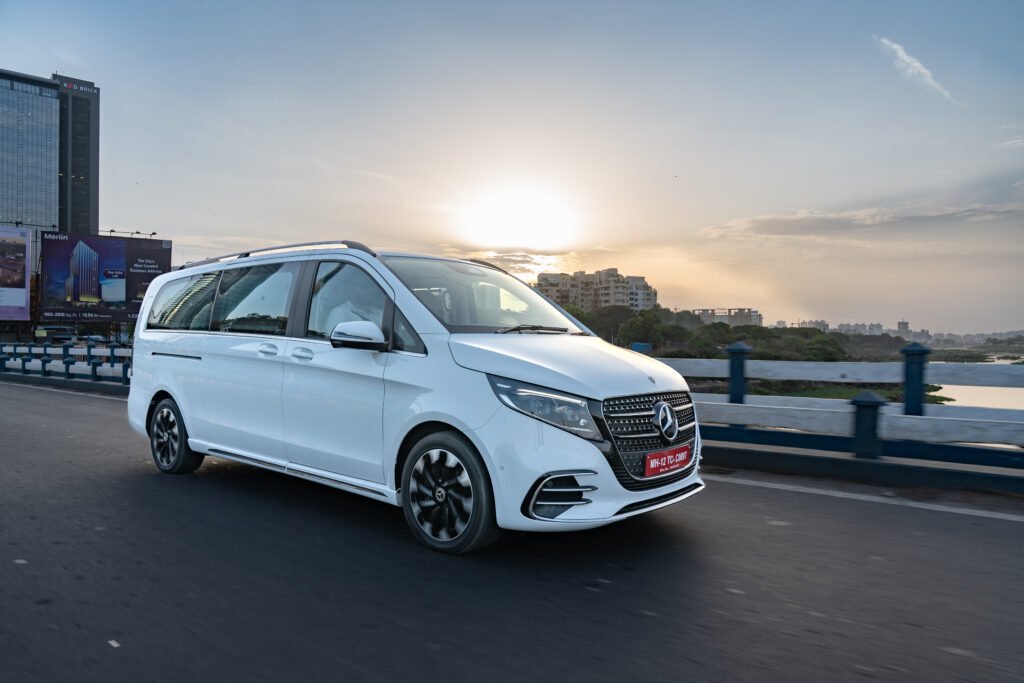
Instead, the cabin remains almost eerily quiet. And that single characteristic completely changes the personality of the V-Class.
Conversations continue uninterrupted. Music doesn’t have to compete with engine noise. Even pulling away from a luxury hotel entrance feels calmer, smoother and somehow more sophisticated.
The V-Class already does an exceptional job of isolating occupants from the outside world through extensive sound insulation and acoustic glass. Pair that with the inherent refinement of a turbo-petrol engine and the result is a travelling experience that borders on effortless.
Throttle response is progressive rather than urgent. Power arrives smoothly. The 9G-TRONIC automatic transmission quietly goes about its work, shuffling through ratios almost imperceptibly as the V-Class gathers speed with surprising grace.
This isn’t an engine that encourages spirited driving. Nor does it pretend to. Instead, it rewards measured inputs, relaxed cruising, and a driving style that perfectly complements the vehicle’s personality.
Mercedes offers Eco, Comfort and Sport driving modes, each subtly altering the V-Class’ responses rather than dramatically transforming its character. Comfort, unsurprisingly, feels like the natural setting, allowing the powertrain to deliver exactly what this vehicle was engineered to do: cover long distances with complete composure.
BUILT FOR DISTANCE
It takes only a few kilometres to recalibrate your expectations. Not because the V-Class feels difficult to drive, but because your perception of its size changes remarkably quickly.
From behind the wheel, the dimensions initially appear daunting. Yet thanks to the commanding seating position, enormous mirrors and excellent all-round visibility, placing the vehicle accurately becomes second nature surprisingly early in the journey.
The steering remains light at city speeds, reducing fatigue during slow-moving traffic, while the generous glass area makes navigating narrow urban streets considerably less stressful than the dimensions might suggest.
The true character of the petrol V-Class, however, emerges once the city begins to fade in the rear-view mirror.
Indian expressways are where this powertrain starts making complete sense. Cruising at highway speeds feels almost effortless. The engine settles into a near-silent rhythm, wind noise remains impressively subdued, and tyre roar rarely intrudes into the cabin.
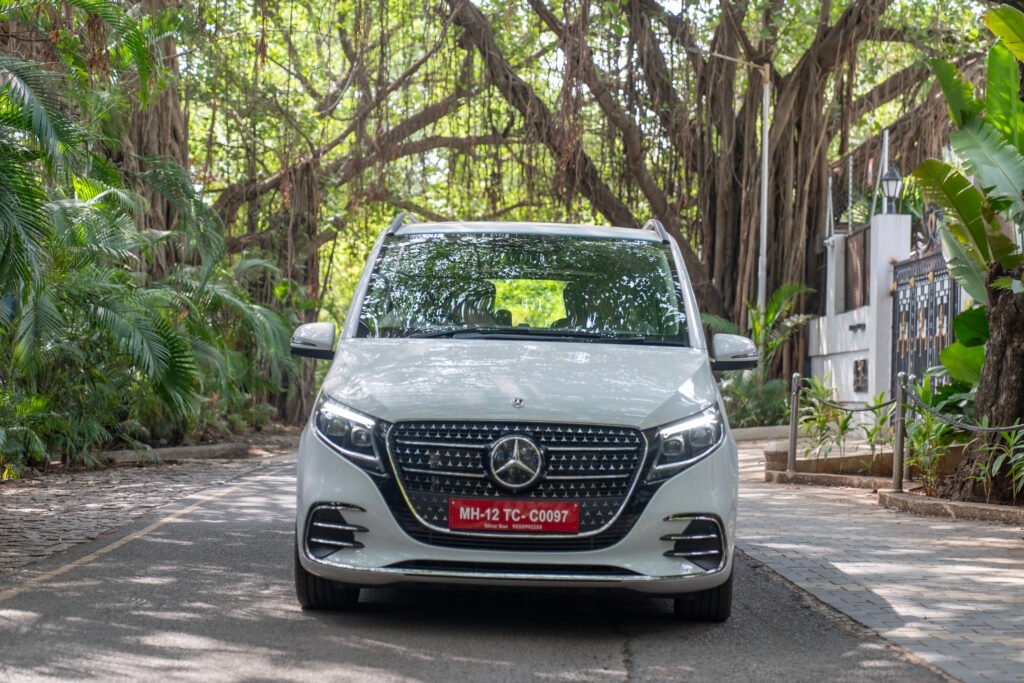
The kilometres simply begin to disappear beneath the wheels. There’s an unmistakable serenity to the way the V 300 covers distance. Rather than encouraging you to drive faster, it quietly encourages you to drive further.
It is one of those rare vehicles where reaching your destination almost feels slightly disappointing.
COMPOSURE OVER COMFORT
Luxury often creates the expectation of softness. Mercedes has wisely resisted that temptation. Rather than chasing an exaggerated magic-carpet ride, the V-Class focuses on composure.
Its AIRMATIC suspension continuously adapts to changing road conditions, balancing comfort with reassuring body control. The ability to raise the ride height when confronted with broken roads or aggressive speed breakers also proves genuinely useful in Indian conditions rather than feeling like a gimmick.
Broken tarmac, expansion joints and uneven surfaces are absorbed with impressive maturity. The suspension settles quickly after larger undulations, avoiding the floaty sensation that often accompanies overly soft luxury vehicles.
Yes, body roll is present. It has to be. Physics cannot be negotiated.
But Mercedes has managed to strike an impressive balance between passenger comfort and driver confidence. Even through sweeping expressway curves, the V-Class never feels unsettled or cumbersome.
Instead, it behaves exactly as its design suggests. Confident. Predictable. Composed.
Perhaps that’s the biggest compliment one can pay the V-Class. It never attempts to disguise its size. Instead, it teaches you to trust it.
And after a full day behind the wheel, that’s exactly what you begin to do.
PETROL OR DIESEL?
Choosing between the two powertrains is perhaps the most interesting decision a prospective V-Class buyer will face. Conventional wisdom immediately points towards the diesel.
Its effortless torque, relaxed cruising ability and greater fuel efficiency make perfect sense for fleet operators, chauffeur-driven ownership and those who routinely cover vast distances with a full cabin. On paper, it is unquestionably the rational choice.
The petrol, however, appeals to a different kind of buyer. One who values refinement as highly as practicality.
Its 2.0-litre engine produces 228bhp and 370 Nm of torque, figures that seem modest compared with the diesel’s 500 Nm. Yet the V 300 petrol was never designed to win a specification sheet.
Its greatest strength is something far more difficult to quantify: silence.
Luxury is often defined by what you don’t notice. The absence of vibration. The absence of harsh mechanical noise. The absence of constant reminders that an engine is working beneath you. That is where the petrol V-Class quietly justifies its existence.
Power delivery is linear, predictable and beautifully refined, while the 9G-TRONIC automatic transmission remains almost invisible throughout the drive. Together, they create an experience that feels less mechanical and more effortless.
Would I still recommend the diesel to someone whose calendar revolves around airport transfers, intercity chauffeur duties and thousands of highway kilometres every month? Absolutely.
But would I hesitate to recommend the petrol to someone who intends to drive themselves, values refinement over outright torque, and simply wants one of the quietest executive movers currently on sale? Not for a second.
Mercedes hasn’t created two versions of the same vehicle. It has created two distinctly different personalities.
BEYOND THE NUMBERS
Attempting to compare the V-Class with a conventional luxury sedan misses the point entirely. A Mercedes-Benz S-Class remains one of the finest chauffeur-driven luxury cars ever built. On the other hand, a GLS offers commanding road presence and the versatility of an SUV.
Both continue to define their respective segments. But the V-Class, however, answers a question neither of them attempts to ask: What if luxury wasn’t about isolating two passengers? What if it was about travelling exceptionally well together?
The answer lies in architecture rather than equipment.
No luxury sedan, regardless of price, can replicate the freedom offered by the V-Class’ cabin. The ability to stand, stretch, move between rows, hold conversations naturally or simply change seating positions during a long journey fundamentally transforms the travelling experience.
Once you’ve spent several hours inside the V-Class, returning to even the most luxurious sedan feels surprisingly restrictive. That isn’t a criticism of traditional luxury cars. It’s simply the advantage of space. Mercedes hasn’t invented a new segment. It has simply refined one better than most.
STANDING AMONG RIVALS
Naturally, comparisons with the Toyota Vellfire and Lexus LM are inevitable. All three target remarkably similar customers, yet each interprets luxury in a completely different way.
The Lexus LM is unapologetically indulgent. Its rear cabin feels almost theatrical, delivering an experience that closely resembles a first-class airline suite. Every journey feels like an occasion.
The Toyota Vellfire approaches the same audience with a more family-oriented philosophy. Comfortable, dependable and exceptionally easy to live with, it has deservedly earned its reputation as one of the finest long-distance MPVs available.
The Mercedes-Benz V-Class chooses neither approach. Instead, it feels like an executive lounge. Its luxury is quieter. More understated. More architectural.
Rather than overwhelming occupants with ornamentation or extravagant features, it focuses on creating an environment that gradually grows on you the longer you spend inside.
For many buyers, that understated confidence may ultimately prove more desirable than overt extravagance.
LUXURY, REIMAGINED
Perhaps the biggest takeaway from our time with the V-Class had very little to do with the vehicle itself. It had everything to do with how our understanding of luxury has changed.
There was a time when luxury was measured by horsepower, handcrafted leather and the badge mounted proudly on the bonnet.
Today, luxury feels different. It is measured by peace. By arriving after a five-hour drive without feeling exhausted. By conducting a meeting without raising your voice. By watching children remain comfortable throughout a road trip.
By having enough room to work, relax or simply enjoy the journey instead of counting down the kilometres.
Modern luxury has quietly shifted from indulgence towards wellbeing. The V-Class understands that remarkably well. It doesn’t attempt to impress you every five minutes. Instead, it allows you to forget that you’re travelling at all.
And perhaps that is the greatest compliment one can pay any luxury vehicle.
THE DAG VERDICT
The Mercedes-Benz V-Class is not a vehicle everyone will immediately understand. Its silhouette still carries unmistakable van DNA. Its proportions challenge long-held ideas of what a flagship luxury vehicle should look like. And that’s perfectly alright.
Because the moment those sliding doors open, appearances become secondary. What matters is the experience waiting inside.
Our exclusive time with the petrol-powered V 300 also revealed something unexpected. While the diesel will almost certainly remain the volume seller, the petrol deserves far more attention than it is likely to receive.
Its extraordinary refinement transforms an already exceptional cabin into one of the quietest travelling environments currently available in the luxury MPV segment. More importantly, it changes the character of the vehicle itself. It feels calmer. More elegant. Almost effortless.
Ultimately, choosing the V-Class isn’t really about choosing between petrol and diesel. It’s about embracing a different philosophy of travel. One where conversations matter more than notifications. Where comfort quietly takes precedence over speed. Where the journey itself becomes time well spent rather than time simply endured.
In an era where luxury vehicles compete to be louder, faster and more dramatic, the Mercedes-Benz V-Class achieves something considerably more difficult. It reminds us that true luxury isn’t about reaching your destination sooner. It’s about arriving feeling exactly the same as when you left.
IMAGES
Images: Sachin Kawankar