
Mitsubishi has officially unveiled the all-new Pajero, bringing back its iconic cross-country SUV nameplate as a new-generation flagship with a 2.4-litre clean-diesel…
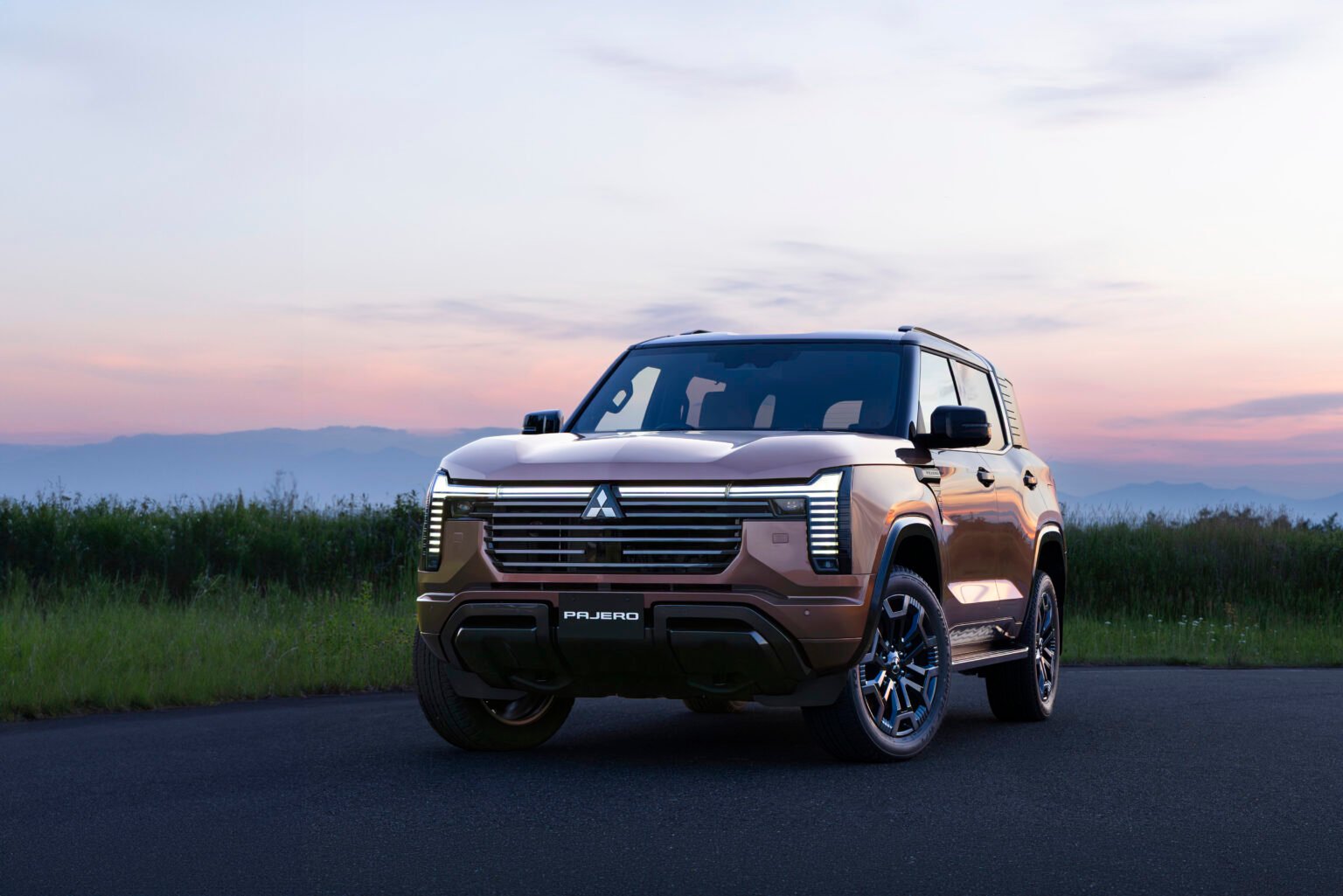
Mitsubishi has officially unveiled the all-new Pajero, bringing back its iconic cross-country SUV nameplate as a new-generation flagship with a 2.4-litre clean-diesel engine, 8-speed automatic gearbox, Super Select 4WD-II, S-AWC, seven drive modes, a three-row seven-seat cabin and a host of advanced safety and connected technologies.
Mitsubishi Motors has unveiled the all-new Pajero at its world premiere in Tokyo on September 2, 2026. Positioned as the company’s new-generation flagship SUV, the new Pajero combines the nameplate’s traditional off-road capability with greater comfort, refinement and premium features. It will be built in Thailand, with the Thai market scheduled to receive it first, followed by Japan and Australia during fiscal 2026. From fiscal 2027 onward, Mitsubishi plans to introduce the SUV in approximately 100 countries worldwide, including ASEAN, Latin America and the Middle East.
The return of the Pajero is significant for Mitsubishi. Originally introduced in 1982 as a cross-country 4WD, the SUV became one of the Japanese manufacturer’s most recognisable models. Across four generations, Pajero production exceeded 3.29 million units, with the model gaining a following in more than 170 countries and regions.
New Mitsubishi Pajero: What Is New?
The all-new Pajero has been developed around three key characteristics: Confidence, Comfort and Prestige. While the first two continue the model’s traditional focus on off-road ability, reliability and passenger comfort, Prestige represents Mitsubishi’s attempt to move the Pajero further into premium flagship-SUV territory.
The SUV gets a rigid ladder-frame chassis, independent double-wishbone front suspension, a five-link rigid rear axle, Super-All Wheel Control (S-AWC) and Super Select 4WD-II (SS4-II). Together, these systems are intended to provide serious off-road ability while keeping the SUV comfortable and predictable on normal roads.
2.4-Litre Diesel Engine Produces Up to 480 Nm
Powering the new Pajero is a 2.4-litre clean-diesel engine equipped with a wide-range single variable geometry turbocharger (VGT). Mitsubishi says the engine develops a maximum 480 Nm of torque, although select specifications are rated at 470 Nm.
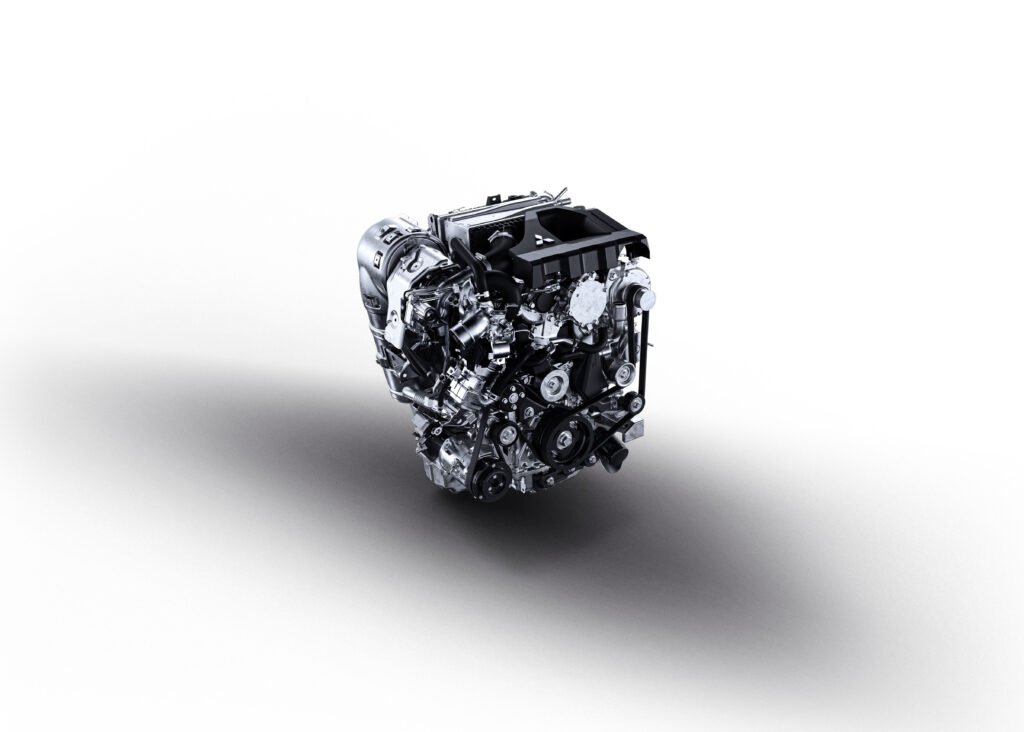
The engine is paired with a newly developed 8-speed automatic transmission with Sport mode. Mitsubishi says the combination has been tuned to provide responsive acceleration from low speeds through high-speed driving while improving refinement and reducing noise.
This powertrain also reinforces the Pajero’s positioning as a vehicle designed for both long-distance travel and challenging terrain rather than simply being a city-focused premium SUV.
Ladder Frame and Off-Road Suspension
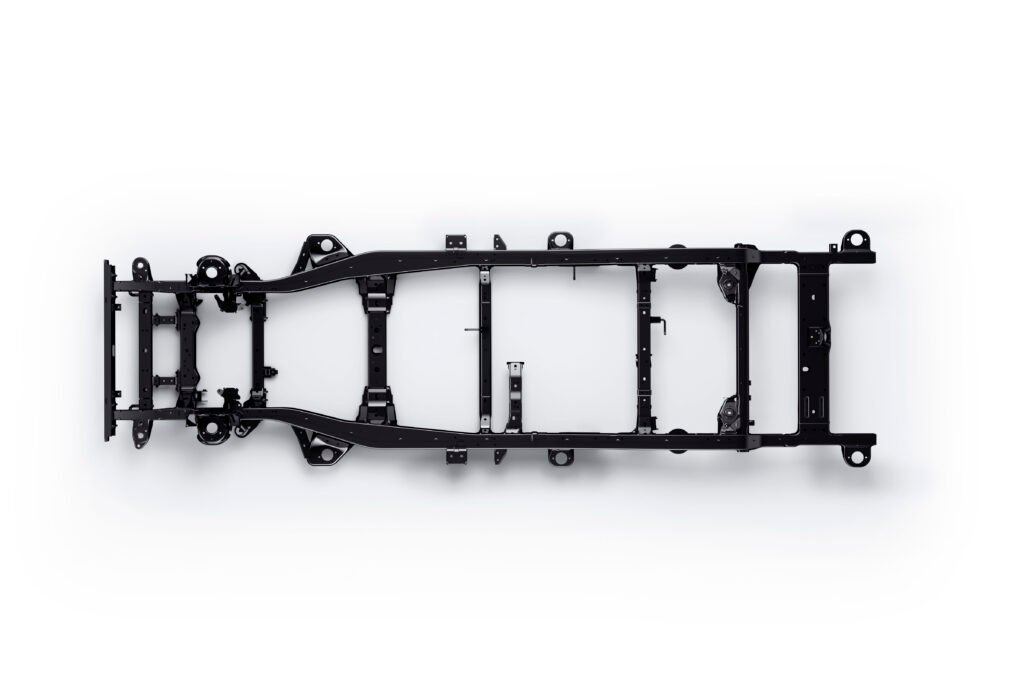
The new Pajero continues with a highly rigid ladder frame, a key component of its traditional body architecture. Mitsubishi says greater use of high-tensile steel helps reduce weight, while increased frame cross-sectional areas improve torsional and bending rigidity.
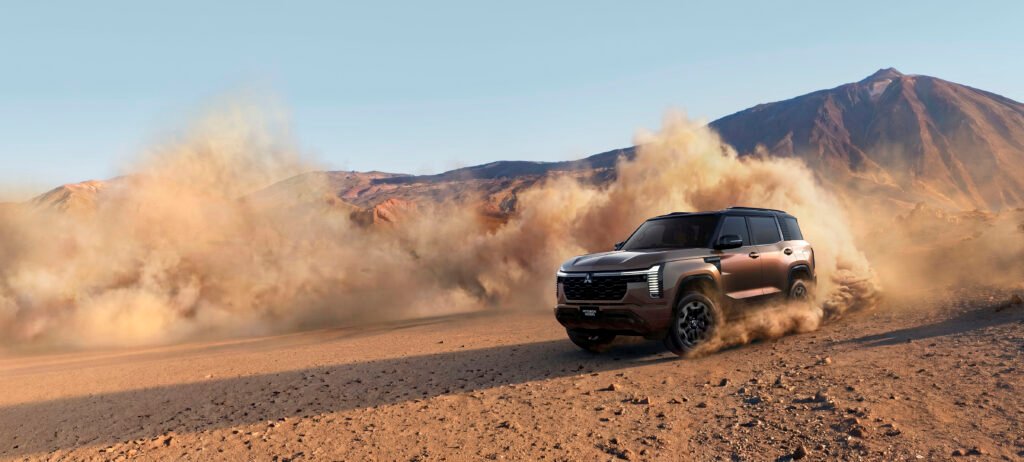
Suspension duties are handled by an independent double-wishbone setup at the front and a newly developed five-link rigid axle at the rear. The suspension has been engineered to maintain tyre contact over uneven terrain while delivering a more composed ride on paved roads. Strengthened body mounts further reduce unwanted vibrations on rough surfaces.
Super Select 4WD-II and S-AWC Explained
One of the most important features of the new Pajero is its combination of SS4-II and S-AWC.
The SS4-II system provides four selectable drivetrain modes:
- 2H – Rear-wheel drive
- 4H – Full-time four-wheel drive
- 4HLc – Locked centre differential
- 4LLc – Locked centre differential with low-range gears
The S-AWC system integrates Active Yaw Control (AYC), Active Stability and Traction Control (ASTC) and ABS, allowing Mitsubishi to coordinate acceleration and braking forces at all four wheels according to driving conditions.
The Pajero also offers seven selectable drive modes: Normal, Eco, Gravel, Snow, Mud, Sand and Rock. This gives drivers dedicated settings for different road and terrain conditions. The SUV gets large 18-inch brake rotors and an electric brake booster as well.
New Pajero Dimensions and Ground Clearance
The all-new Mitsubishi Pajero measures:
| Dimension | New Pajero |
|---|---|
| Length | 4,920 mm |
| Width | 1,925 mm |
| Height* | 1,910 mm |
| Wheelbase | 2,870 mm |
| Ground clearance* | 230 mm |
| Approach angle* | 30.4° |
| Ramp breakover angle* | 22.6° |
| Departure angle* | 25.8° |
| Front/rear track | 1,630 mm |
*Figures marked by Mitsubishi apply to vehicles equipped with 20-inch tyres.
The 230 mm ground clearance and three-digit approach, breakover and departure angles highlight the Pajero’s focus on genuine off-road capability. Mitsubishi has also targeted a 52:48 front-to-rear weight distribution to support stability and predictable handling.
Seven-Seat Cabin With Focus on Third-Row Comfort
Despite its rugged mechanical package, the new Pajero has been developed as a family-friendly three-row SUV. It gets a seven-seat layout, with Mitsubishi focusing particularly on passenger comfort in the second and third rows.
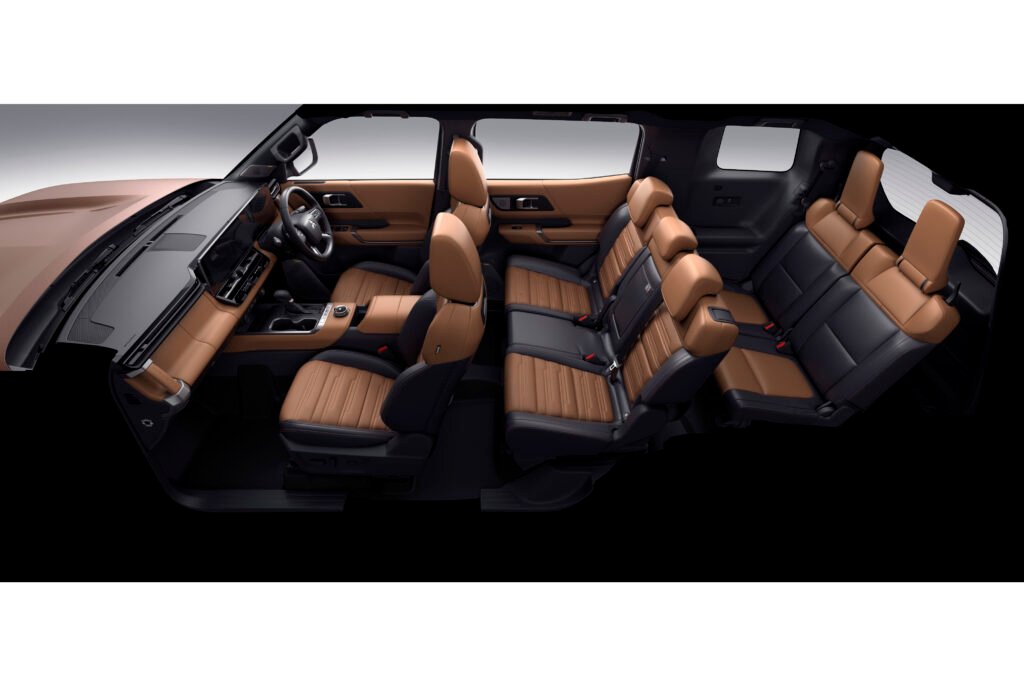
The second row offers a 150 mm sliding range along with a tumble mechanism to make entry and exit easier. Mitsubishi says the third row provides sufficient headroom even for adults, while the footwell allows passengers to place their toes underneath the second-row seats.
The SUV also gets seat ventilation and three-zone automatic climate control, allowing separate temperature settings across the cabin and improving comfort for passengers in all three rows.
Premium Interior With Dual 14.3-Inch Displays
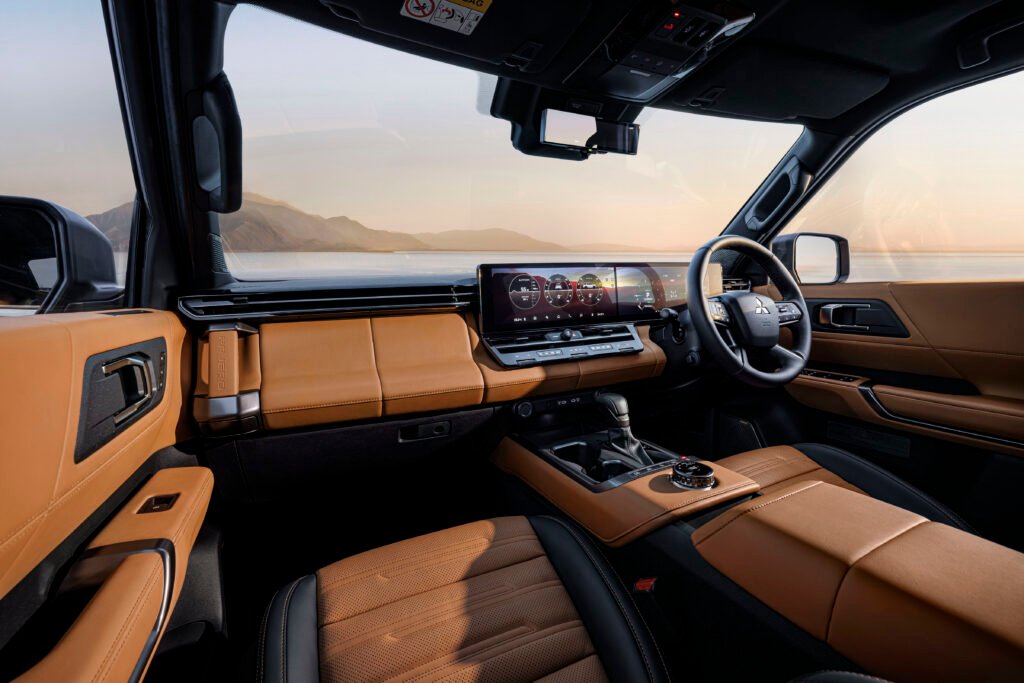
The interior takes inspiration from the first-generation Pajero while adopting a much more modern digital layout.
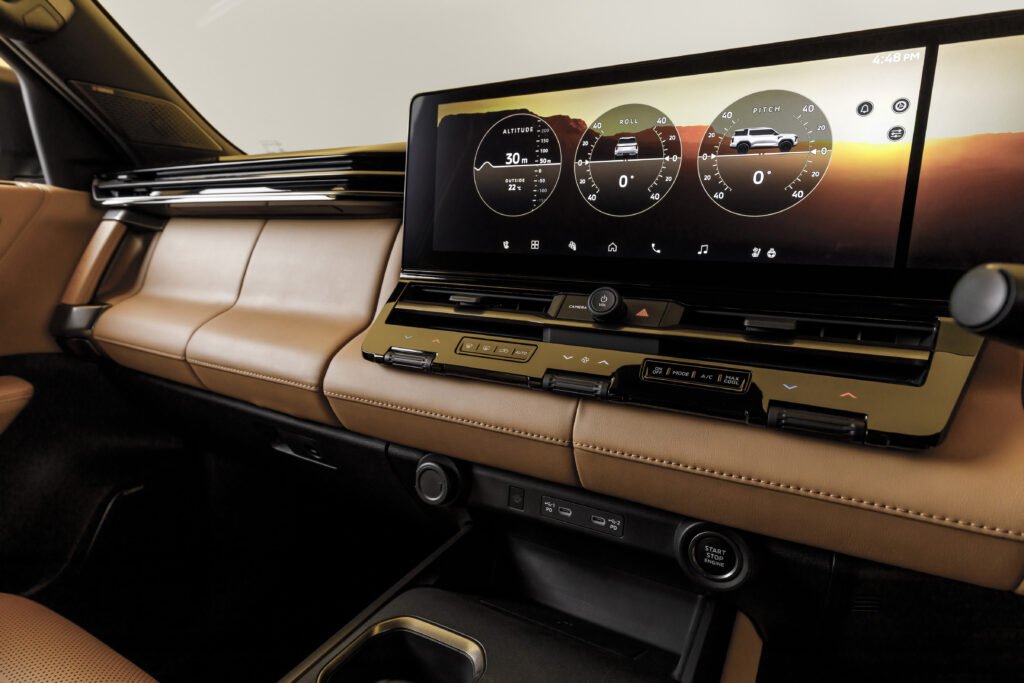
The horizontally oriented dashboard incorporates a monolithic display arrangement with two 14.3-inch screens, although Mitsubishi notes that a 12.3-inch display is available on select specifications. A modern interpretation of the classic triple-gauge cluster is called the Multi Meter.
The Multi Meter can display information including:
- Altitude
- Compass heading
- Temperature
- Vehicle pitch and roll angles
- AYC control status
The infotainment system supports wireless smartphone connectivity, while the instrument display offers 16 background themes that change according to the time of day.
Quieter Cabin and Premium Materials
Mitsubishi has also worked extensively on NVH levels. Acoustic glass is used for the windshield as well as the front and rear door windows, while additional noise-reduction measures have been incorporated throughout the vehicle.
The objective is to allow occupants to converse naturally even at highway speeds and in high-noise conditions, giving the new Pajero a more premium character.
The cabin uses soft-touch materials with stitching inspired by Kimekomi, a traditional Japanese craft technique. Mitsubishi also offers a Camel interior colour, designed to complement the SUV’s exterior while giving the cabin a more sophisticated appearance.
Pajero Exterior Design Blends Heritage With Modern Styling
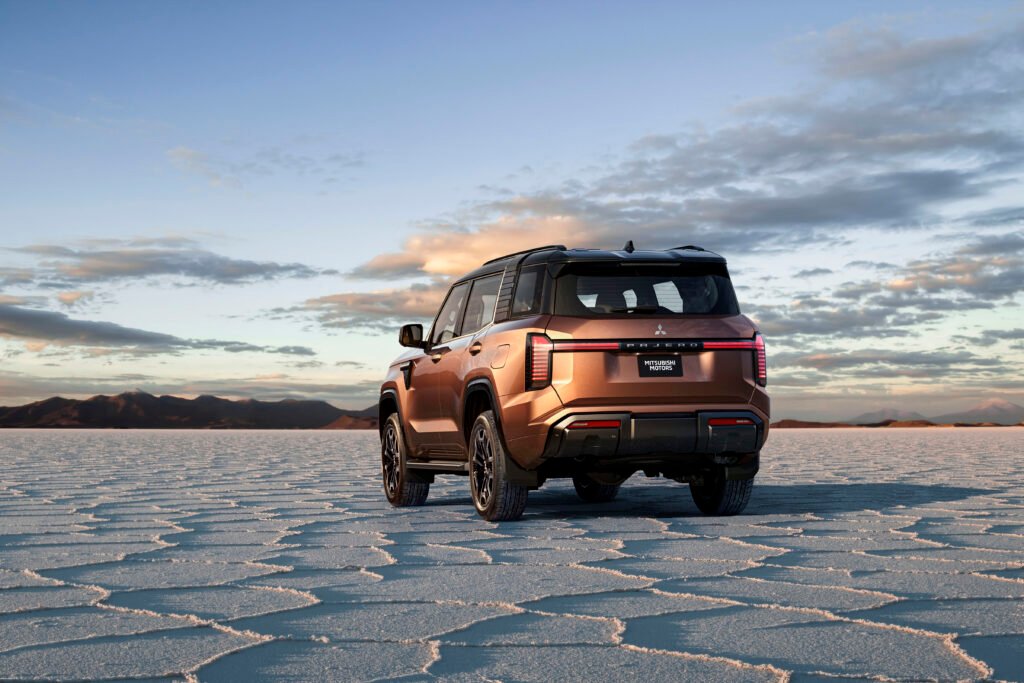
The new Pajero’s exterior has been designed around the concept of “Grand Charisma.” Its upright proportions and strong horizontal lines reference the first-generation Pajero, while powerful fenders and sculpted surfaces give it a more imposing appearance.
The front-end design takes inspiration from kendo, the Japanese martial art associated with discipline and composure. Mitsubishi will offer two distinctive grille designs: a horizontal-bar grille and a honeycomb grille.
The headlights feature a distinctive T-shaped design, while other heritage details include a C-pillar inspired by the roll bar of the first-generation Pajero and a hexagonal rear motif that references the spare wheel design of earlier generations.
Two key exterior theme colours include Armor Copper Metallic and Phantom Blue Metallic.
Advanced Safety Features and MI-PILOT
The all-new Pajero receives a comprehensive suite of preventive safety and driver-assistance technologies.
Its safety package includes Forward Collision Mitigation (FCM) with pedestrian, cyclist and motorcyclist detection, junction assist, Predictive Forward Collision Warning, Emergency Assist for Pedal Misapplication and Front Cross Traffic Alert.
For the first time, the Pajero also gets Emergency Lane Assist, which uses a forward-facing camera and radar to detect lane markings and surrounding vehicles before providing warnings and steering assistance when a lane-departure risk is detected.
The SUV also gets MI-PILOT, Mitsubishi’s highway single-lane driving assistance system. It integrates Adaptive Cruise Control and Lane Keep Assist to help maintain following distance and keep the vehicle centred within its lane on highways.
There are eight airbags, including Mitsubishi’s first SRS centre airbag, which is designed to reduce the risk of contact between occupants in the front seats.
3D Multi Around Monitor Helps During Off-Roading
The new Pajero gets a 3D Multi Around Monitor that combines feeds from four cameras with a 3D model of the vehicle. The system processes approximately 30 frames per second to provide a real-time view of the SUV’s surroundings.
A particularly useful feature for off-road enthusiasts is the front under-floor view, which allows the driver to see terrain beneath and ahead of the vehicle that would normally remain hidden. The system can automatically display this view when 4HLc or 4LLc is selected, or it can be activated manually.
Mitsubishi Connect and Yamaha 12-Speaker Audio
The new Pajero is also equipped with MITSUBISHI CONNECT, enabling owners to remotely operate climate control, check vehicle status through a smartphone and access an SOS call function for emergency assistance.
For audio enthusiasts, Mitsubishi has partnered with Yamaha Corporation to develop the Dynamic Sound Yamaha Ultimate system. It features 12 speakers and dual amplifiers, along with noise-compensation technology that adjusts volume and audio tuning according to vehicle speed.
New Mitsubishi Pajero Launch Timeline
Mitsubishi will initially launch the all-new Pajero in Thailand, where it is being produced. Japan and Australia will follow during fiscal 2026, which Mitsubishi defines as April 2026 to March 2027.
From fiscal 2027, the company plans to expand the SUV’s availability to approximately 100 countries, including ASEAN, Latin America and the Middle East. The press release does not confirm an India launch, India-specific specifications or pricing at this stage.
New Mitsubishi Pajero
The all-new Mitsubishi Pajero marks a major return for one of the Japanese manufacturer’s most recognisable nameplates. Rather than simply reviving the badge, Mitsubishi has positioned the SUV as a premium flagship cross-country vehicle, combining a traditional ladder frame and low-range 4WD hardware with modern electronics, a seven-seat cabin, connected technology and advanced driver assistance.
Its 2.4-litre diesel, 480 Nm torque output, 8-speed automatic gearbox, SS4-II 4WD, S-AWC, 230 mm ground clearance and seven terrain modes should make it particularly interesting to serious SUV and off-road enthusiasts. At the same time, features such as dual large displays, three-zone climate control, acoustic insulation, MI-PILOT and Yamaha’s 12-speaker audio system give it a significantly more sophisticated character than the rugged Pajeros of the past.
For now, Mitsubishi has revealed the vehicle as a new-generation flagship, with final equipment and specifications potentially varying according to market and trim.