
Bigger, bolder and packed with character, the petrol-powered MINI Countryman C brings family-friendly practicality to the brand’s quirky world. But does its…
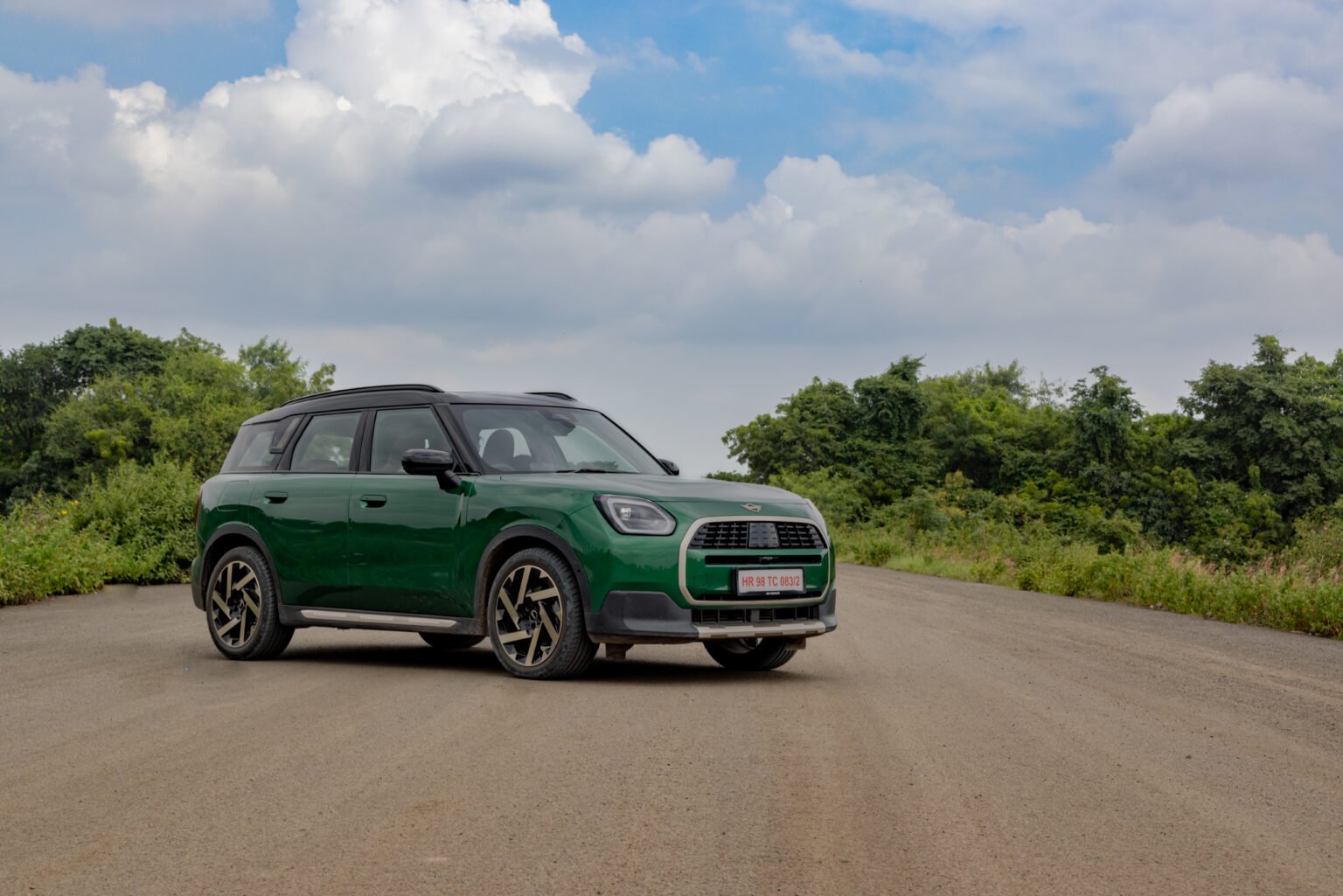
Bigger, bolder and packed with character, the petrol-powered MINI Countryman C brings family-friendly practicality to the brand’s quirky world. But does its three-cylinder engine and tech-heavy cabin deliver the complete premium SUV experience?
The MINI Countryman has always occupied an interesting space in the automotive world. It carries the unmistakable personality of a MINI, yet its larger dimensions and SUV proportions make it a more practical alternative to the brand’s smaller, driver-focused offerings. Now in its third generation, the Countryman has grown into the largest MINI yet, and the introduction of the petrol-powered Countryman C makes it more accessible to buyers who want the brand’s distinctive character without going electric.
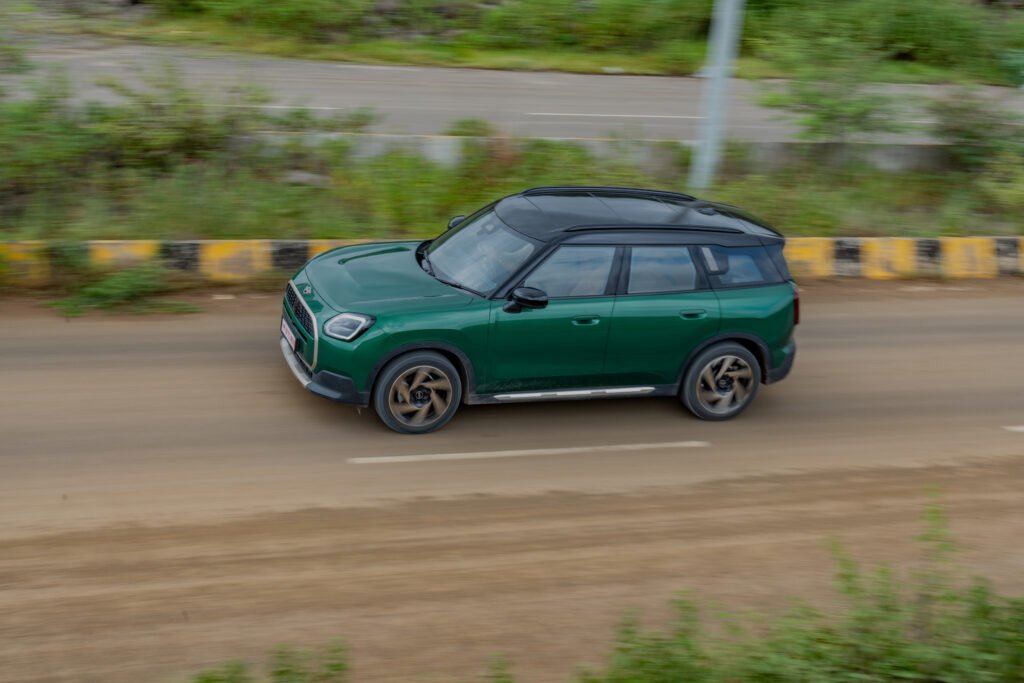
Locally assembled in India, the MINI Countryman C is priced at ₹47.5 lakh ex-showroom. It enters a competitive premium SUV segment populated by the BMW X1, Mercedes-Benz GLA and Audi Q3. That is an interesting neighbourhood to be in, especially when the Countryman shares its engineering roots with the BMW X1 but takes a considerably more expressive approach to design and cabin ambience.

The question, then, is not simply whether the Countryman C is a good MINI. It is whether this larger, more practical interpretation of the brand makes enough sense as a premium SUV to justify its asking price.
MINI COUNTRYMAN C DESIGN: BIG, BOLD AND UNMISTAKABLY MINI
The latest Countryman makes its intentions clear the moment you see it. The upright bonnet, tall roofline and substantial body give it the road presence expected of a modern SUV, while its distinctive lighting and quirky design details keep it recognisably MINI.
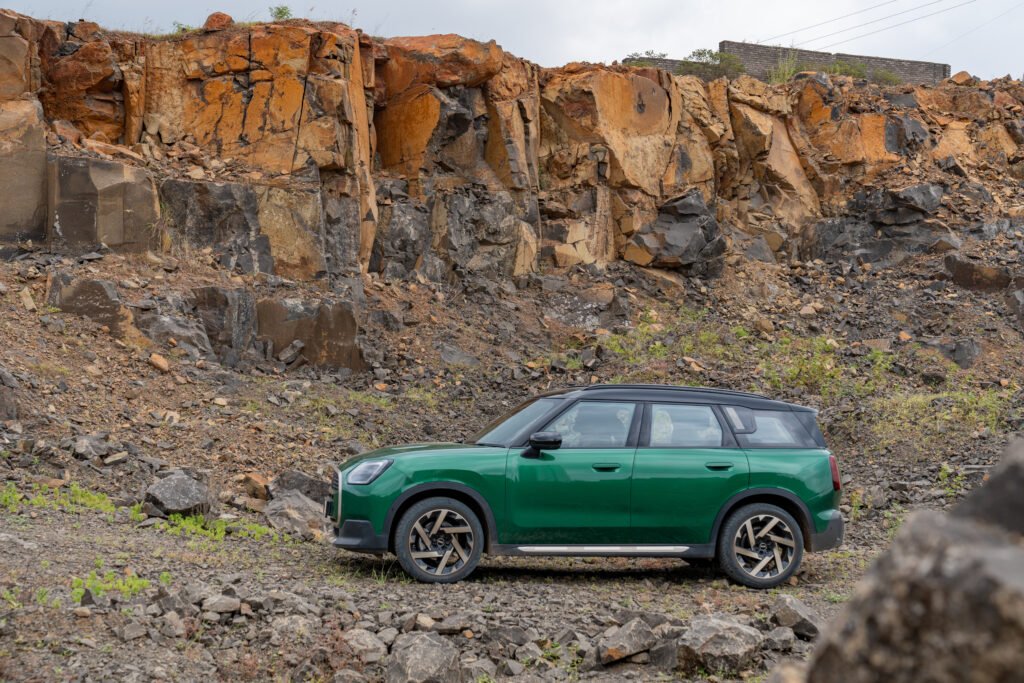
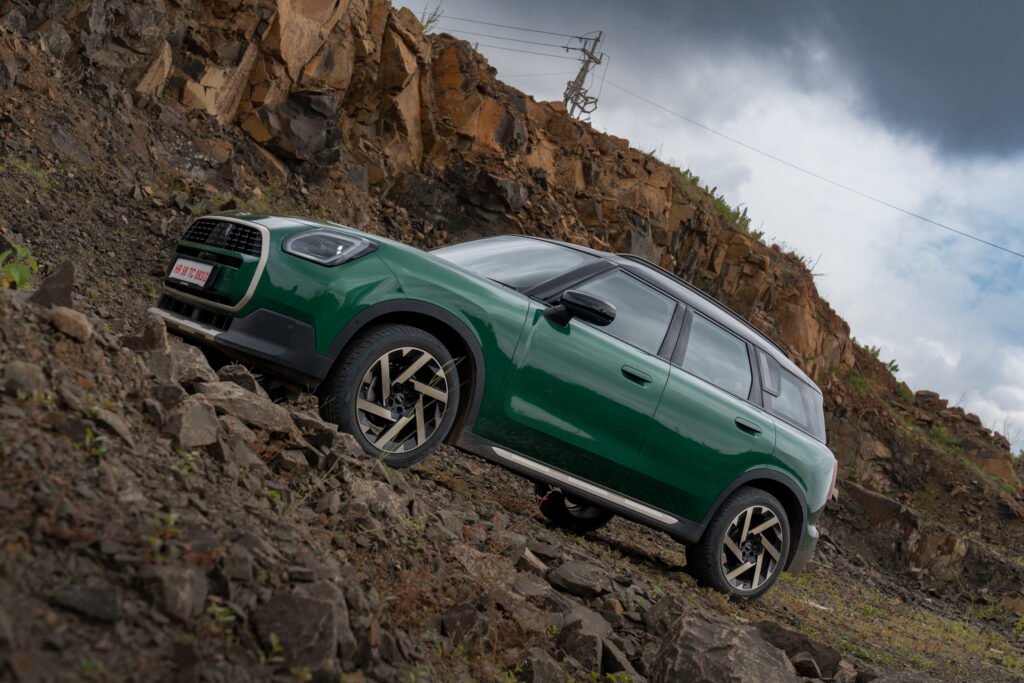
Measuring about 4.4 metres long, the Countryman has grown considerably from its earlier iterations. The high bonnet line and substantial proportions make it feel more imposing than the compact MINIs most people associate with the brand. At 190mm, its claimed ground clearance also gives it a practical advantage when negotiating uneven roads and speed breakers.
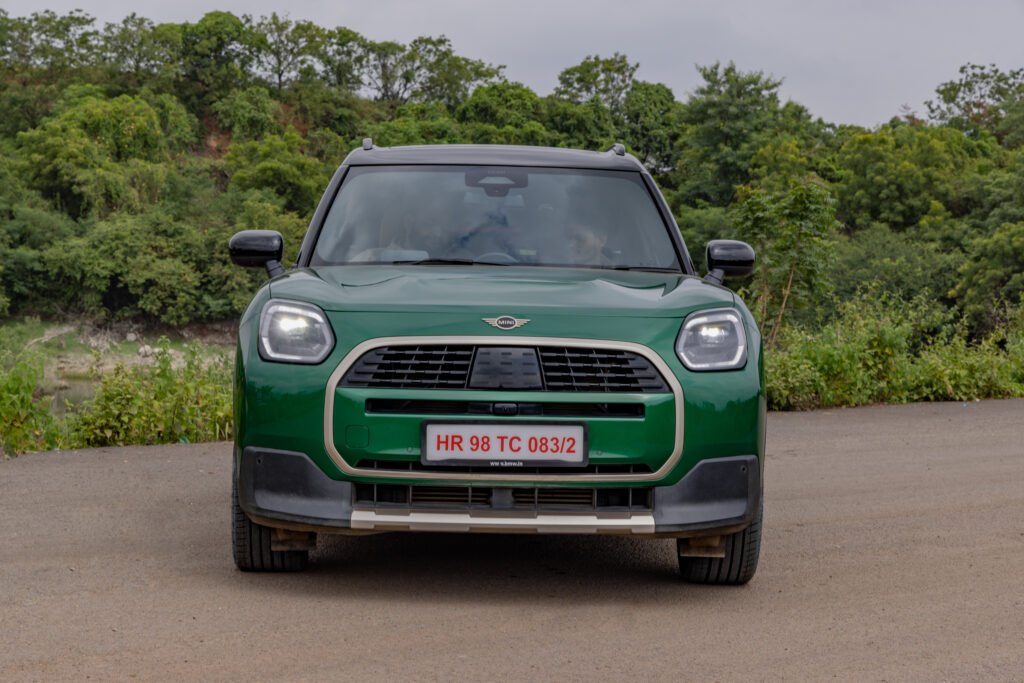
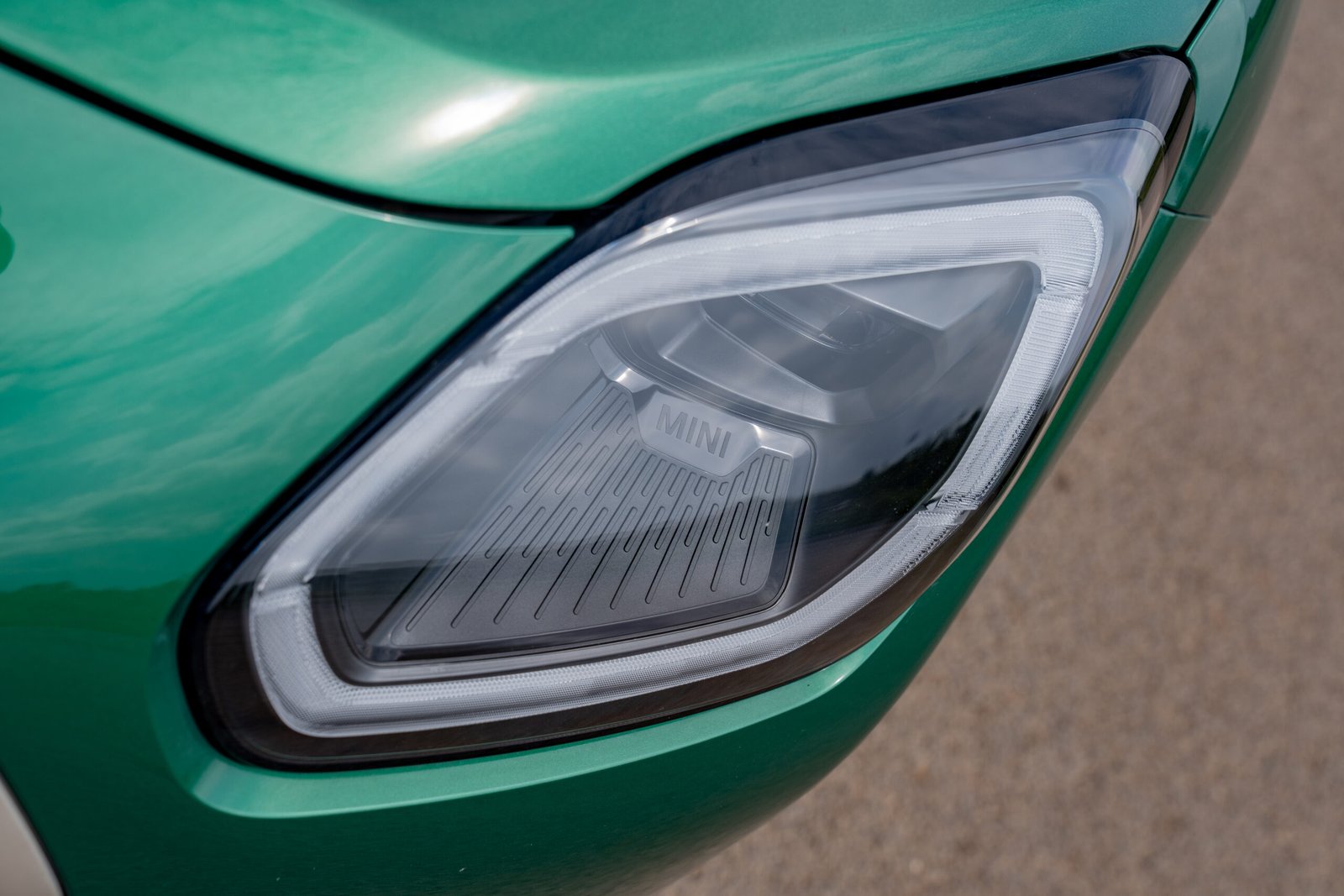
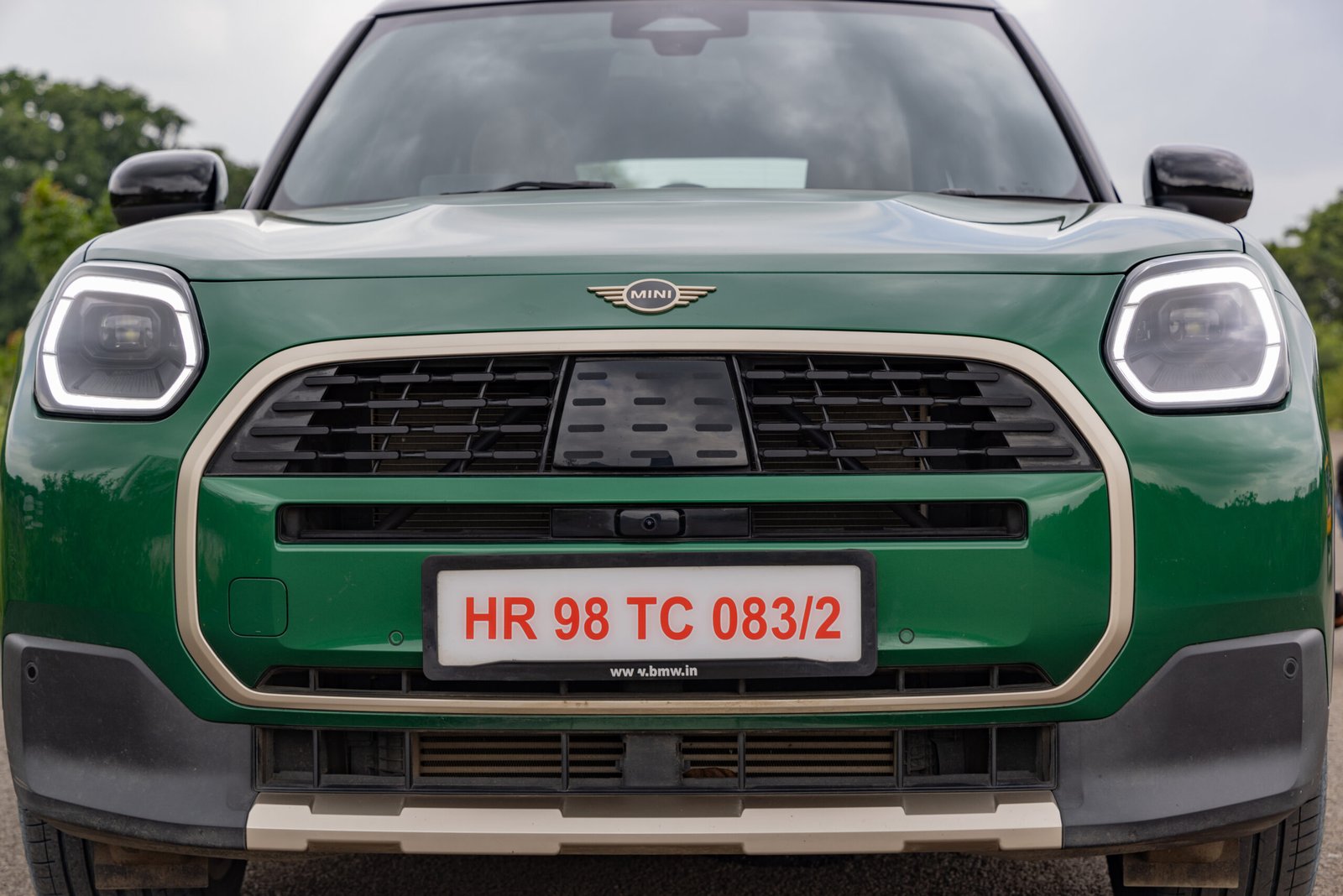
Up front, the large octagonal grille is the defining feature. Its contrasting gold detailing adds a touch of visual drama, particularly against darker paint shades, while the angular LED headlamps bring a contemporary edge to the familiar MINI face. The design deliberately moves away from the brand’s traditional obsession with circular elements, although enough familiar cues remain to make the Countryman instantly identifiable.
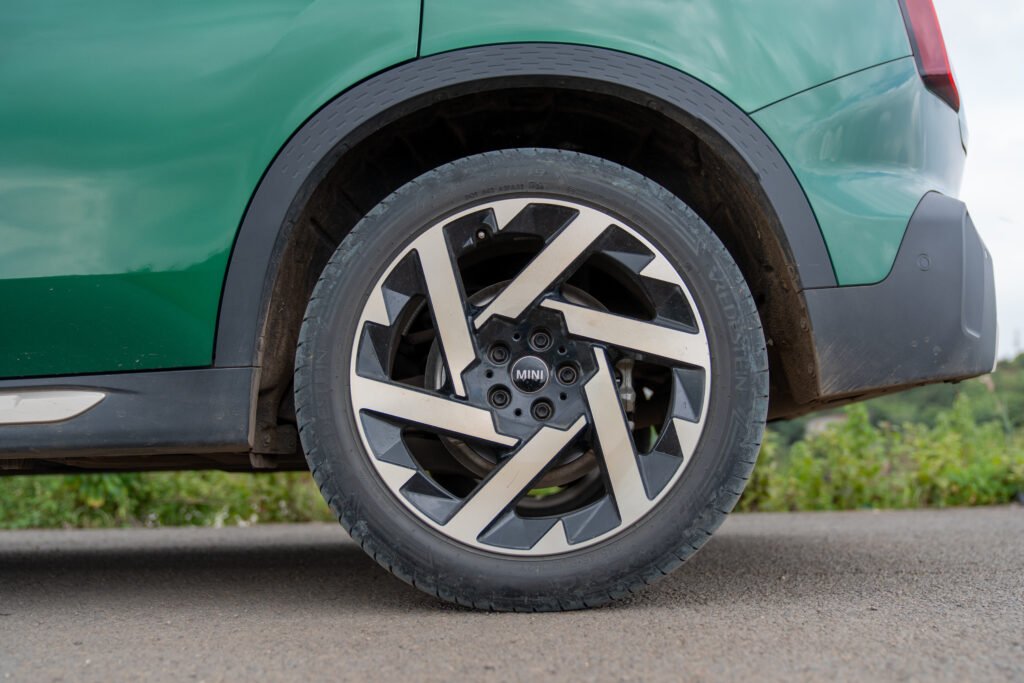
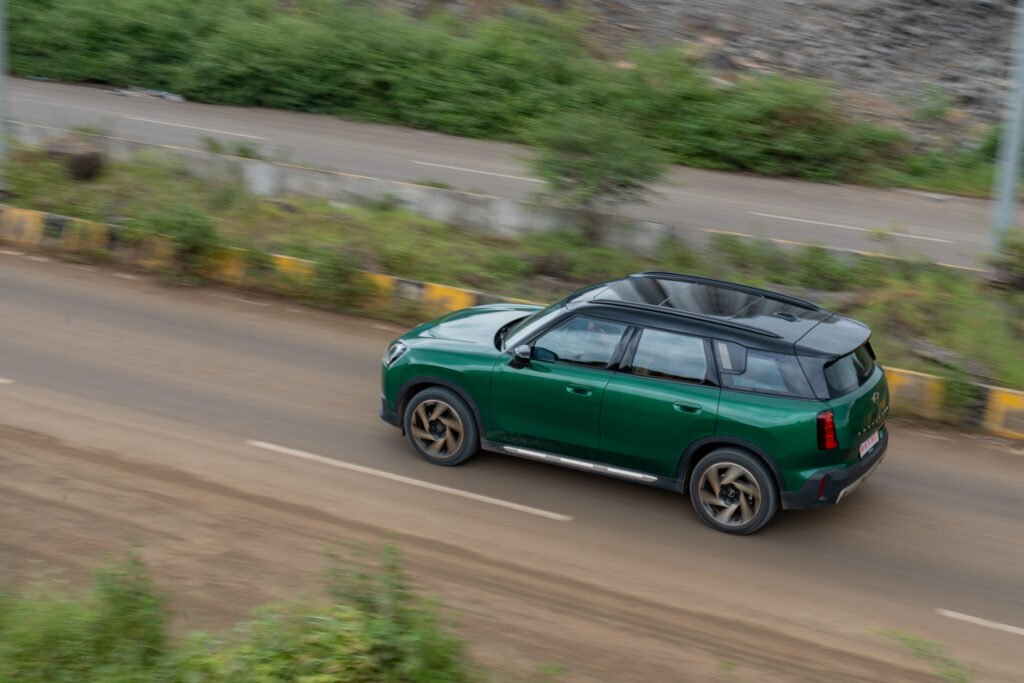
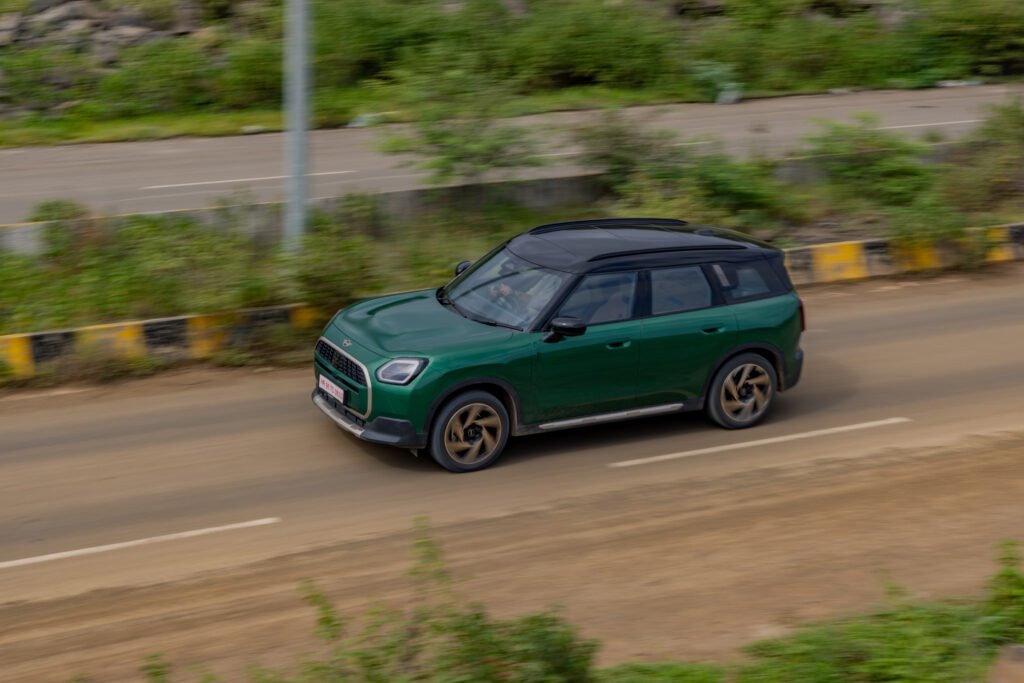
The side profile is where the increased dimensions become most apparent. Pronounced wheel arches, body cladding and contrasting pillars break up the visual bulk, while the contrasting roof adds another layer of customisation. Our test car’s 19-inch alloy wheels, shod with 245/45 R19 tyres, fill the arches nicely and give the Countryman a suitably planted stance.
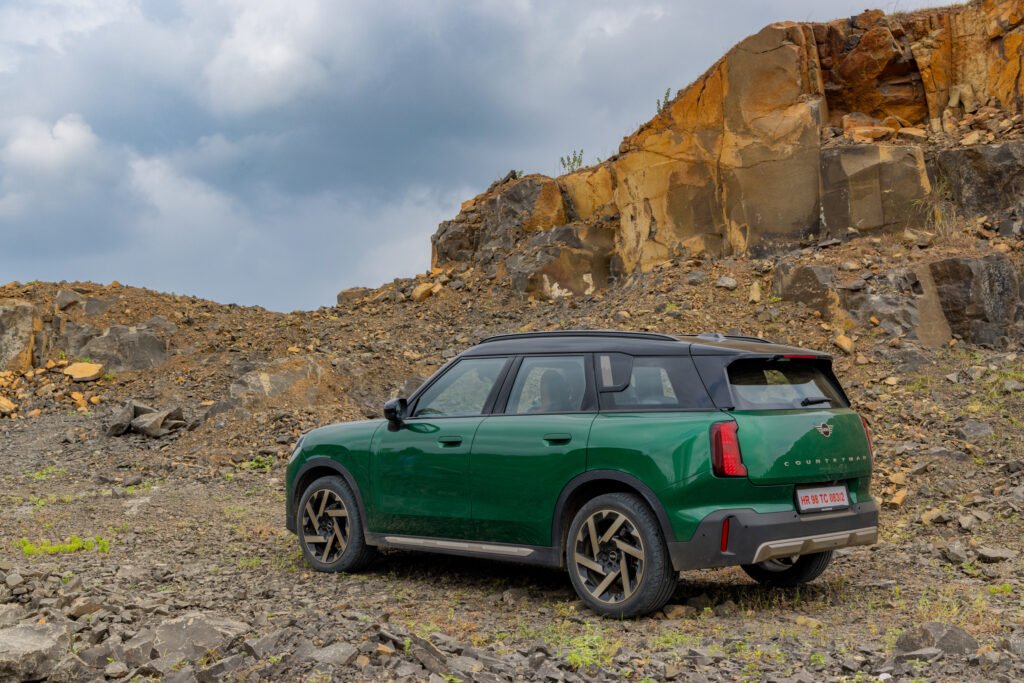
At the rear, the vertically oriented LED tail lamps retain a distinctive MINI signature. Their selectable lighting patterns add a little theatre, while the clean tailgate and hidden exhaust outlets keep the design contemporary. The power-operated tailgate is a useful touch, particularly when your hands are occupied with luggage.
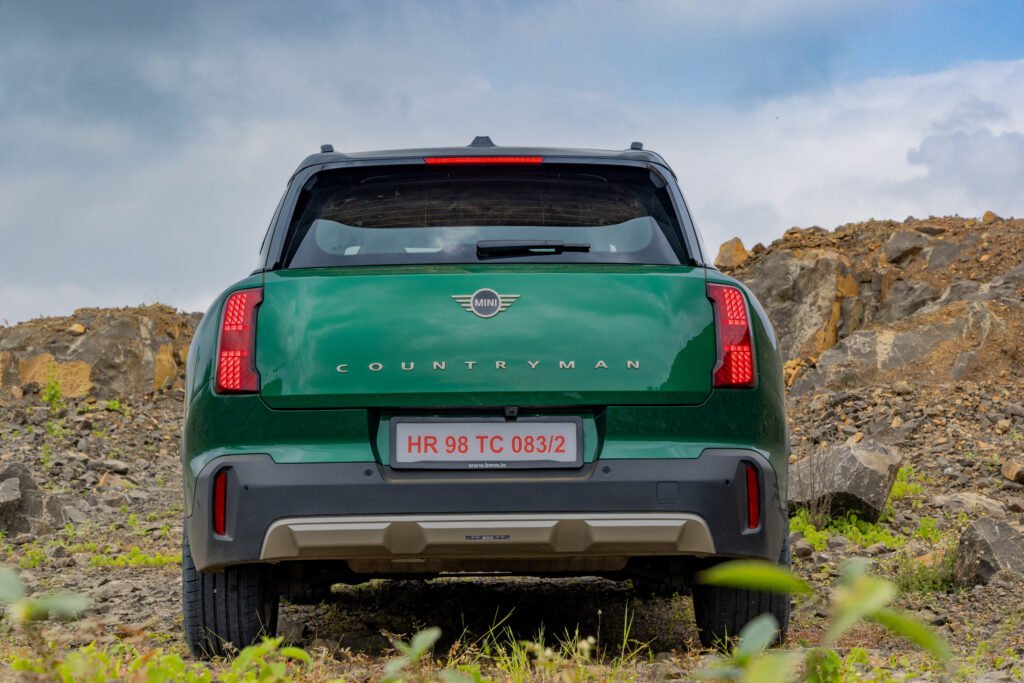
Not every design detail will appeal to everyone, and that is rather the point. The Countryman has personality. Unlike a premium SUV that attempts to look understated and sophisticated, the MINI is happy to be noticed. Whether that visual exuberance works for you is subjective, but there is little chance of confusing it with its German rivals.
MINI COUNTRYMAN C INTERIOR: CHARACTER OVER CONVENTION
Step inside, and the Countryman continues to do things differently. The dashboard is dominated by a circular OLED touchscreen, while the knitted textile surfaces, contrasting upholstery and ambient lighting create an environment that feels more playful than the conventional cabins found in this segment.
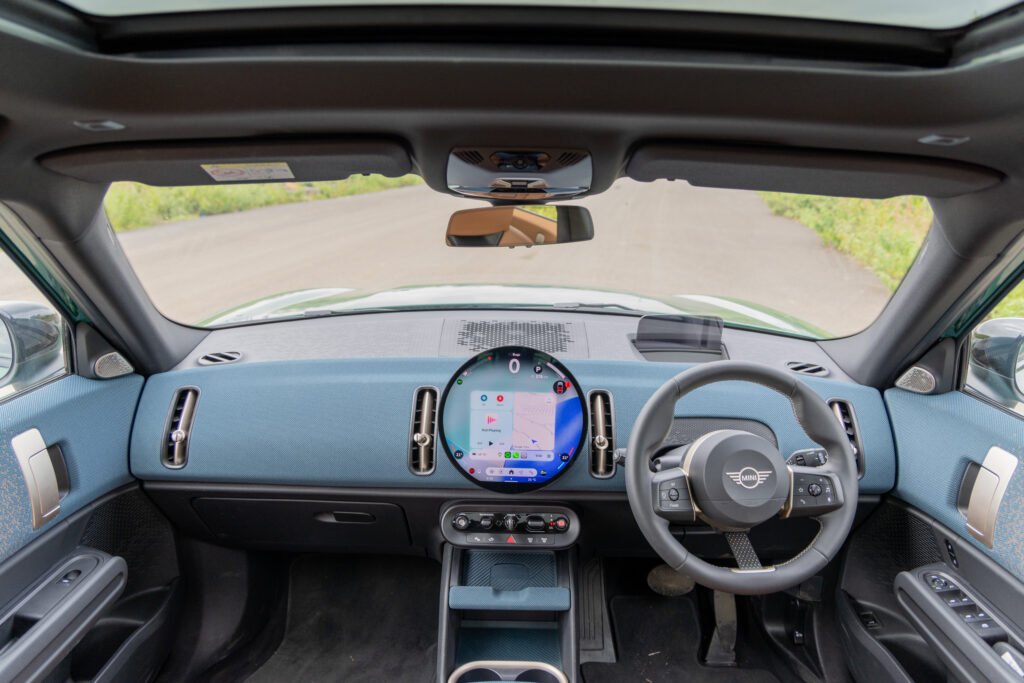
The circular display is the centrepiece of the experience. Measuring approximately 9.4 inches, it combines infotainment, navigation, vehicle settings and several other functions in a distinctive interface. The graphics are sharp, the presentation is colourful, and the different Experience Modes alter the visual character of the display and the cabin.
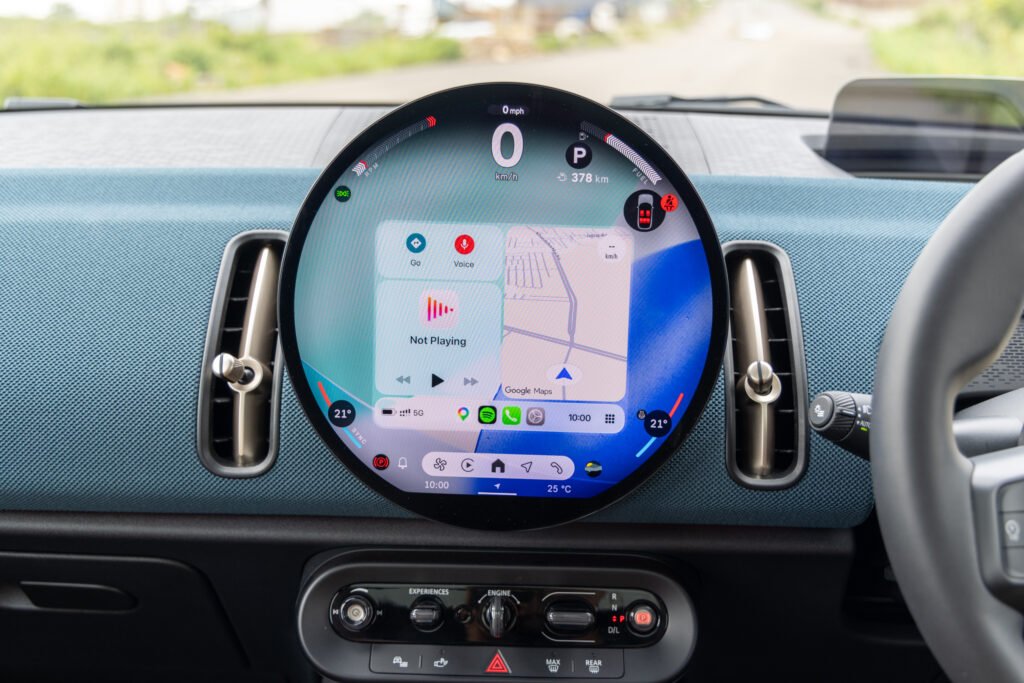
The design is certainly memorable. MINI has managed to create an interior that feels different without relying on oversized screens arranged in the usual rectangular format. The chunky steering wheel, tactile toggle-style controls and minimalist dashboard complement the overall theme.
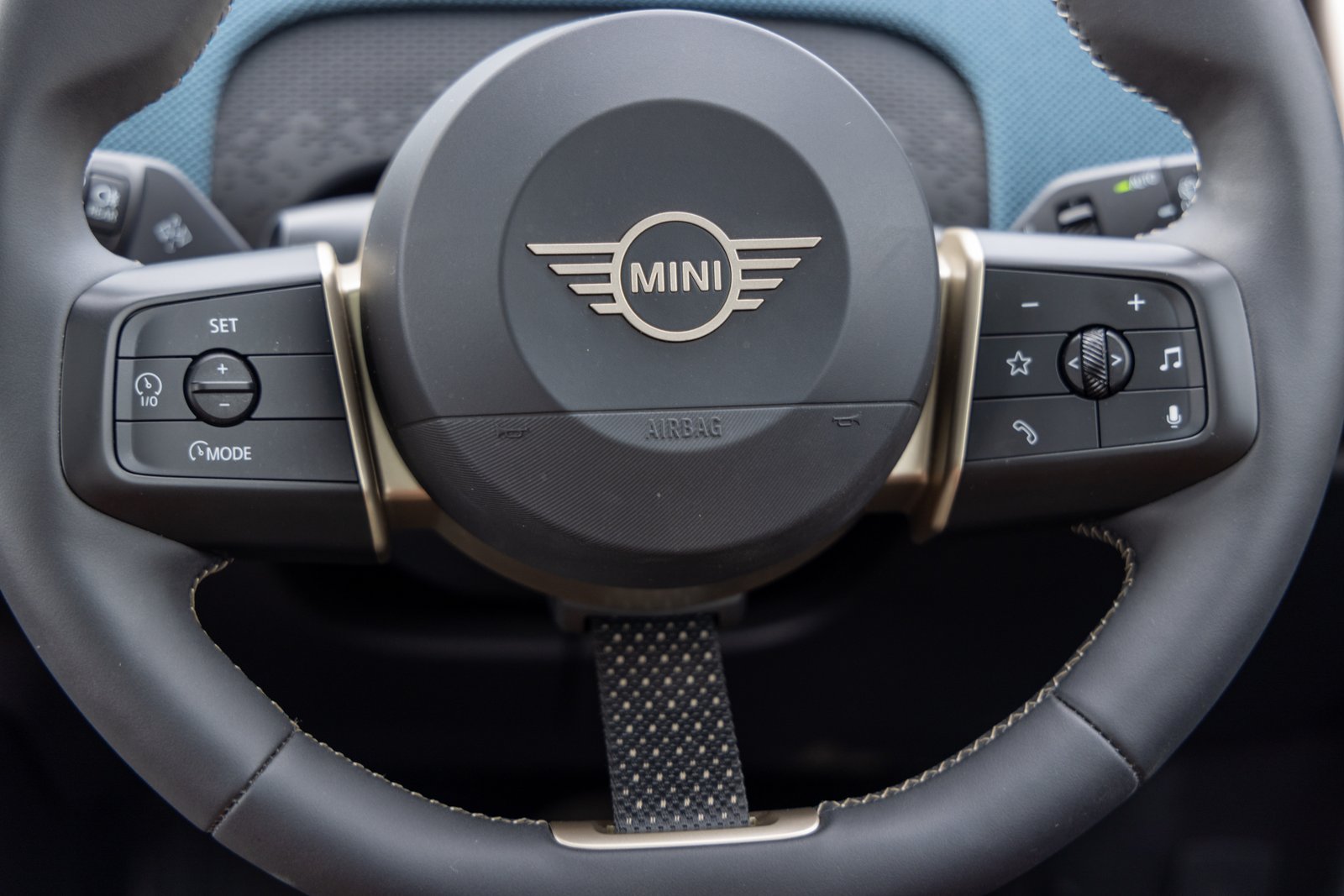
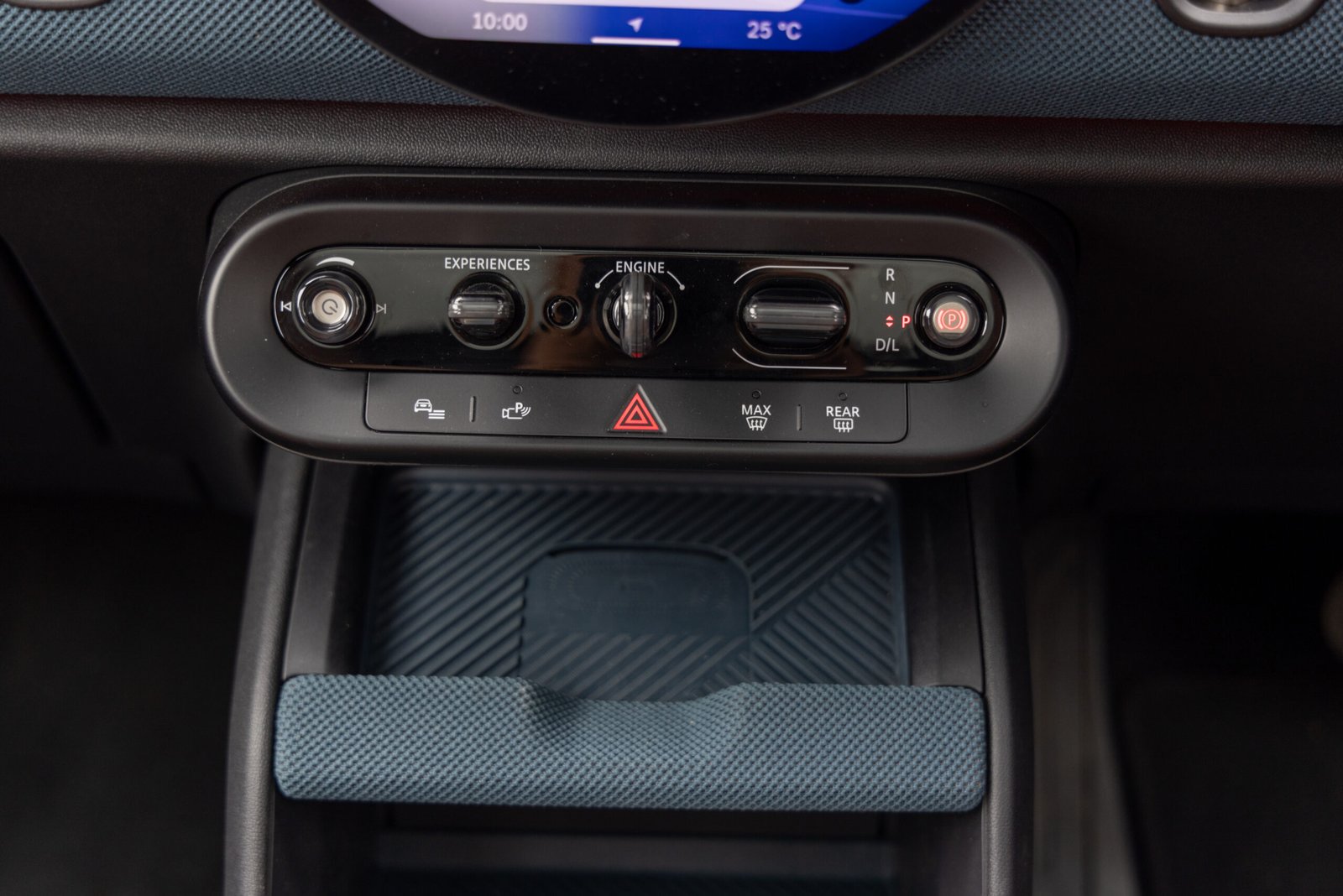
However, there is a catch. The absence of a conventional instrument cluster means that the central screen and head-up display carry much of the responsibility for communicating driving information. The head-up display helps keep essential information within the driver’s line of sight, but the learning curve remains.
Several functions, including climate adjustments and seat comfort settings, require navigating touchscreen menus. This looks neat when the car is parked, but becomes less intuitive when you simply want to make a quick adjustment while driving. The screen is impressive as an infotainment system, but its extensive responsibilities make the interface more complicated than it needs to be.
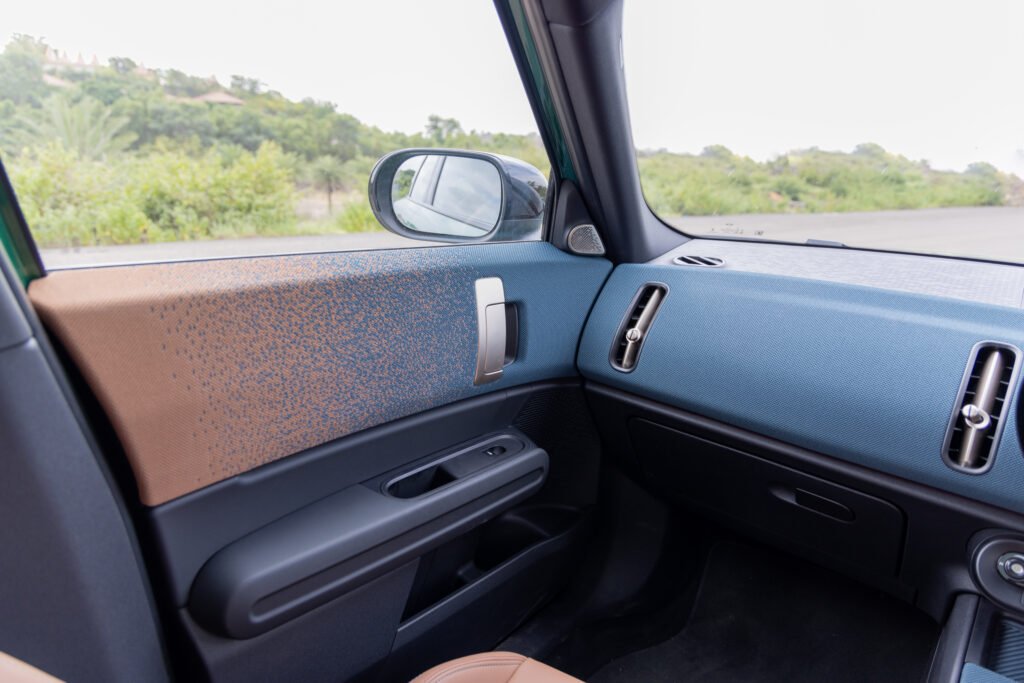
The knitted dashboard material is another talking point. It adds texture and warmth to an otherwise minimalist cabin, giving the interior a more distinctive visual identity than the usual sea of conventional surfaces. However, its open texture may be more demanding to maintain in dusty Indian conditions.
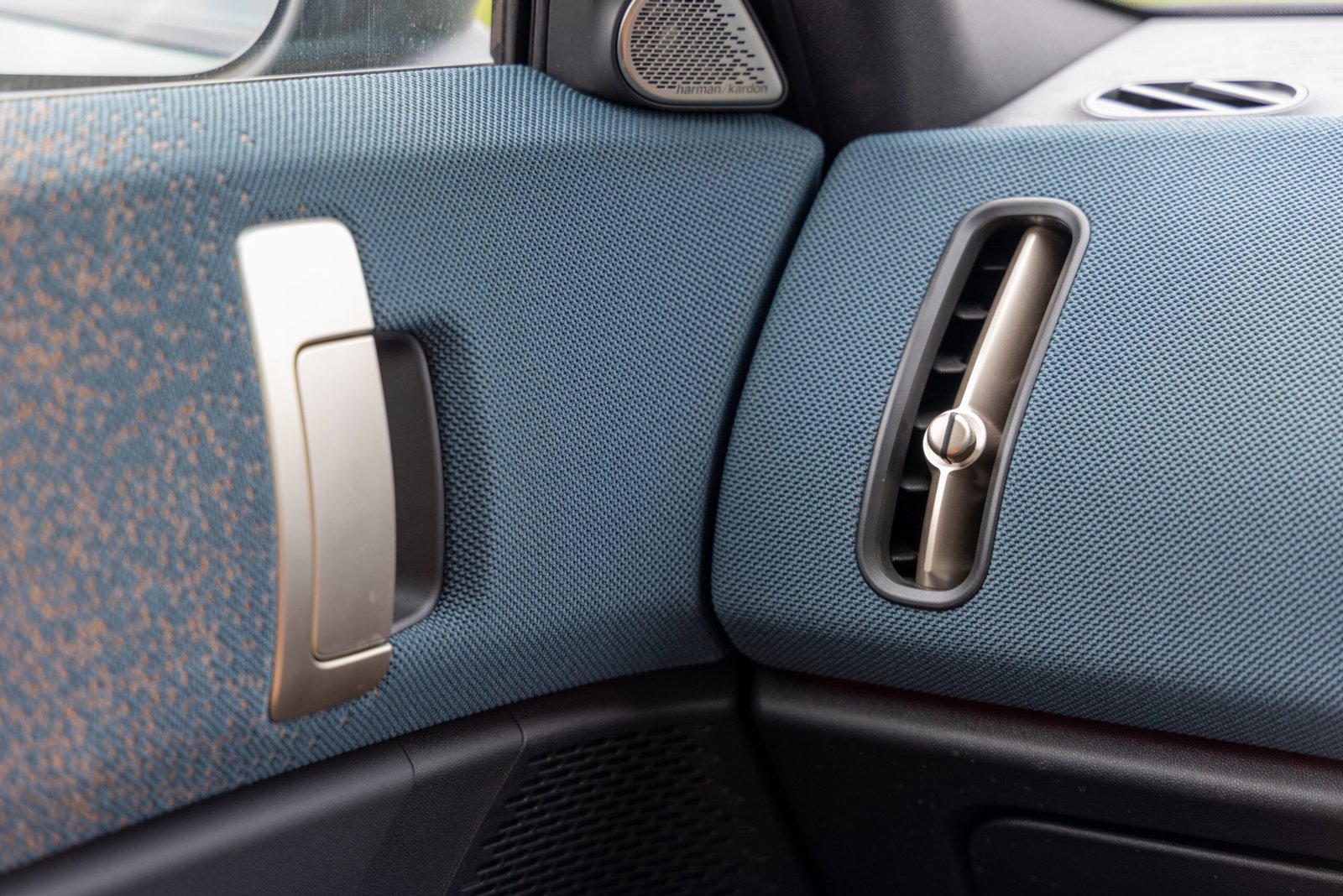
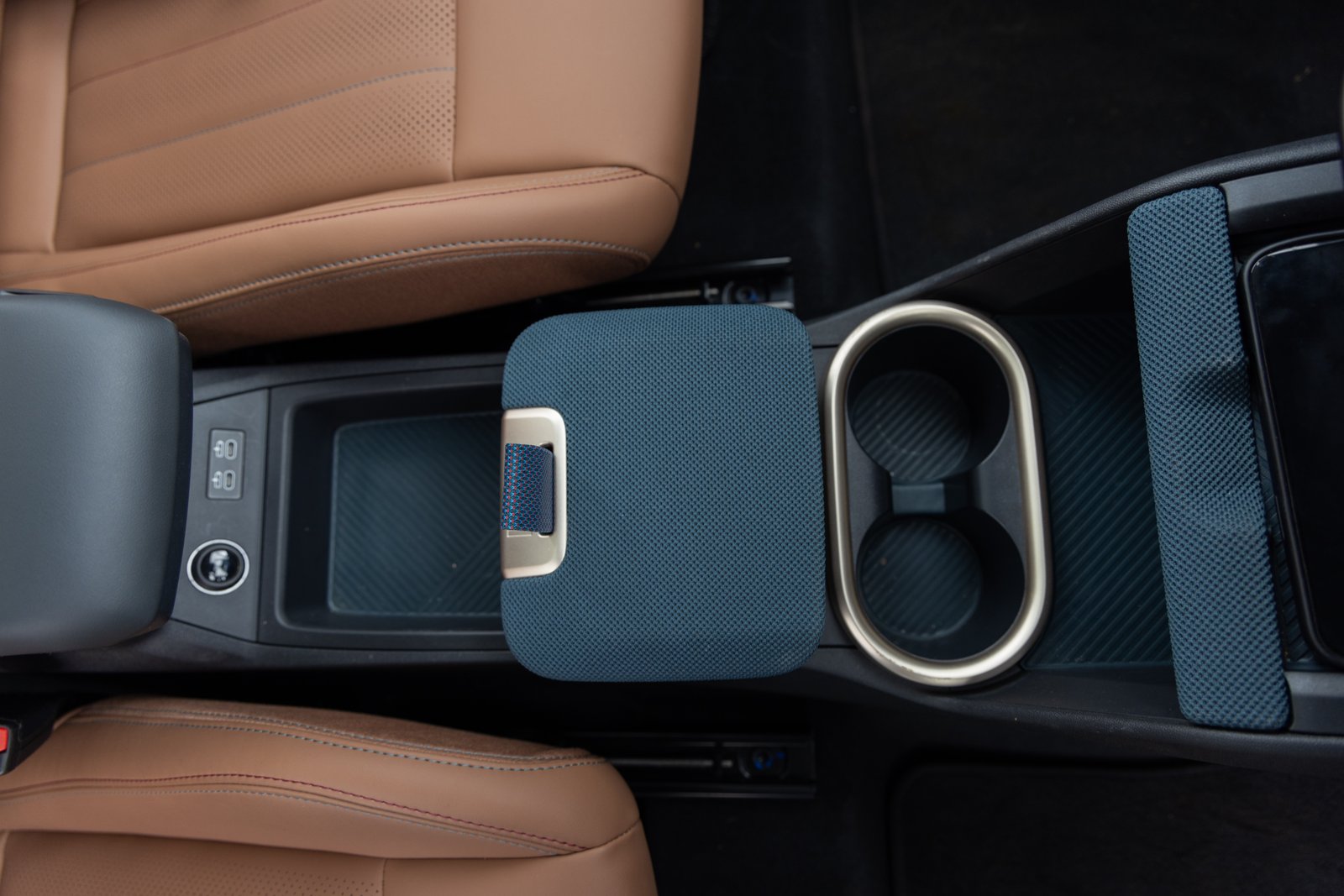
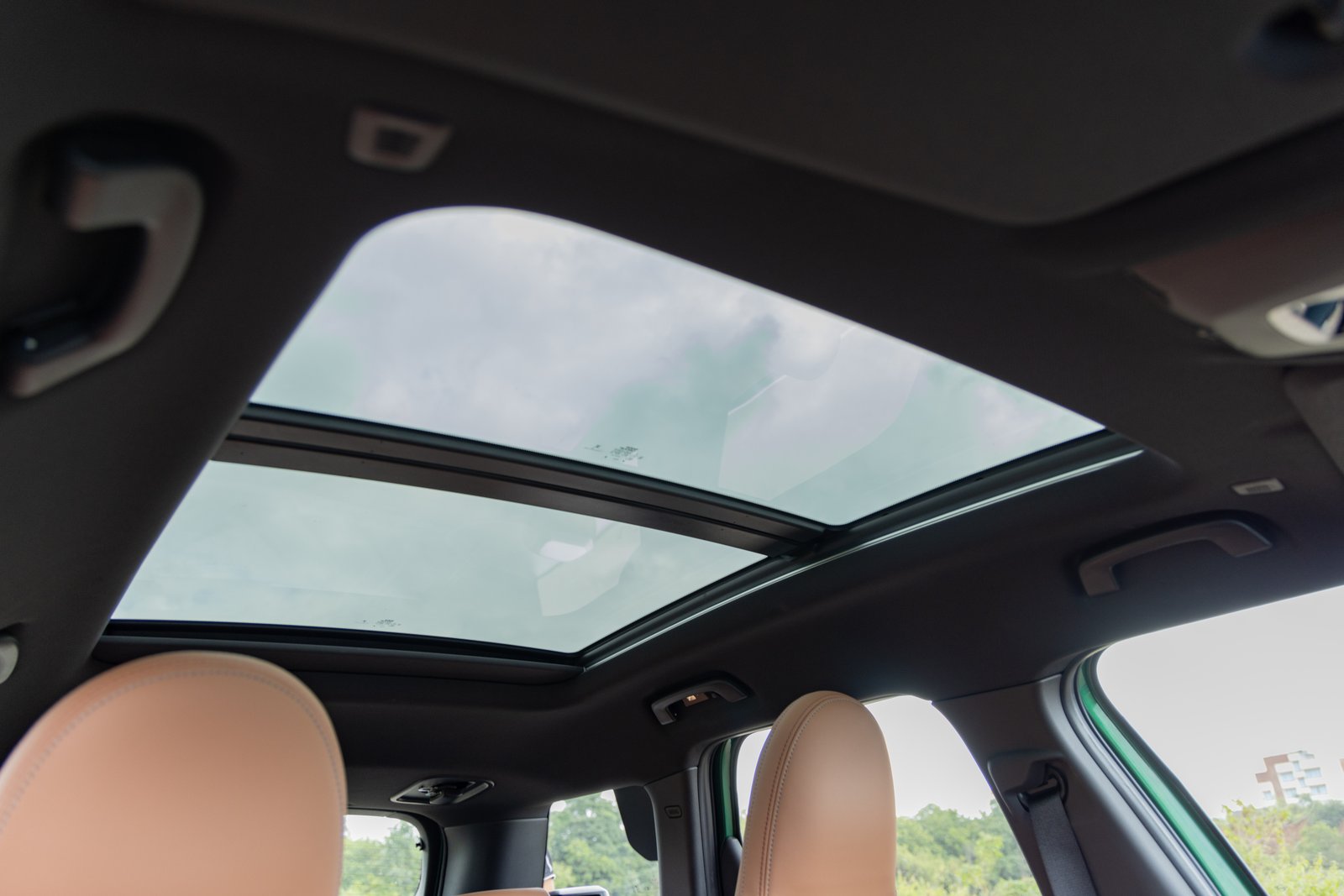
Equipment levels are generous. The Countryman C offers powered front seats with memory and massage functions, a head-up display, a panoramic sunroof, ambient lighting, wireless smartphone connectivity and a 12-speaker Harman Kardon audio system. The combination makes the cabin feel suitably feature-rich for a premium SUV, even if the ergonomics are not universally convincing.
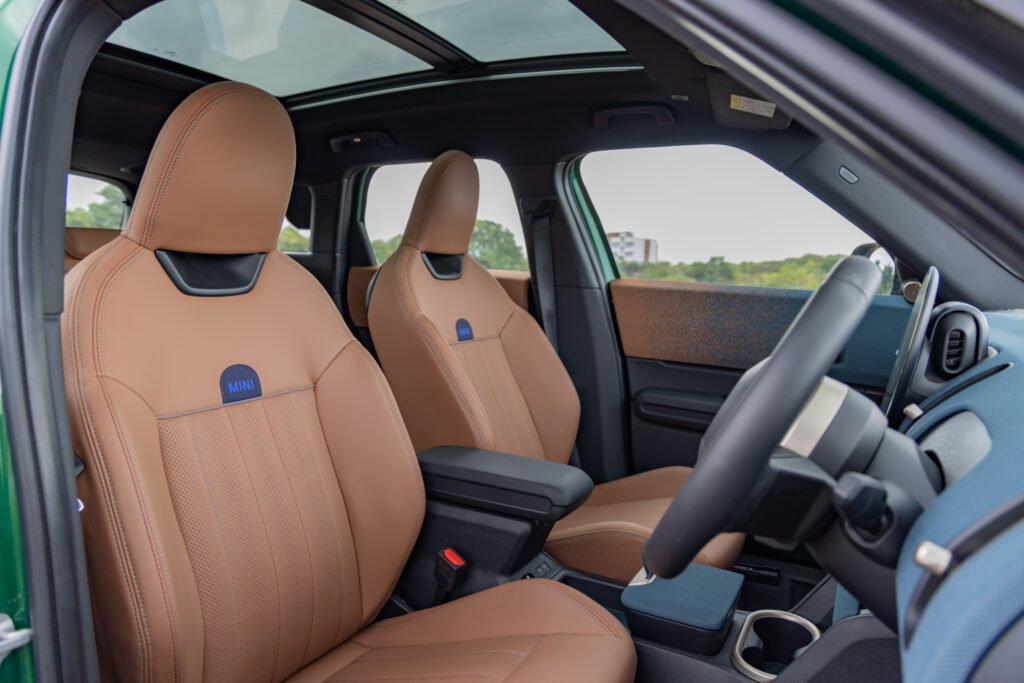
The seats deserve a mention, too. The elevated seating position provides a commanding view of the road, while the chunky steering wheel and well-contoured front seats make the driving position comfortable and reassuring. For longer journeys, that SUV-like visibility is likely to be appreciated.
REAR-SEAT SPACE AND BOOT: A MINI FOR THE FAMILY
Practicality is one of the strongest arguments in favour of the Countryman C. The larger dimensions are not simply about road presence; they translate into a more accommodating cabin that can serve as a family’s primary car.
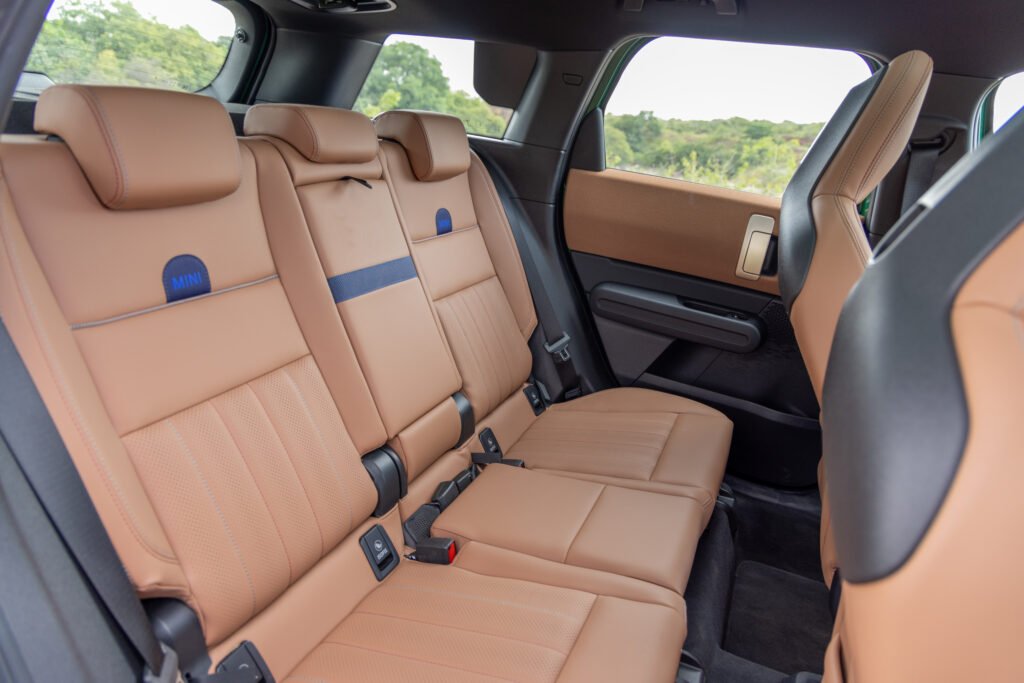
The rear bench offers useful knee room and headroom, while the backrest angle can be adjusted for additional comfort. The rear seats also slide by up to 130mm, allowing occupants to prioritise legroom or luggage space depending on their requirements. Under-thigh support is reasonable, although the rear bench is not especially generous when it comes to accommodating three adults.
The relatively small rear windows can also make the back of the cabin feel less airy than the dimensions might suggest. Nevertheless, for two adults travelling in the rear, the Countryman provides a comfortable and usable space.
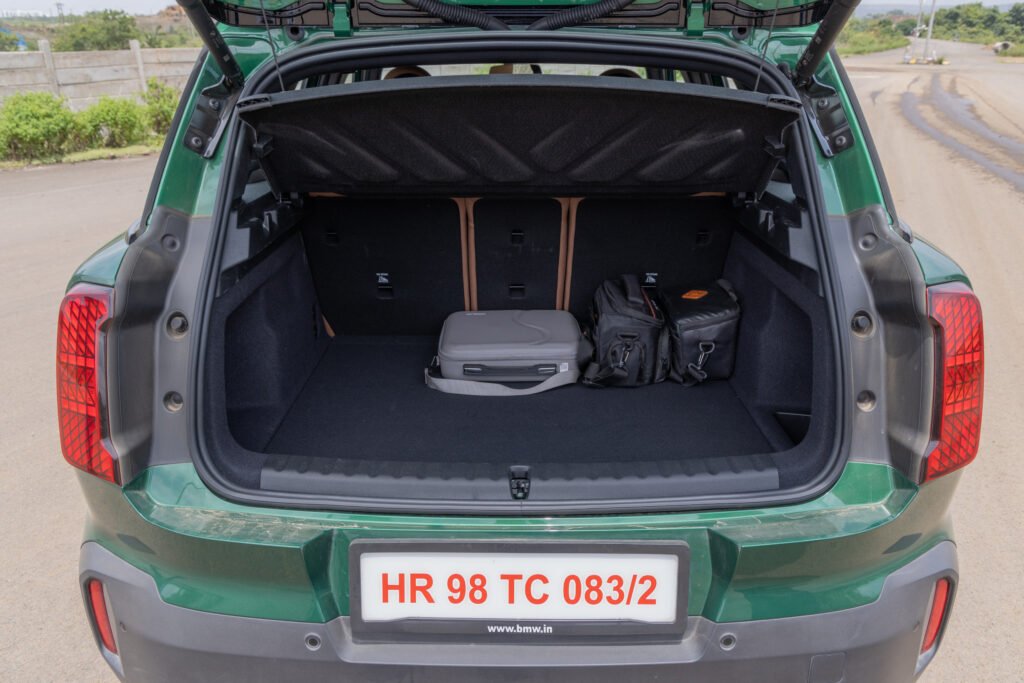
The boot offers 505 litres of luggage capacity, expanding to approximately 1,450 litres with the rear seats folded. The power tailgate makes loading easier, while the availability of a space-saver spare wheel is welcome in a market where puncture protection can be a genuine concern.
These details make the Countryman considerably more versatile than its brand image might suggest. It can handle weekday commutes, airport runs and weekend luggage without forcing its owner to compromise on everyday usability.
In short, this is a MINI that has made a convincing case for family duty.
MINI COUNTRYMAN C ENGINE AND PERFORMANCE: IS THREE ENOUGH?
Under the bonnet sits a 1.5-litre, three-cylinder turbo-petrol engine producing 156hp and 240Nm of torque. It is paired with a seven-speed dual-clutch automatic transmission, with power sent exclusively to the front wheels. MINI claims a zero-to-100 kmph acceleration time of nine seconds.
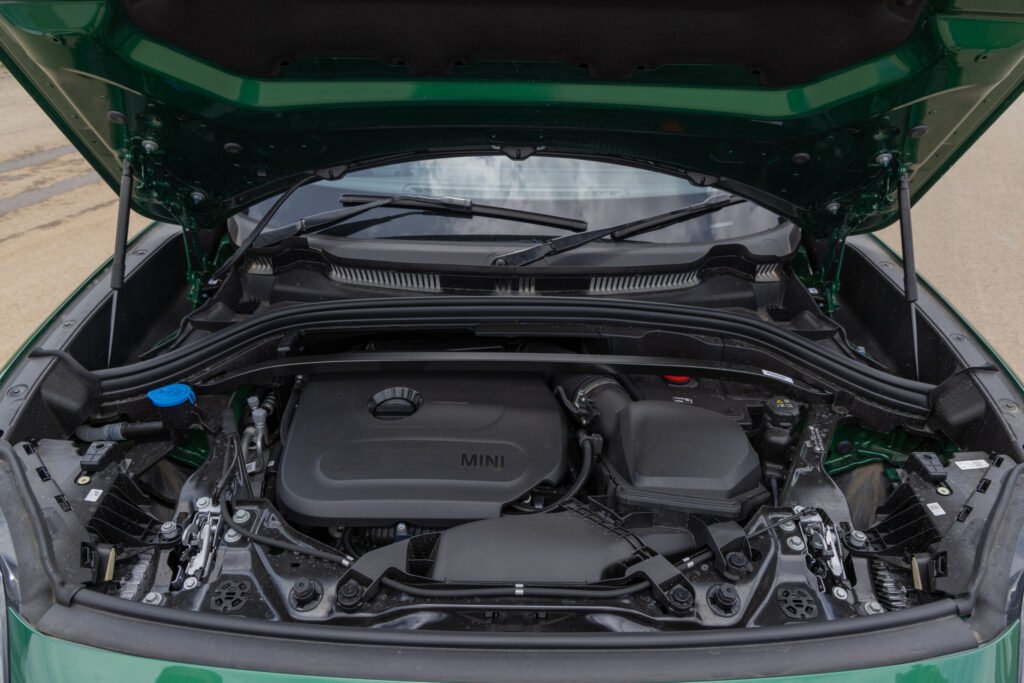
These numbers position the Countryman C as an everyday premium SUV rather than a performance-oriented machine. The three-cylinder configuration might initially raise eyebrows, especially for buyers spending close to ₹50 lakh on a car carrying the MINI badge. However, cylinder count alone does not tell the complete story.
The engine is notably refined for a three-cylinder unit, and its mid-range response is useful in everyday driving. It has enough performance to make urban commutes and highway journeys perfectly manageable, without demanding that the driver constantly push it hard.
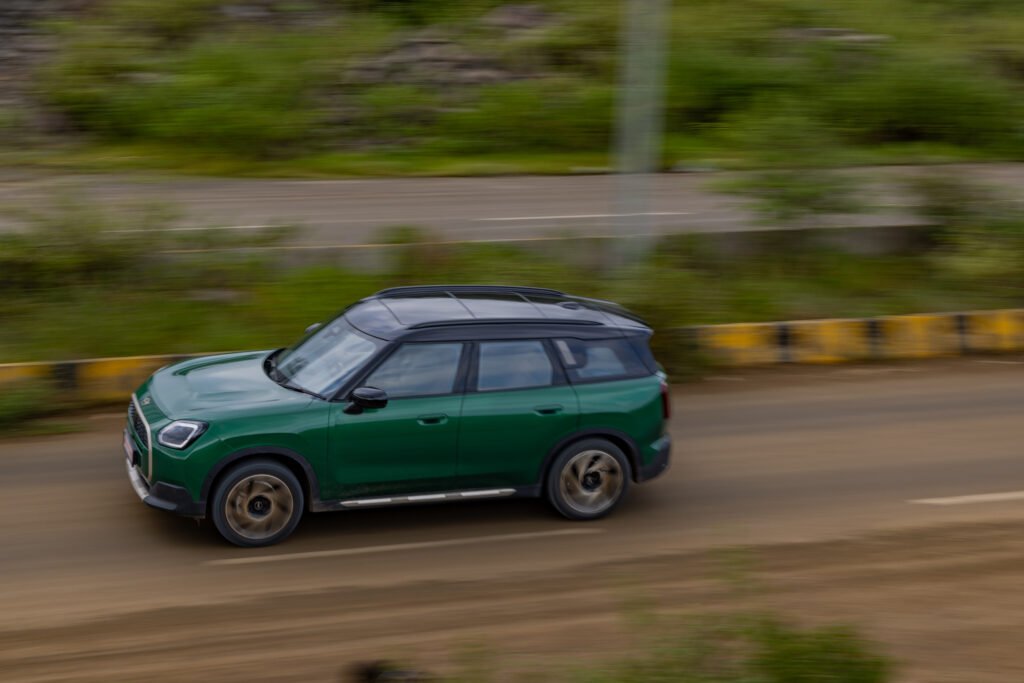
That said, the Countryman C does not deliver the effortless surge that some buyers might expect at this price point. Its claimed nine-second sprint to 100kph is adequate rather than exciting, and those looking for genuinely brisk acceleration may find themselves wanting more.
The seven-speed dual-clutch gearbox generally suits the engine’s character, delivering quick shifts once the car is moving. Low-speed behaviour, however, deserves closer attention in stop-start traffic, where the transmission’s responses can influence how smooth the overall experience feels.
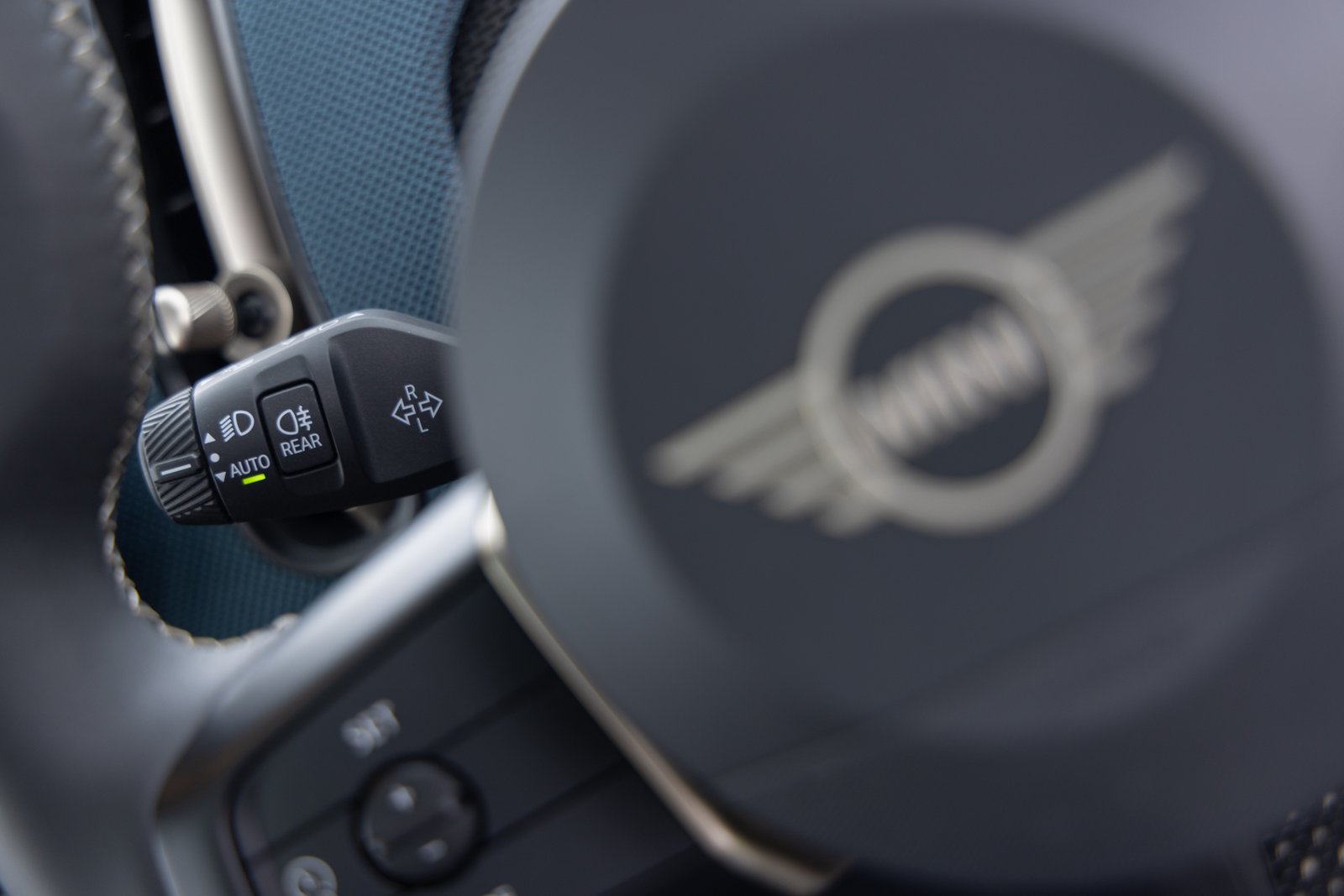
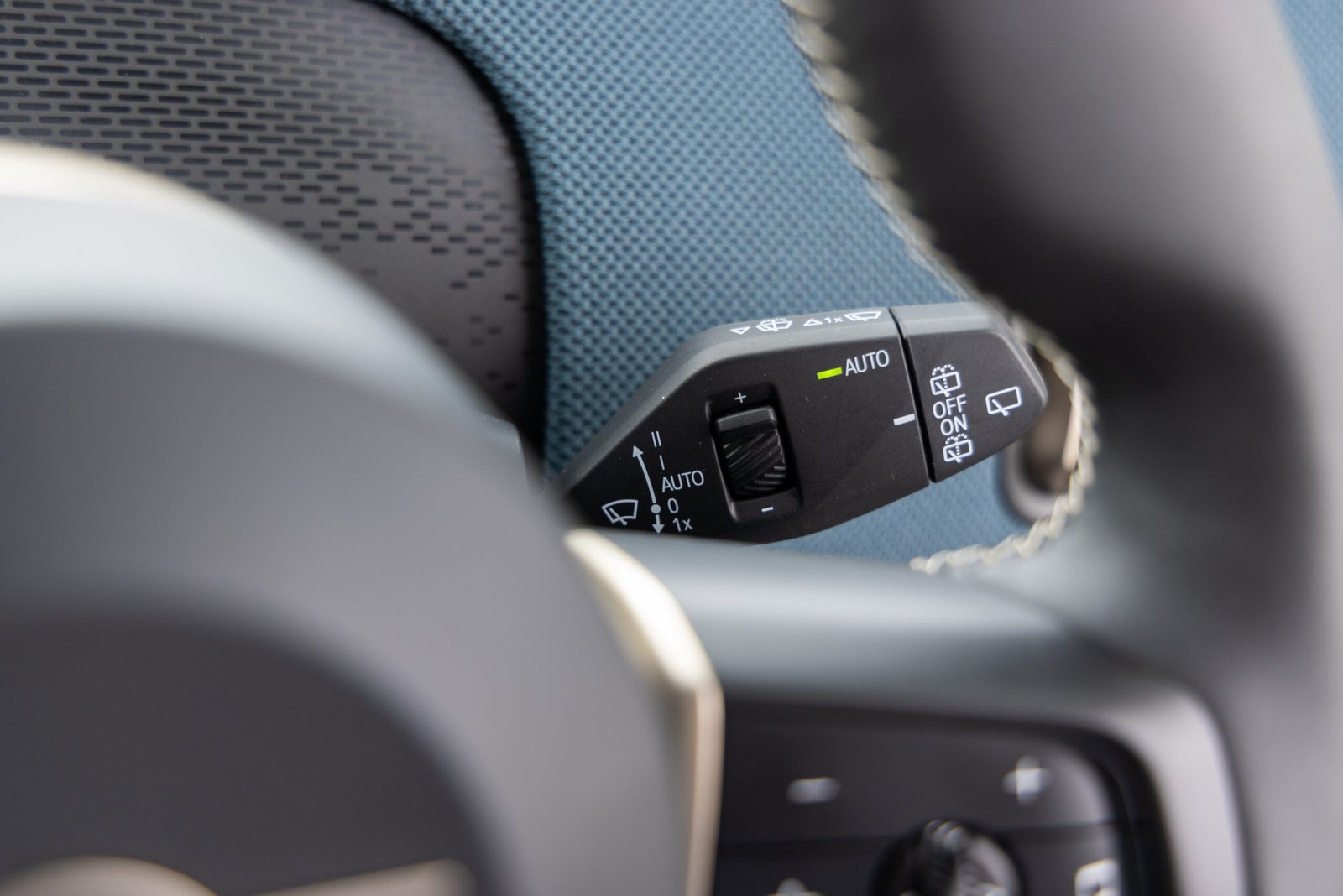
Another omission worth noting is the absence of conventional steering-mounted paddle shifters. For a brand that has long celebrated driving enjoyment, the lack of an immediately accessible manual shifting interface feels like a missed opportunity. The Countryman C is not intended to be a hardcore performance SUV, but a little more driver involvement would have strengthened its appeal.
GO KART MODE: HOW MUCH MINI IS LEFT?
Few automotive brands have built an identity around driving character quite like MINI. The Countryman C attempts to preserve some of that spirit through its Experience Modes, particularly Go Kart Mode.

Select it, and the car adopts a more responsive character, sharpening the driving experience and making the powertrain feel more eager. The accompanying graphics and sounds add to the theatre, reinforcing MINI’s playful approach to technology.
On a winding road, the Countryman can be surprisingly engaging for something of its size. The steering feels direct, and the car responds willingly to inputs. There is a sense of agility here that prevents the SUV from feeling completely detached from the brand’s driving heritage.
But expectations need to be kept in check. This is a considerably larger and more practical vehicle than a MINI Cooper, and it does not have the same compact, playful character. Go Kart Mode adds a welcome layer of involvement, but it cannot fundamentally change the Countryman’s dimensions or its underlying purpose.
The Countryman C is best understood as a premium SUV with a sporting edge rather than a large hatchback pretending to be an SUV. That distinction matters because the driving experience is enjoyable in its own right, even if it is not the miniature go-kart fantasy the name might suggest.
RIDE QUALITY AND HANDLING: A COMPROMISE WORTH UNDERSTANDING
The Countryman’s SUV proportions bring clear benefits, but the combination of a tall body and 19-inch wheels also places greater importance on suspension tuning.
On smoother roads, the car feels composed and substantial. Its steering is direct enough to make progress along winding stretches enjoyable, and the chassis offers a degree of body control that helps it feel more agile than its size suggests.

However, sharper imperfections can make their presence felt inside the cabin. The large wheels look excellent and contribute to the Countryman’s stance, but their relatively low-profile tyres leave less sidewall to absorb harsh impacts. Broken tarmac, potholes and sharp road joints can therefore expose the limits of the ride setup.

This does not make the Countryman unsuitable for Indian roads. Its 190mm ground clearance is reassuring, and the elevated driving position gives the driver a useful view of the road ahead. But buyers who prioritise a particularly cushioned ride should spend time driving it over the surfaces they encounter most often.
The balance MINI has chosen is understandable. A completely soft setup could undermine the car’s composure through corners, while a firmer one helps it retain a more engaging character. The challenge is finding the right compromise for everyday Indian conditions.
For the Countryman C, that balance is one of the most important aspects to evaluate during a test drive.
MINI COUNTRYMAN C PRICE AND RIVALS IN INDIA
Priced at ₹47.5 lakh ex-showroom, the MINI Countryman C sits in a competitive part of the premium SUV market. Its key alternatives include the BMW X1, Mercedes-Benz GLA and Audi Q3, all of which appeal to buyers seeking a compact luxury SUV with a premium badge.
The Countryman’s locally assembled status helps it arrive at an attractive price point relative to several rivals. Its single Favoured trim also bundles a substantial equipment list, reducing the need to navigate a long list of variants to find a well-equipped version.

However, the buying decision goes beyond the price tag. The Countryman’s distinctive design, quirky cabin and strong feature list will appeal to buyers who want something less conventional. Its three-cylinder engine and touchscreen-heavy interface may be less convincing for those who prioritise outright performance or traditional ergonomics.
The BMW X1 is particularly relevant because the two cars share engineering foundations. Yet their personalities differ considerably. The X1 follows a more conventional premium SUV formula, while the Countryman makes individuality a central part of its appeal.
The Mercedes-Benz GLA and Audi Q3 offer further alternatives for buyers who value established luxury credentials and a different interpretation of compact SUV design. The right choice will depend on whether you prioritise performance, comfort, technology, practicality or personality.
VERDICT: A MORE PRACTICAL MINI, WITH A FEW COMPROMISES
The MINI Countryman C is a fascinating evolution of the brand’s SUV. It has grown into a more spacious, more practical and better-equipped vehicle, one that can comfortably take on the responsibilities of everyday family life while retaining a distinctive design identity.
Its strengths are easy to appreciate. The exterior has real presence, the cabin is full of character, the rear seat is usefully accommodating, and the boot makes it a genuinely versatile proposition. The engine is refined for a three-cylinder unit, while the handling gives the Countryman a welcome degree of engagement.
But the compromises are equally clear. Performance is adequate rather than thrilling, the ride over sharper imperfections can be firm, and the touchscreen-heavy interface could be more intuitive. The lack of conventional paddle shifters is also disappointing in a car that leans on its driving heritage.
Ultimately, the Countryman C is not the MINI to buy if you want the purest expression of the brand’s traditional go-kart character. It is the MINI to buy if you want that character translated into a larger, more practical premium SUV.
At ₹47.5 lakh ex-showroom, it makes a compelling case for buyers who value individuality as much as equipment and everyday usability. It may not be the most conventional choice in its segment, but that is precisely why it deserves consideration.
The biggest MINI has grown up. Fortunately, it has not grown entirely out of its personality.
SHOT BY: SACHIN KAWANKAR AND SHREYA SOMANI FOR DAG INDIA